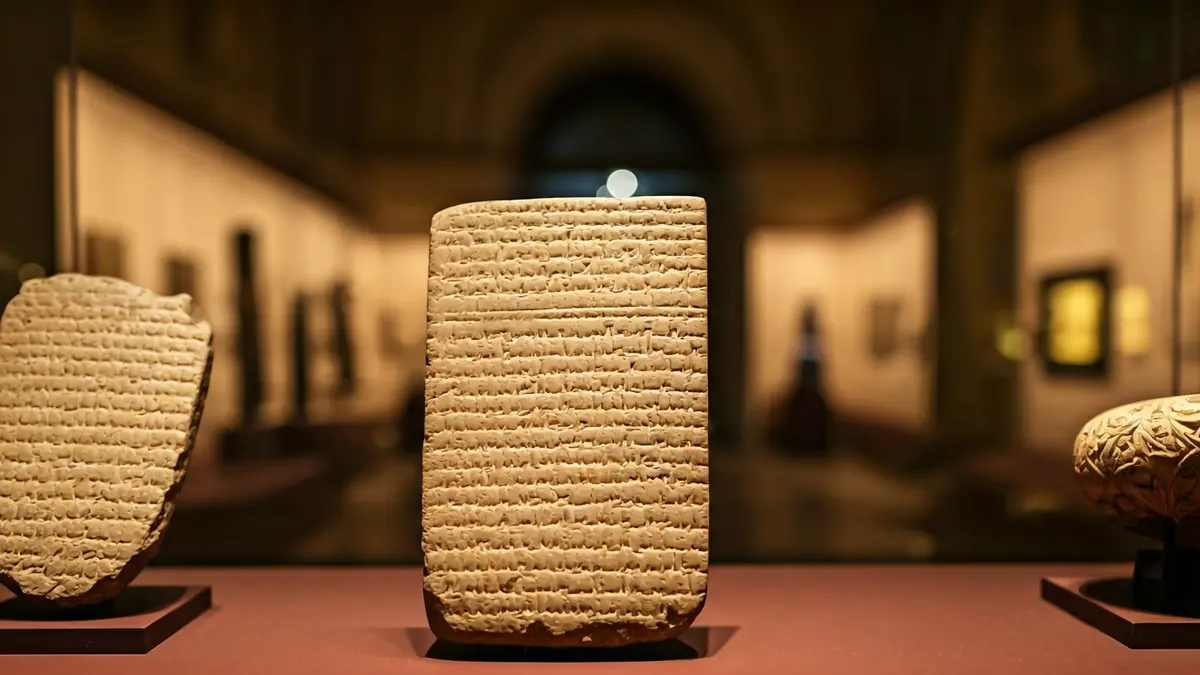
This ambitious cultural proposal, open to the public until October 4, 2026, immerses visitors in the life and legacy of one of the most powerful and often lesser-known rulers in ancient history. The exhibition highlights the figure of Ashurbanipal, who governed the Assyrian Empire between 669 and 631 BC from the mythical city of Nineveh, located in modern-day Iraq.
The exhibition is structured into seven thematic sections that reveal the monarch's complex personality. On one hand, Ashurbanipal is presented as a scholar and bibliophile, who founded the first great library of cuneiform tablets with the aim of compiling all human knowledge. On the other hand, his role as a ruthless warrior is showcased, having used violence and terror to consolidate his vast dominion, which stretched from the Eastern Mediterranean to the mountain ranges of Iran.
The exhibition not only narrates the king's biography but also emphasizes the importance of cultural heritage protection, inviting reflection on how the conservation of these remains is fundamental to understanding human evolution.
Under Ashurbanipal's rule, the Assyrian Empire reached its maximum geographical expansion and experienced a remarkable economic flourishing. His influence was not only political but also cultural, promoting artistic styles and currents of thought that spread throughout the Middle East and the Mediterranean.
Among the treasures from the British Museum displayed in Madrid are objects of incalculable historical value, many of them originating from excavations in emblematic sites such as Nimrud, Borsippa, and Sippar. Highlights include ritual stelae, such as a red sandstone piece showing Ashurbanipal carrying a basket of earth for the reconstruction of the temple of Nabu; ivory carvings, including openwork panels from Nimrud depicting figures like a woman looking out a window or scenes of musicians; bronzes and ceramics, such as a bronze bowl decorated with winged sphinxes from Nineveh; and luxury everyday objects, like cosmetic containers made from Tridachna squamosa shells and cylindrical ivory boxes.
Admission to the exhibition is free for CaixaBank customers and children under 16 years old. General admission also allows access to other exhibitions available at the cultural center. Related information and tags can be followed using the digital hashtag #CaixaForumAsurbanipal.