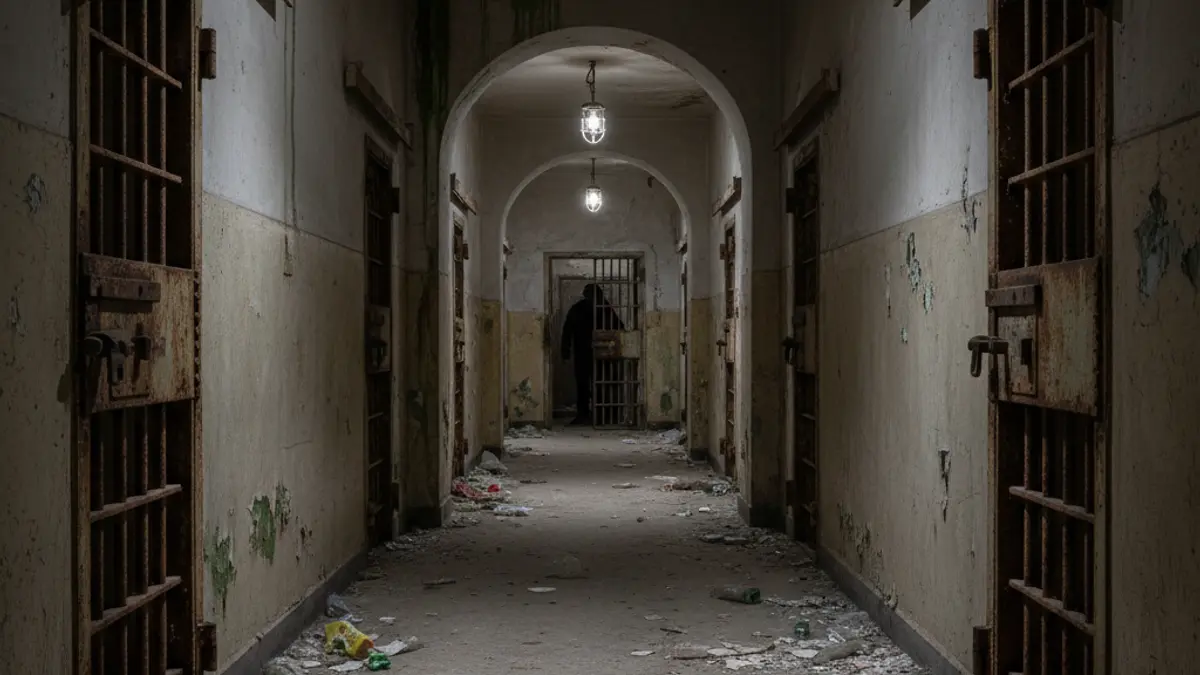
In a statement, the union asserts that the three modules considered most problematic currently house over a hundred inmates each, and warns that this number continues to grow. Furthermore, they have reported the presence of bed bugs in one of the penitentiary center's departments.
The union organization maintains that, during certain shifts, only two officials are responsible for more than one hundred inmates, some of whom are considered dangerous, conflictive, or unadapted. In the organization's view, this situation violates “basic prison security standards” and reflects “unsustainable” conditions.
“"This situation violates basic prison security standards and reflects unsustainable conditions."
The union also links the increased tension in the center to the arrival of inmates from other prisons after rapid progressions to second degree, as well as the high presence of prisoners with psychiatric pathologies, mental illnesses, and addiction problems.
Likewise, the deterioration of the facilities in the problematic modules has been reported, where they claim there is a significant lack of lighting. The luminaires accumulate dirt and residue, leaving some areas practically in darkness and making high-risk operations, such as opening and closing cells, particularly difficult.
Given this situation, they demand the urgent installation of new light points and spotlights in the courtyards, where current visibility is insufficient for inmate control. They also call for the renovation of the video surveillance system, which they consider “obsolete and insufficient” for a penitentiary center of these characteristics.
Another problem highlighted is the absence of doctors during several shifts. According to the union, the center lacks medical professionals during mornings, nights, holidays, and weekends, a situation that, they affirm, complicates the clinical evaluation of inmates and hinders the application of disciplinary sanctions.
The lack of medical staff also increases the workload for nurses and assistants. To compensate for this shortage, Prison Institutions has implemented a telemedicine system shared among four prisons, although CSIF considers the measure insufficient.
Finally, the appearance of bed bugs in module 9 has been reported, where the insects are found in both the cabin and the bathrooms. The organization states that it has communicated the situation to the center's management and administration, but denounces that fumigation work has not yet been carried out.
In light of this scenario, the union demands urgent measures, including the recognition of prison officials as agents of authority and the updating of available coercive means. They also urge Prison Institutions to take immediate action to guarantee the safety of workers and the proper functioning of the Madrid prison.