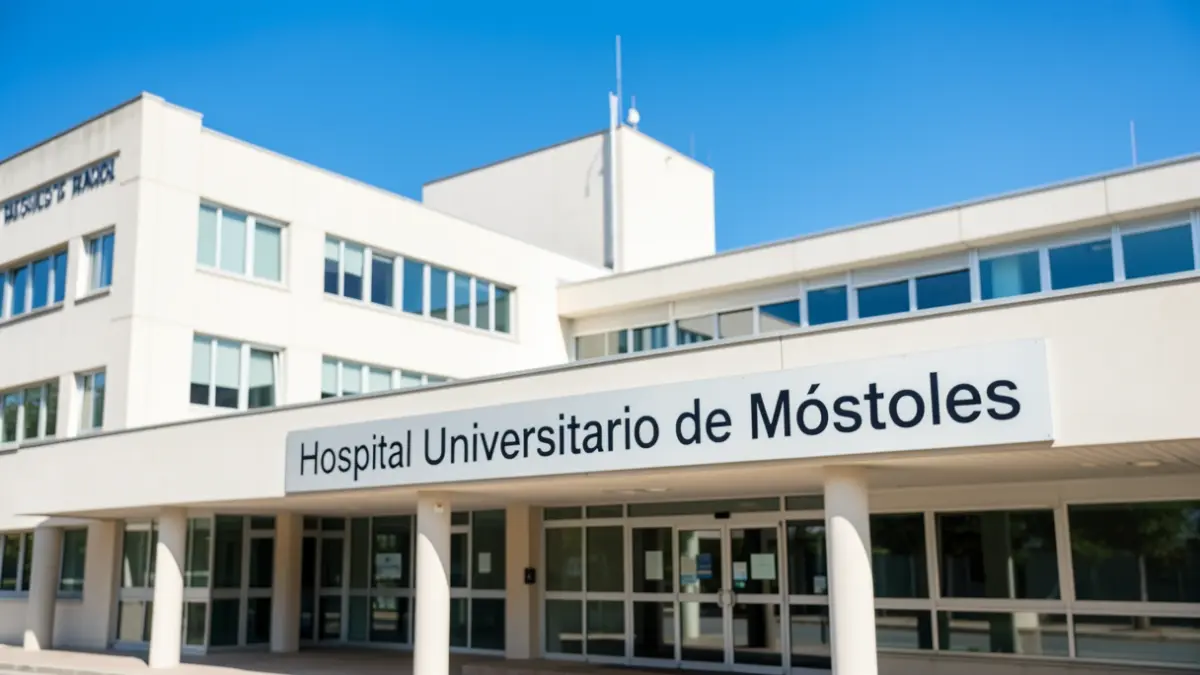
The Móstoles University Hospital, a public center within the healthcare network of the Community of Madrid, has achieved SEMI Excellent certification for its Venous Thromboembolic Disease Unit (ETEV). This recognition from the Spanish Society of Internal Medicine validates the care quality, multidisciplinary coordination, and specialization of the professionals involved in managing this potentially serious pathology.
This achievement is the result of years of work and the consolidation of a collaborative care model involving the departments of Internal Medicine, Emergency, Hematology, and ICU, with participation from Pediatrics, Cardiology, and Radiodiagnostics. The activation of the PEA Code (Pulmonary Embolism) in necessary cases has been crucial. This success follows other SEMI Excellent accreditations already obtained by other units and by the Internal Medicine Service itself.
“"Thromboembolic disease can affect very different patients and requires the participation of multiple specialties. This accreditation recognizes the coordinated work we have built over years to offer specialized, rapid, and safe care."
Dr. Javier García Álvarez, head of the ETEV consultation, emphasizes the importance of having well-trained professionals in areas such as Emergency, Hematology, Oncology, and ICU to expedite decision-making and improve care for patients with this condition.
A comprehensive protocol has been developed, thoroughly reviewing scenarios related to thrombosis, including deep vein thrombosis and pulmonary embolism. The coordinating working group includes professionals from Emergency, Internal Medicine, Oncology, Hematology, Quality, Radiodiagnostics, Cardiology, Intensive Care Medicine, Pediatrics, Nephrology, and Pharmacy, with administrative support from Mónica Ayala and nursing participation from Esther Lobo.
Thromboembolic disease affects diverse patient profiles, from young women to cancer patients and the elderly. Pharmacological advances and interventional techniques are improving treatment for a condition with increasing incidence, partly due to increased life expectancy.
The PEA Code (Pulmonary Embolism) allows for rapid identification of patients with severe pulmonary embolism, activating necessary care and coordinating with the ICU or referring to the San Carlos Clinical Hospital for more complex cases.
Thrombosis and pulmonary embolism pose a clinical challenge due to symptom overlap with other respiratory or cardiological conditions. Improved diagnostic techniques and consensus protocols enable faster and more effective identification and treatment.
In Spain, VTE has an incidence of 154 cases per 100,000 inhabitants annually, with over 80,000 new cases each year, making it the third leading cause of cardiovascular mortality. The hospital's specialized thrombosis clinic, established in 2005, sees between 6 and 8 new patients weekly, in addition to assessing admitted patients.