In an interview with Canal 33 TV, Recuenco emphasized Leganés's evolution since he took office, contrasting the current situation with what he found: "closed theaters, social services without staff, vulnerable people not receiving aid due to a lack of technicians, nursery schools without teachers, and blocked projects."
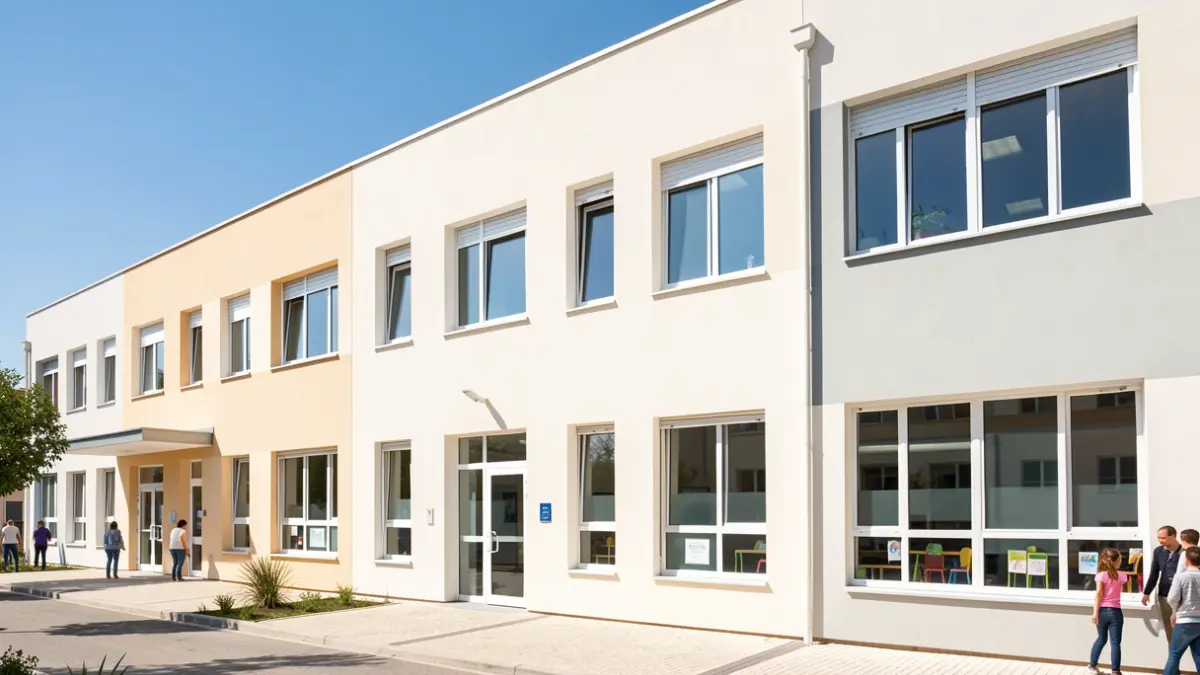
The mayor stated that his team has since completed staffing for the Treatment Center for Addictions, provided teachers for nursery schools and the Music School-Conservatory, and promoted infrastructure projects including two civic centers, one finished and another set to begin construction this year.
In sports, Recuenco highlighted the Leganés Norte and Solagua sports complexes. The latter's project is already tendered, awarded, financed, and scheduled to begin before the end of 2026, which he stressed will be "a benchmark in the southern area" and will include hospitality services.
Regarding municipal politics and the confidence vote linked to the budget, Recuenco criticized the opposition (PSOE, Más Madrid, Podemos, and Vox), accusing them of "uniting to block" the accounts. He explained that the local government, ruling in minority, attempted negotiations unsuccessfully, as some groups "don't even show up" and others "do nothing."
The mayor defended the necessity of presenting a budget, drawing a parallel with the Spanish Government, and recalled that the Local Treasury Law allows linking his position to a confidence vote, which could lead to budget approval if the opposition fails to present an alternative.
Addressing opposition criticism about lack of transparency and technical doubts, Recuenco dismissed them as "excuses," asserting that favorable economic planning, intervention, and legal reports allowed the budget to be presented to the Municipal Plenary.
In housing matters, the City Council is pursuing three lines of action: completing 350 homes through the public company, promoting 650 rental units via a tender on designated land under the Community of Madrid's law, and the medium/long-term project Puerta de Madrid.
Regarding the Puerta de Madrid project, Recuenco detailed the revival of the Leganés Norte consortium with the Community of Madrid (60% regional, 40% municipal participation) for protected housing, cautioning that timelines are long, estimated at six to eight years.
The mayor highlighted the need for infrastructure for Leganés's elderly population (around 35%), such as the planned residence and day center within the Community's 40/40 plan, emphasizing the local government's swiftness in land cession (one month for the residence, one and a half for the institute).
Recuenco contrasted this agility with the previous municipal government, which he accuses of "using the institution to criticize the regional government," arguing that the key is ceding land for the Community of Madrid to invest.
For Recuenco, the city's main concerns are cleanliness, security, and sports. On cleanliness, he acknowledges "there's always room for improvement" but defends progress made thanks to the confidence vote, while stressing the need for "citizen awareness" with the motto "The cleanest is not the one who cleans the most, but the one who dirties the least."
In security, he stated that Leganés is ten points below the regional average in crime rates, considering it a safe city, though "we must never let our guard down." He mentioned controls around La Cubierta with the National and Local Police, detecting mainly civil infractions and some substance possession.
In sports, he noted that over 60,000 people use municipal facilities and defended the commitment to two sports complexes, alongside investments in gymnastics, swimming, and paddle tennis courts included in the budgets. He stressed the importance of maintaining existing facilities.
Finally, the mayor invited visitors to discover Leganés, which will celebrate its 400th anniversary as a town in 2026, highlighting its sculpture museum, "Europe's largest" automaton clock, and over 6.5 million square meters of urban green spaces.