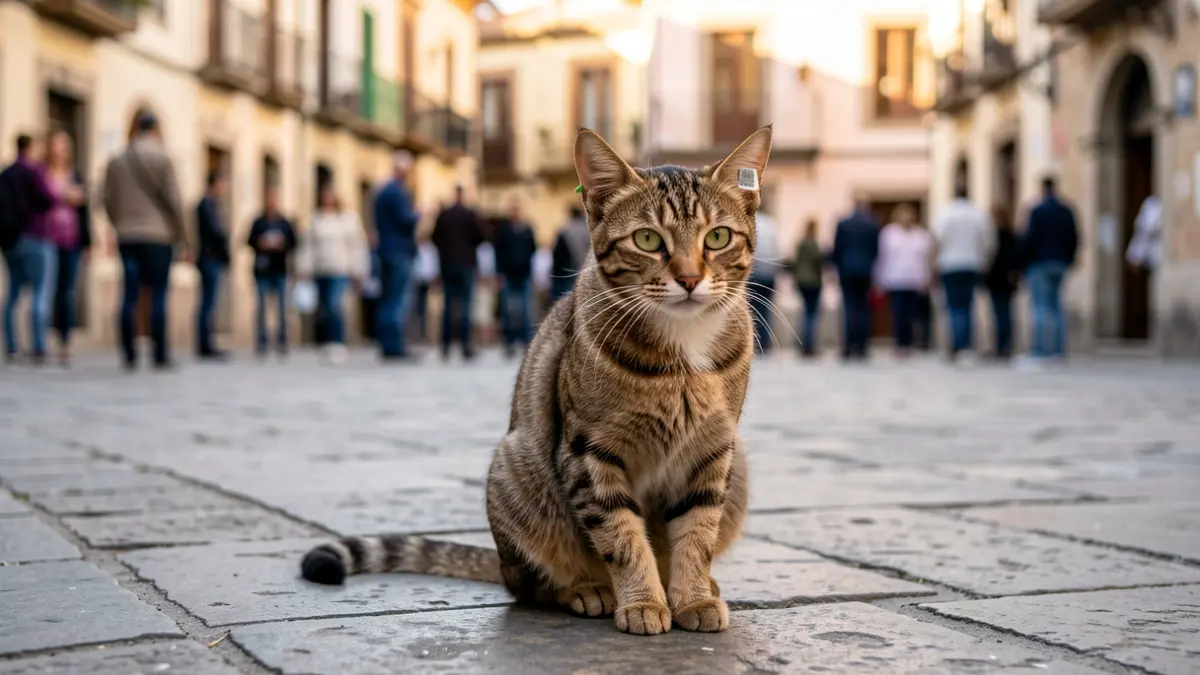
The Council reports that this goal is achieved within its TNR (trap, neuter, return) program for feline colonies. Data is recorded in a computer application that allows for geolocating colonies, identifying the number of members, their sex, sterilization status, and other characteristics.
Currently, the application has registered 1,435 cats distributed across 160 colonies. The management of these animals is carried out by over 70 volunteers who collaborate in their care, feeding, and sterilization. The City Council emphasizes the volunteers' work as crucial for the program's success, which began before it was a legal obligation.
The Department of Environment has initiated a tender process to accelerate the TNR program. More than a third of the registered cats have already been identified with microchips. Additionally, food is distributed to help offset the expenses borne by volunteers.
The main objective of the program is to ensure animal welfare, recognizing that the street is not the ideal environment for cats. The process of removing them from the streets is planned to be gradual and respectful, aiming to prevent reproduction and ensure the best possible conditions for the animals already living in these circumstances. In the medium term, the goal is for all cats in the municipality to live in homes.
“"A city of the future is one where the coexistence of different species is respected, and the welfare of all of them is protected."
The Councilor for the Environment, Jesús Pérez, expressed pride in the work accomplished, a result of collaboration between the City Council, the contracting entity, local organizations, and all the volunteers. He highlighted the importance of coexistence and protection of all species for a city of the future.