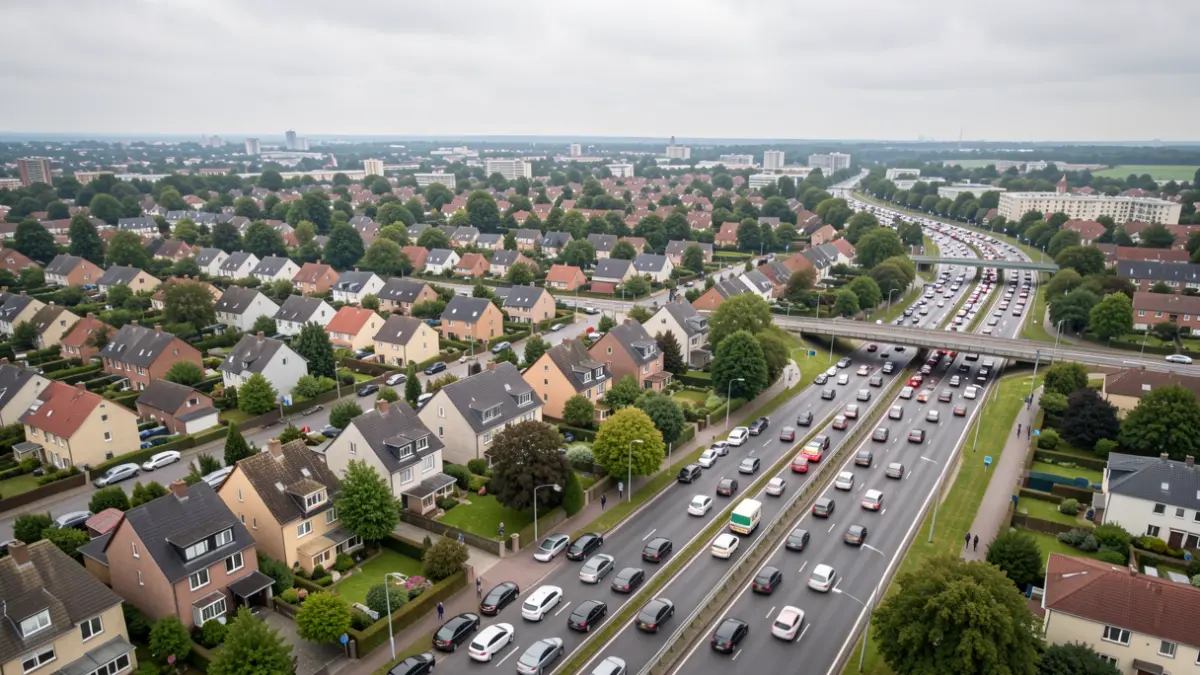
The over 2,100 residents of the Parque Miraflores development, located between Fuenlabrada and Móstoles, have for years denounced their isolation and mobility issues stemming from congestion on the M-506 highway. Traffic diverted onto this road when it becomes blocked saturates the internal streets of the residential enclave.
In response, the municipal council of Fuenlabrada has debated motions presented by the PP and PSOE. Socialist councilor Rubén Jubil announced the development of a mobility study to evaluate potential 'restricted traffic access' solutions for the neighborhood. The aim is to limit entry for external drivers using the urbanisation's streets to avoid M-506 traffic jams, while simultaneously facilitating resident entry and exit.
Furthermore, improvements to the public transport provided by EMTF to the neighborhood have been approved, and restricted access solutions will be studied. The spokesperson for Más Madrid, Beatriz del Pozo, criticized the lack of solutions from the administrations, recalling the 4,000 signatures collected by residents and a 2022 project for a pedestrian bridge over the M-506 that has yet to be completed.
From Vox, councilor Carlos Martínez stated that the problems have persisted for 'years' and that residents are only remembered during election years, demanding a timeline for improvements. PP councilor Mariángeles Camacho reproached the council for the lack of amendments and advocated for maintaining the access islet to the development.
Municipal sources indicated that the measures will include a pedestrian access over the M-506 connecting Parque Miraflores with Móstoles. The Community of Madrid is also urged to take urgent action to reduce congestion on the M-506 and its access points. Additionally, a direct access from the service road to the central carriageway opposite Metalúrgicos street is proposed.
The motion also incorporates the residents' demand to improve interurban transport between Parque Miraflores and Aluche, which will be forwarded to the Community of Madrid and the Transport Consortium. Built in the 1970s, the neighborhood suffers from isolation exacerbated by the construction of the R-5, the M-50, and the widening of the M-506.