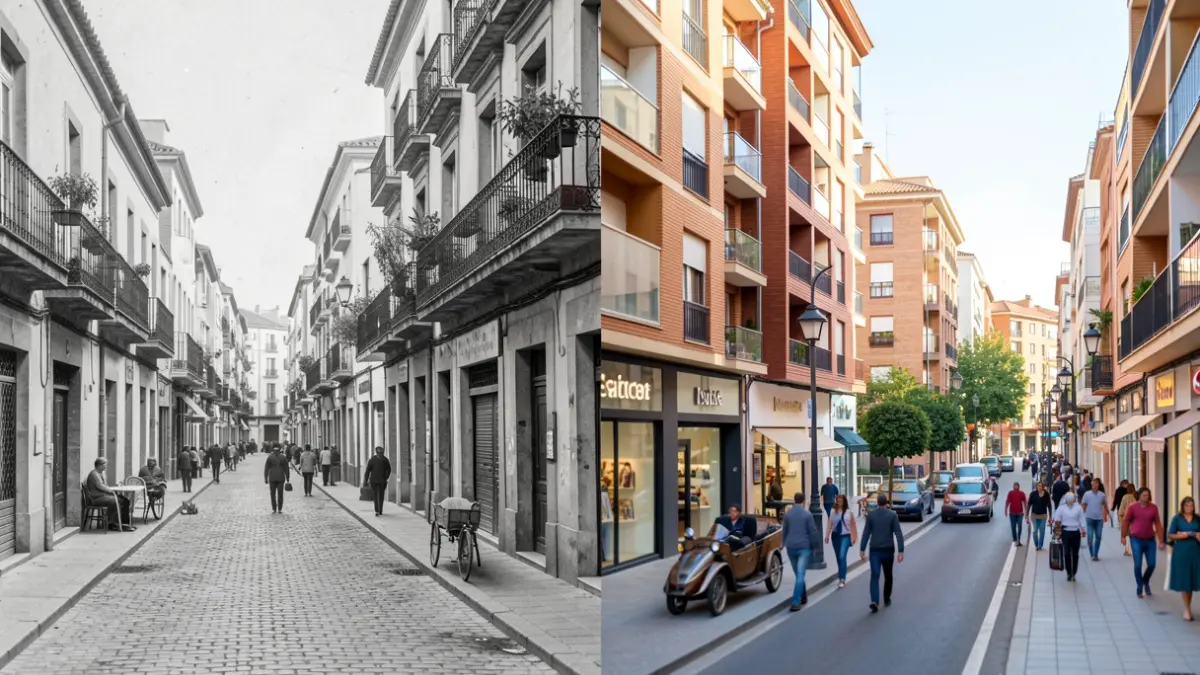
The Universidad Carlos III de Madrid (UC3M), with the support of the Leganés City Council and the Spanish Foundation for Science and Technology (FECYT), has concluded a research project exploring the collective memory of the municipality. The study, which combines surveys of secondary school students, expert interviews, and historical documentation analysis, details how Leganés has transitioned from a predominantly agricultural and neighborhood environment to a city marked by large commercial centers and real estate developments.
The results of the project, titled ‘The Recovery of Leganés' Collective Memory through Citizen Science’, reveal a notable decrease in spaces dedicated to youth leisure and local commerce. These places, which defined the identity of Leganés in the past, have been progressively replaced by supermarkets and new housing developments in recent decades.
The report emphasizes the importance of citizen participation and oral history. According to the authors, a city's history resides not only in official archives but fundamentally in the experiences of its inhabitants. The project has involved different generations, especially those who lived in the municipality from the 1940s onwards, to build a more complete and honest portrait of the city.
“"A city's memory does not live only in archives; it lives in people. This project focuses on the testimonies of those who have inhabited Leganés, giving their accounts their own entity as they are sources of knowledge as legitimate as any historical document."
The study's methodology was based on citizen science, with 152 surveys conducted by secondary school students from IES Siglo XXI. This fieldwork, along with in-depth interviews with local experts and the documentary heritage of the Leganés Historical Archive, allowed for data triangulation to obtain rigorous conclusions.
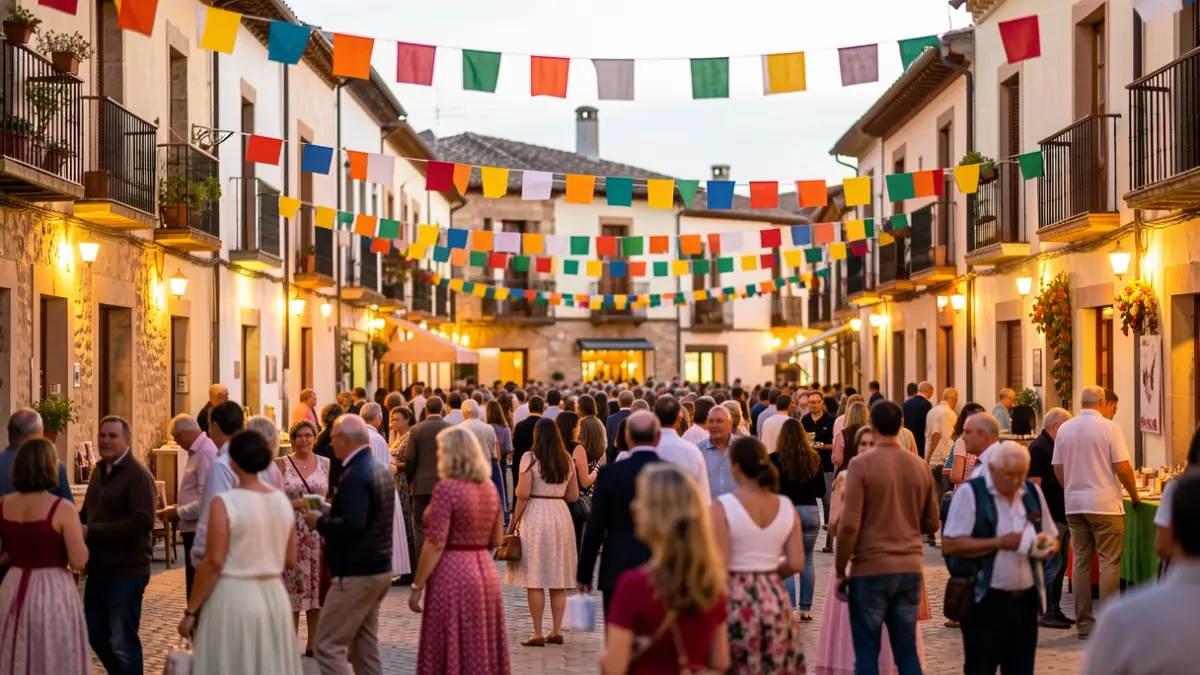
The report compares past and present neighborhood meeting points, highlighting a social shift. While in the past, outdoor spaces like Plaza de España or Parque de Polvoranca were prioritized, today the Parquesur shopping center is the most visited point. Sports facilities have also gained relevance.
The disappearance of emblematic places is documented, such as neighborhood cinemas (Avenida, Ideal, Capitol, Florida, Durán), which were cultural and leisure centers from the 60s to the 90s, replaced by housing and supermarkets. Youth nightlife venues from the 80s and 90s, like Doña Carlota or Universal Sur, have given way to betting shops or residential buildings. Recreational areas like the Solagua Pools are also remembered as extinct.
Out of 24 past spaces dedicated to neighborhood and children's leisure, only 5 remain, with most having been converted. The study also points to the replacement of traditional local shops (butcheries, confectioneries) by large supermarket chains.
The UC3M project not only values Leganés' oral memory as historical heritage that needs protection but also offers a scientific radiography useful for reflecting on urban planning models, the privatization of public spaces, and the preservation of the cultural identity of Madrid's southern commuter towns. As part of the project's outcomes, a photographic exhibition has been generated at the UC3M Getafe Campus until June 12th.