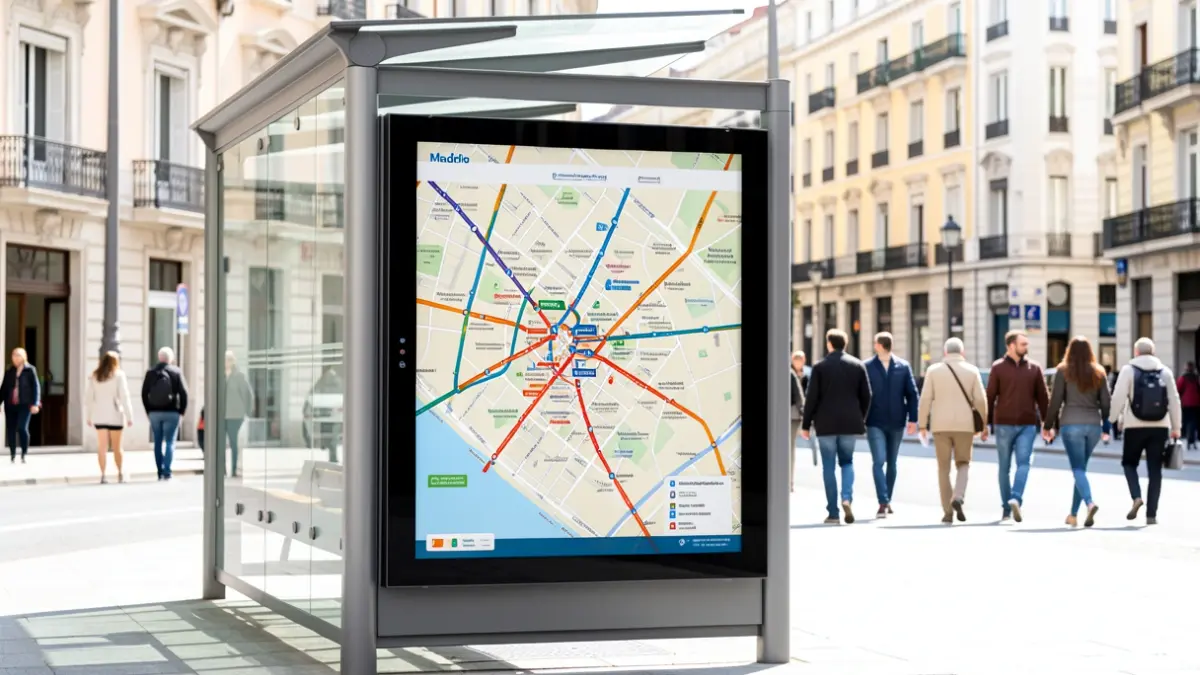
Bus passengers in Alcorcón will soon benefit from a new tool for accessing public transport information. The Community of Madrid is deploying touchscreen displays with interactive maps at bus shelters managed by the Regional Transport Consortium of Madrid (CRTM), as part of a broader initiative to digitize and improve these spaces.
Alcorcón is among the ten municipalities in the region included in the first phase of this project. Initial installations will also take place in Boadilla del Monte, Colmenar Viejo, Getafe, Majadahonda, Móstoles, Rivas-Vaciamadrid, San Sebastián de los Reyes, and Torrejón de Ardoz, while Alcobendas already has one operational screen.
These new screens will allow users to consult interactive maps, locate stops, and access updated public transport network plans. The primary goal is to facilitate travel by enabling passengers to obtain information directly from the shelters themselves.
The installation of these screens aligns with the Community of Madrid's strategy to integrate technology into urban furniture and enhance the public transport user experience. This initiative complements other measures already being deployed, such as dynamic information panels showing real-time bus waiting times, currently present at 555 stops across 133 municipalities. Additionally, Wi-Fi connection points have been installed at various shelters, with 19 new locations added in 2025, bringing the total to 29 Wi-Fi-enabled shelters across 13 municipalities.
The modernization project for bus shelters extends beyond screen installation, incorporating features to improve traveler comfort and accessibility. New designs adhere to universal accessibility criteria and include functionalities designed to assist users with reduced mobility.
Furthermore, the Community of Madrid plans to integrate solar-powered lighting and digital information panels (mupis). The CRTM has also developed other technological initiatives to enhance accessibility, including the use of NaviLens, a system based on high-visibility codes detectable by mobile devices, which aids visually impaired individuals in accessing transport information. During 2025, 393 new shelters and 551 signage posts were installed as part of the regional public transport furniture renovation process.