Despite advancements in public transport in large cities, in the mountainous areas of the Sierra de Madrid, private vehicles are a necessity. Significant distances, complex topography, and limited public transport options often make mobility without a car a challenging task for inhabitants.
For residents of the Sierra, the automobile is not just a convenience but a vital tool. It provides the flexibility needed for commuting to work, taking children to school, or performing daily activities, which other transport methods cannot offer in this environment.
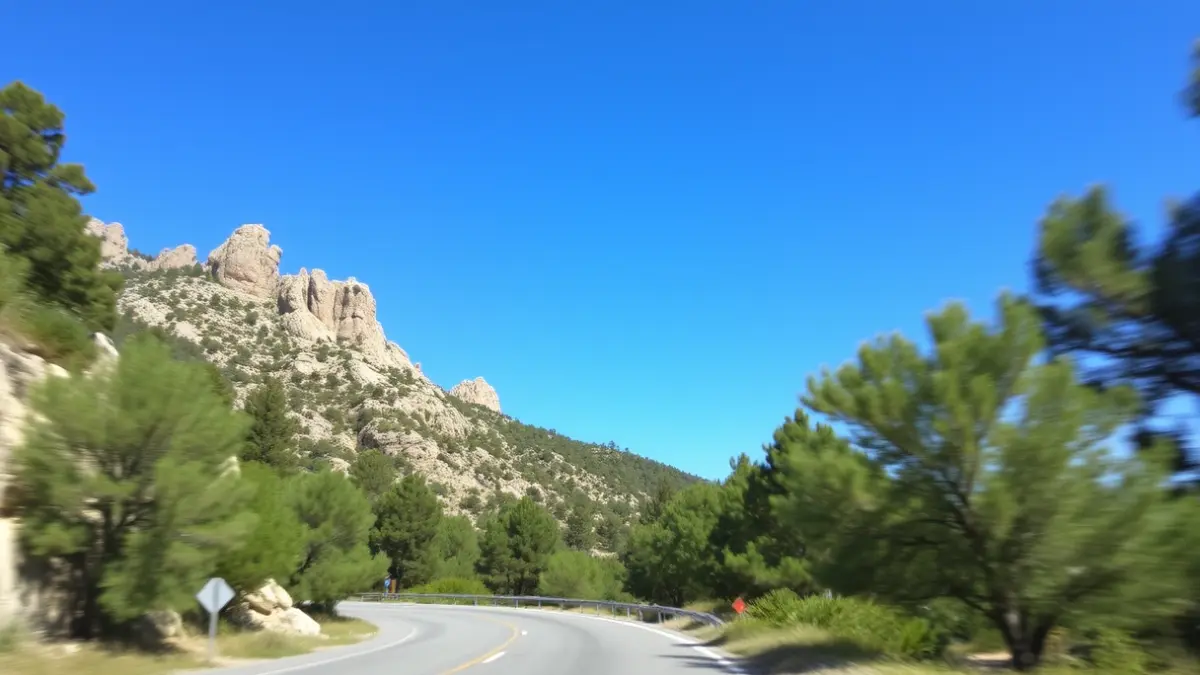
The geography of the Sierra de Madrid imposes specific conditions for driving. Roads are characterized by steep inclines, sharp turns, and constant altitude changes, which not only affect the driving experience but also vehicle wear and tear. Furthermore, weather conditions, such as snow or ice in winter and heat in summer, can further complicate circulation.
Studies on mobility in rural areas indicate that over 70% of daily commutes in mountainous regions of Spain are made by car, highlighting the strong reliance on private transport in these areas.
Driving in the Sierra demands more from a vehicle, especially on long or repetitive journeys. Mechanical components operate under higher stress, which can accelerate their deterioration. Factors such as continuous inclines requiring more engine effort, prolonged descents increasing brake usage, frequent curves affecting stability, and temperature changes influencing system performance, make maintenance crucial.
The braking system is of vital importance in mountain areas. Prolonged descents necessitate more frequent brake use, which can lead to overheating and accelerated wear of their components. Therefore, regular brake inspection is not merely a recommendation but an imperative for safety on these roads.
“"The brake system warning light illuminates when there is a problem with this system. This light can indicate various issues related to the braking system, such as a lack of fluid; there is no specific brake fluid warning light, so in this case, the brake system failure light will illuminate. Ignoring this signal can result in brake failure, making it essential to act immediately to ensure your safety on the road."
If the brake warning light illuminates, it is crucial to remain calm, gradually reduce speed, and stop the vehicle in a safe location to check its condition. Ignoring these warnings can have serious consequences, especially in demanding environments like mountain roads.
Preventive vehicle maintenance in mountainous areas not only extends its lifespan but also enhances safety. Checking brakes, tires, fluid levels, and the general functioning of the mechanical system allows for timely detection of anomalies and prevention of risky situations. A vehicle in optimal condition responds better to environmental demands, leading to safer and more efficient driving.
Although the car remains essential in the Sierra de Madrid, there is a gradual search for sustainable alternatives. However, geographical realities limit these options. The future challenge will be to balance the need for mobility with sustainability, without compromising the accessibility of rural and mountainous areas.