The political party argues that the project proposed by the Popular Party, led by José María Moreno, is a mere "patch" that will not address the structural problems of the road. Instead, they demand the reinstatement of the original 2022 project, which offered a comprehensive and lasting solution.
Laying half the necessary asphalt is throwing away residents' money. It's an aesthetic solution to make the road shine before the elections, but it will break down shortly because it lacks the required legal and technical thickness.
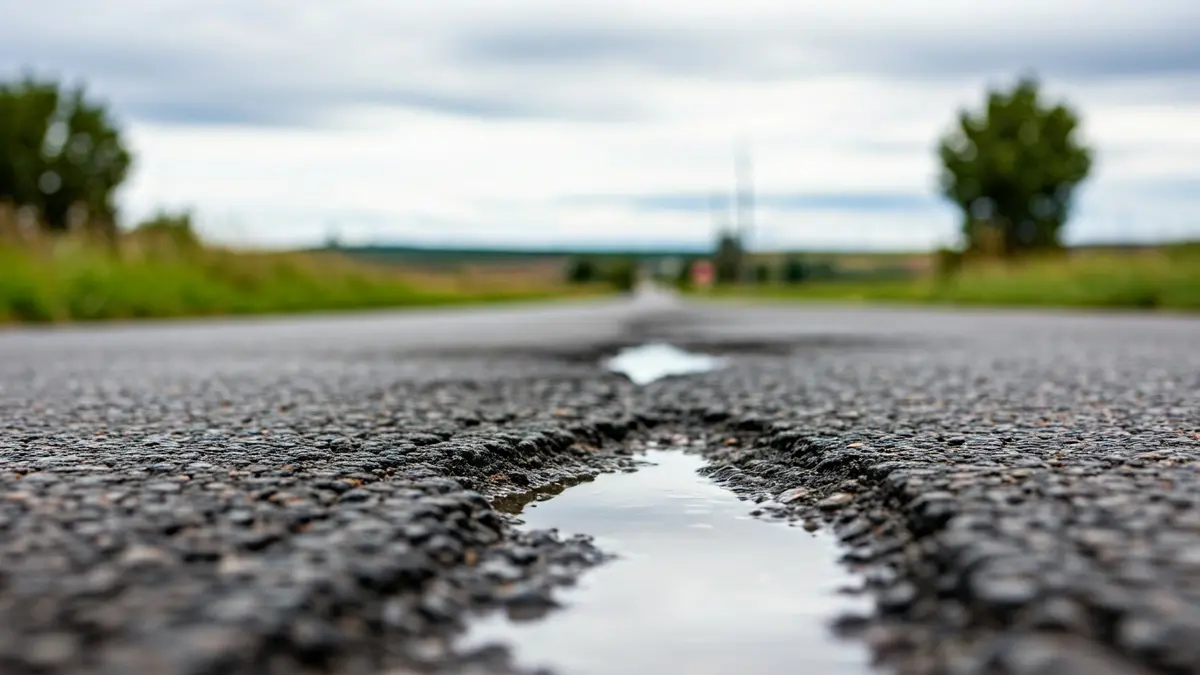
According to the technical annex presented by Vecinos por Moralzarzal, the current plan only includes a 5-centimeter asphalt layer. This measure contrasts with state regulations (Orden FOM/3459/2003), which require a thickness of between 10 and 12 centimeters for roads with heavy traffic (category T2), such as the M-615, to ensure its durability.
The municipal group's complaint is supported by a report from the Municipal Architect from July 2023. This document explicitly warned that any action not including the repair of sanitation and drainage would again cause "widespread cracks and soft spots" due to subsoil moisture. The current project ignores these warnings, limiting itself to a superficial milling, unlike the 2022 comprehensive plan, valued at 1.1 million euros, which did provide a definitive solution to recurrent floods and sinkholes.
In addition to the pavement deficiencies, the motion highlights other serious flaws in the PP's proposal. The project does not include bike lanes or accessibility improvements, despite being a crucial route for access to the Leonardo da Vinci school and the Capellanía Industrial Park. The lighting is also questioned, with 5-meter solar streetlights compared to the 9-meter luminaires in adjacent sections, raising concerns about nighttime road safety. Finally, the lack of consideration for ecological impact is criticized, as the road crosses a protected biological corridor between Matarrubia and Dehesa Vieja, without proposing lighting solutions that protect local biodiversity.