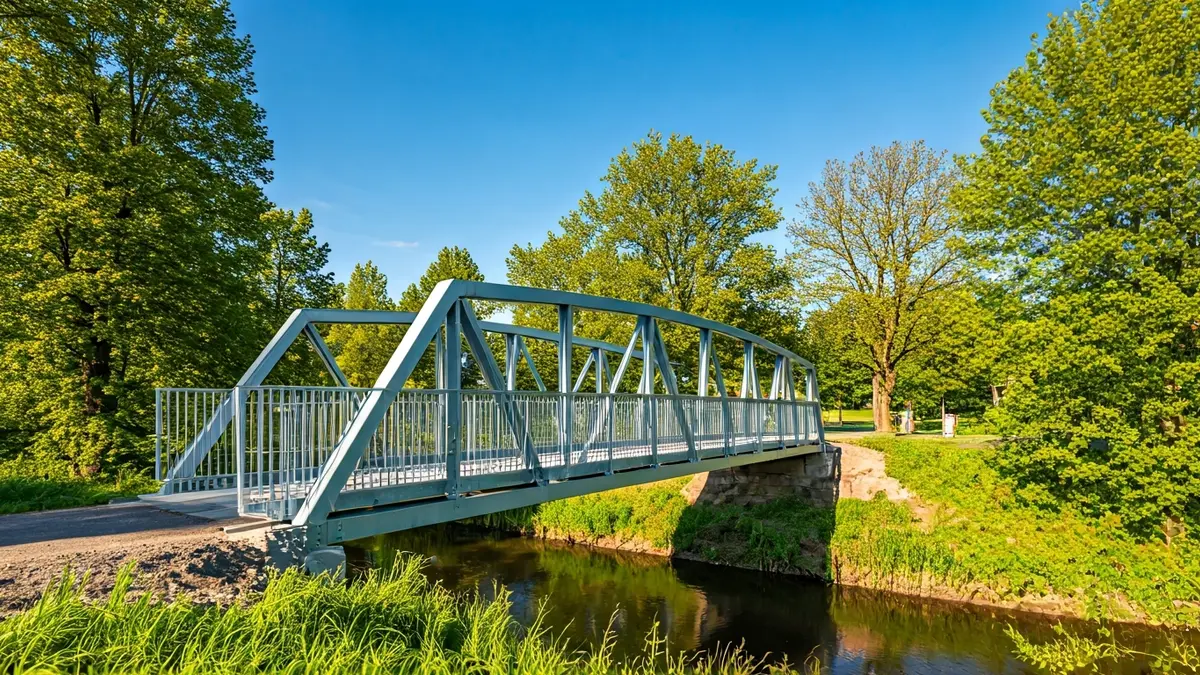
This infrastructure replaces a previous concrete structure and is part of a broader project aimed at transforming the area into a small river beach at the confluence of the Guadarrama River and the La Poveda stream. Mayor Mariola Vargas and Environment Councilor Adan Martínez attended the walkway's placement, emphasizing its role in municipal cohesion.
“"The river was one of the divides separating Collado Villalba, and we want to unite it, creating space, with paths, benches, viewpoints, or walkways like this one, to enjoy with family, walking, exercising, or simply enjoying nature."
The re-naturalization project is supported by a grant of over 2.3 million euros from European funds, covering 83% of the total cost. The Collado Villalba City Council will contribute the remaining 489,000 euros. Additionally, the municipality will invest an unforeseen 760,000 euros in a new sanitation water channeling project to prevent discharges into the La Poveda stream and the Guadarrama River.
“"This initiative means, for the residents of Collado Villalba, returning the river environment to its natural state, which is how it always should have been."
The re-naturalization works, carried out by ACCIONA, are in their final stage and are expected to be completed by early summer. The tasks include riverbed cleaning, access conditioning, demolition of obsolete structures, planting native vegetation, and applying bioengineering techniques. The goal is to enhance biodiversity, improve environmental sustainability, and reduce flood risk in the area.