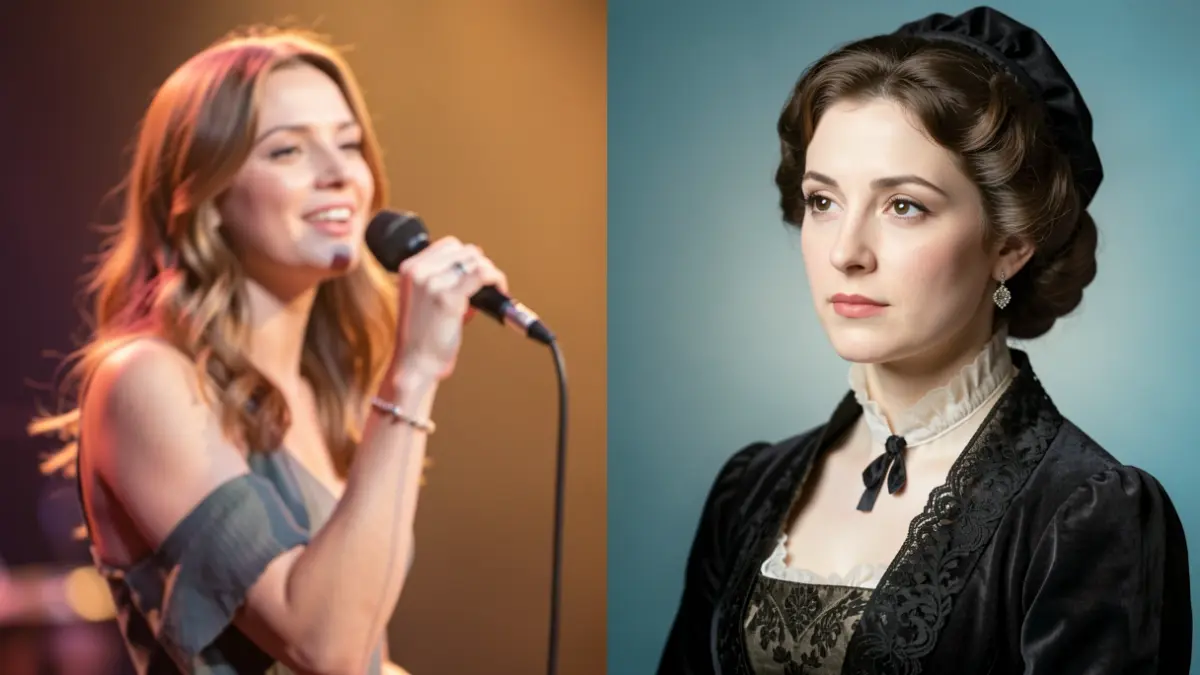
From Majadahonda, a reflection is presented on two female figures who share a name but represent different universes: the singer Rosalía Vila Tobella, known for her current success, and the poet Rosalía de Castro, a key figure in Galician and Spanish literature. While acknowledging the contemporary artist's vocal range and presence, the author focuses on the work and legacy of the 19th-century writer.
A parallel is drawn between Rosalía de Castro and Emily Dickinson, suggesting that had the Galician poet been born in a different geographical context or written in another language, she would have achieved a universal recognition similar to the American poet. Both share a sense of solitude, though expressed in different ways: more internalized in Dickinson and more costumbrista in Rosalía de Castro.
Rosalía de Castro's influence extends to later poets like Rubén Darío, whose poem "Lo fatal" might have found inspiration in works such as "Follas novas". Rosalía de Castro's poetry, in both Galician and Spanish, as seen in "En las orillas del Sar", is described as possessing profound reflective depth, deserving of wider readership.
Majadahonda honors the Galician poet with a street and a school bearing her name, placing her alongside other literary figures such as Bousoño, Saramago, and Lorca. The text highlights the importance of reading and disseminating Rosalía de Castro's work, especially in a context where many women had to resort to pseudonyms to gain recognition.
On the occasion of the Día das Letras Galegas (Galician Literature Day), which commemorates the publication of "Cantares gallegos", the figure of Rosalía de Castro is remembered as a literary treasure "so ours, so belonging to all of us. Forever, Like her Poetry. Eternal."