The PequeZine Natural cycle, aiming to raise awareness about the protection and conservation of the planet's biodiversity, returns to the Royal Botanical Garden (RJB-CSIC) in Madrid. This scientific outreach initiative by the Spanish National Research Council (CSIC) will commence on October 13th and run until June 2027, featuring nine free sessions supported by the Spanish Foundation for Science and Technology (FECYT) and the Ministry of Science, Innovation and Universities (MICIU).
This second edition introduces significant novelties, including the expansion of outreach to students and teachers from Compulsory Secondary Education (ESO) and Baccalaureate. Four of the nine sessions will target this audience, with one also aimed at upper primary school students. Furthermore, a white paper will be compiled, gathering proposals from participants on biodiversity conservation initiatives.
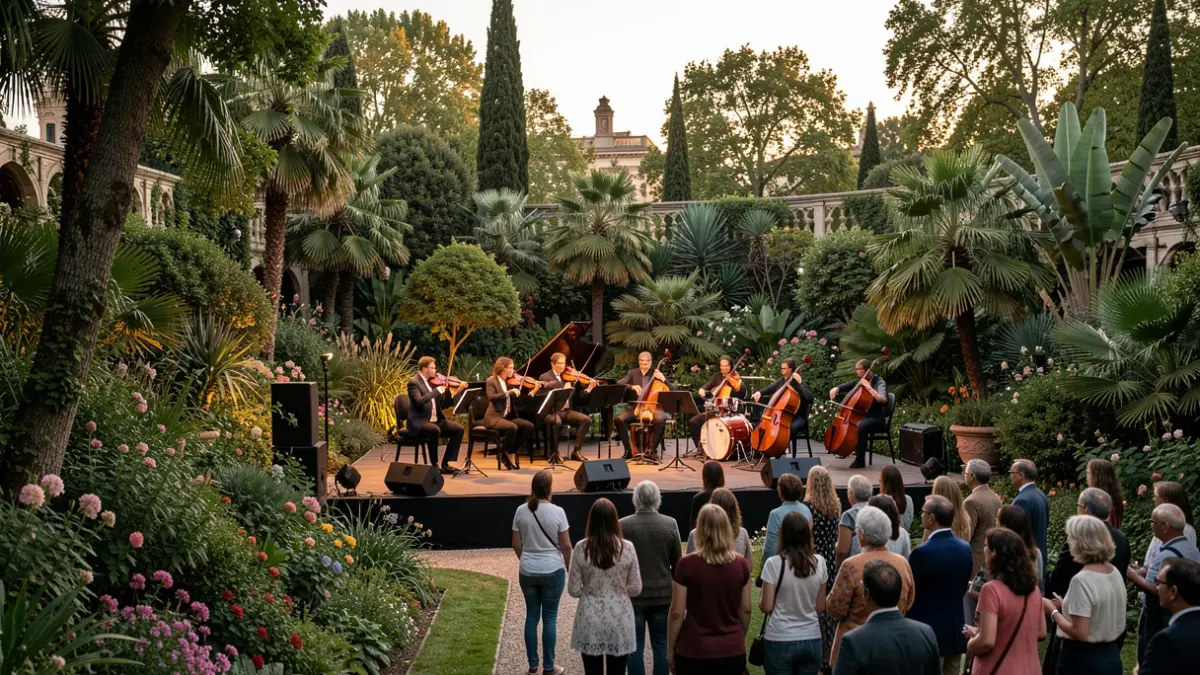
To conclude the cycle in June, an open-air music concert will be held in the Garden. A chamber group will perform soundtracks related to the natural environment. The project maintains its inclusive spirit, with dedicated sessions for individuals with Autism Spectrum Disorder (ASD), as part of the ‘Accessible Garden’ initiative.
Jesús García Rodrigo, the project's coordinator, highlights that the Sustainable Development Goals (SDGs) reflected in the films will continue to be applied to foster social awareness and collective action. A Didactic Guide with educational worksheets for Primary, Secondary, and Baccalaureate students will also be published.
The program begins on Tuesday, October 13th, with a silent film session accompanied by live piano music performed by pianist and composer Sonia Megías, screening Das Blumenwunder (The Miracle of Flowers) in its 100th anniversary year. On November 5th, Strange World will be shown for upper primary and first-year secondary students. On December 15th, silent films by Segundo de Chomón with live music are scheduled for students in years 1 to 4 of ESO.
The Spanish animated film Bikes, by Manuel J. García Pozo, will be screened on January 16th, 2027, marking the first session for ASD audiences. On February 11th, 2027, El enigma Agustina, by Manuel González and Emilio J. García, will be presented. On March 14th, 2027, Open Season (Colegas en el bosque), by Jill Culton and Roger Allers, will be the second session for individuals with ASD. On April 22nd, 2027, The Olive Tree (El olivo), directed by Icíar Bollain, is recommended for ESO and Baccalaureate students.
The eighth session, the third for ASD audiences, will take place on May 23rd, 2027, with Minuscule: Valley of the Lost Ants (Minúsculos. El valle de las hormigas perdidas), by Thomas Szabo and Hélène Giraud. Screenings conclude on June 5th, 2027, with Hoppers, by Daniel Chong, aimed at children and families. The concert by Ensemble Camerístico ‘Brindis de Salas’ will mark the final event on June 13th, 2027.
Most of the films programmed relate to key dates such as the World Day for Nature Protection, World Environmental Education Day, International Day of Women and Girls in Science, International Day of Forests, Earth Day, and World Environment Day.