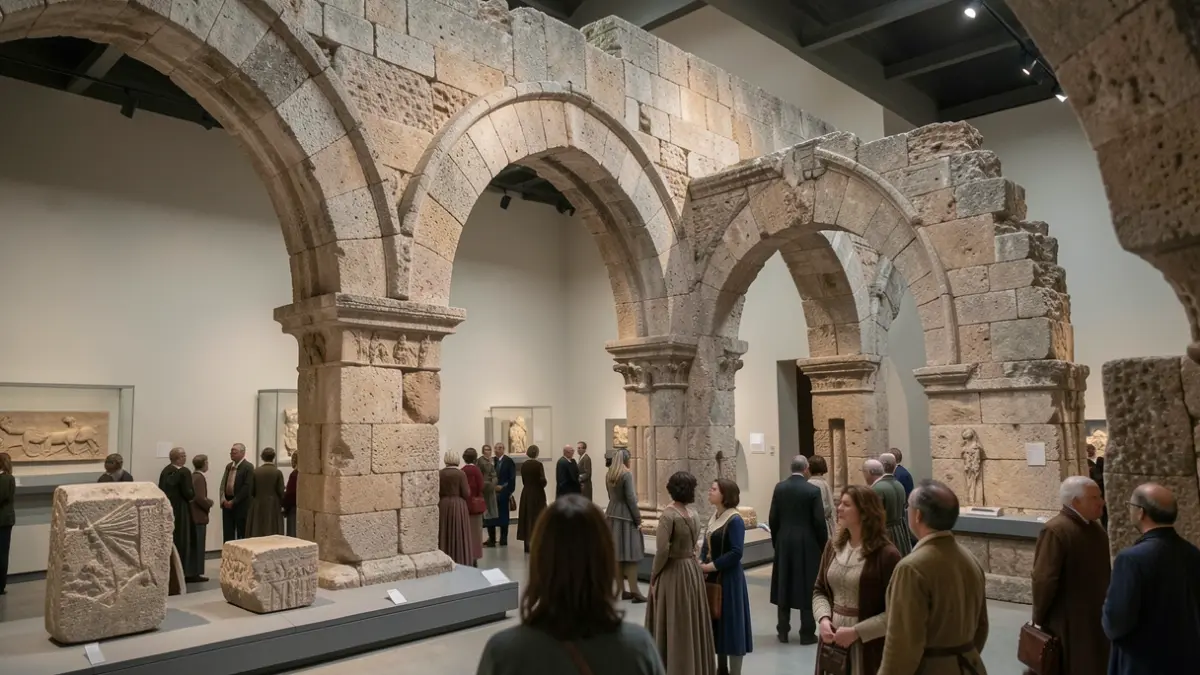
The exhibition offers a new perspective on the populations that inhabited the region after the fall of the Roman Empire, allowing visitors to learn about daily life during the Early Middle Ages. It details the homes, customs, and activities of peasants, artisans, and herders who lived in villages and small rural settlements.
Visitors can learn about the relationship these communities had with their environment and with important centers of the time such as Toledo, the capital of the Visigothic kingdom, and Recópolis (Zorita de los Canes, Guadalajara).
Among the highlighted pieces are funerary trousseaus from regional necropolises, providing information on burial practices and traditions. The collection includes goldsmith work, personal adornment objects, and agricultural and livestock tools. Ceramic sets also illustrate domestic habits.
The exhibition features recently restored materials and new findings presented to the public for the first time, from various sites in the Community of Madrid, including the necropolises of Estevillas-Virgen de la Torre (Madrid), Loranca (Fuenlabrada), and Acedinos (Getafe).
One of the main attractions is a life-size recreation of the ruins of a Visigothic church with its characteristic horseshoe arches. The visit is complemented by audiovisual resources and museographic elements to contextualize the era.
The exhibition benefits from the collaboration of institutions such as the National Archaeological Museum and museums in Toledo and Guadalajara.
Admission is free until full capacity is reached. More information on the museum's website: marpa.madrid.