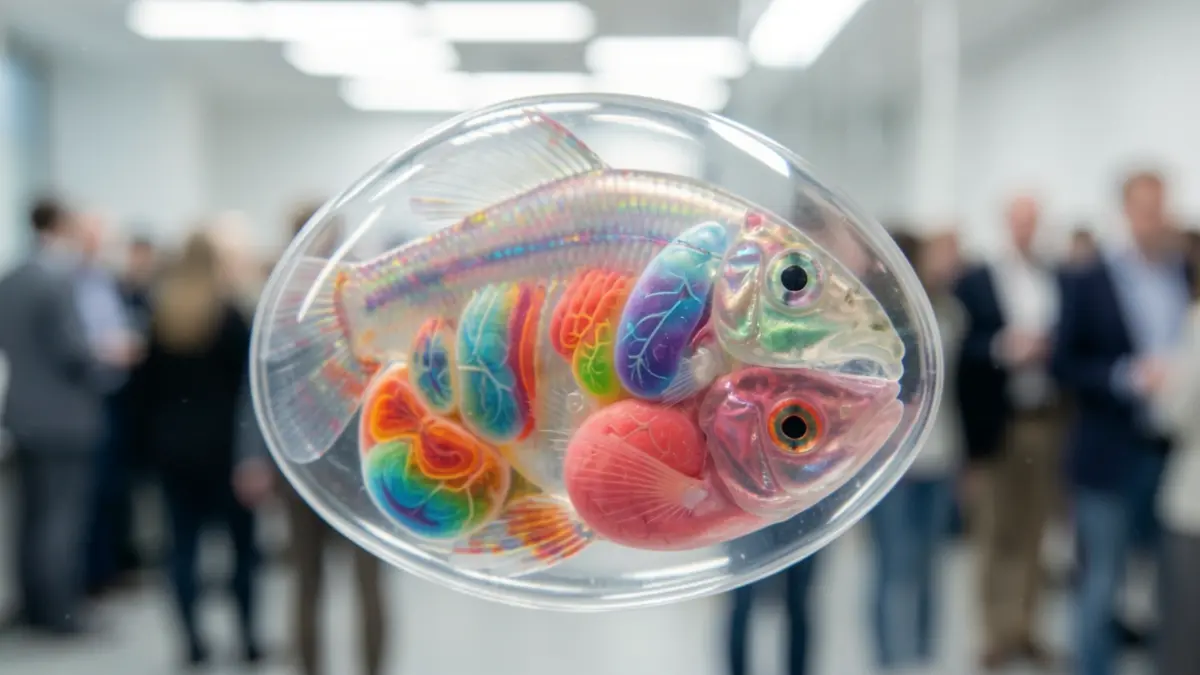
The Central Support Unit (UCA) of IRYCIS, led by Dr. Federico Soria Gálvez, has completed the acquisition and installation of this new infrastructure, funded by the Fortalece-Salud IIS Program of the Carlos III Health Institute (ISCIII). This state-of-the-art equipment expands the institute's experimental opportunities and promotes more competitive and innovative research.
Zebrafish are presented as a strategic alternative to the murine model for studying diseases and preclinical evaluation of new treatments. This animal model allows observation of disease progression closely resembling that in patients, something that currently available mouse models do not always successfully replicate.
The advantages of zebrafish in biomedical research include their rapid embryonic development, transparency in early life stages enabling high-resolution studies, high reproductive capacity, significant genetic similarity to humans, ease of genetic manipulation, and reduced experimental costs.
These features make it a valuable tool for studying human diseases, identifying therapeutic targets, and preclinical evaluation of innovative treatments across IRYCIS's strategic areas. Its use promotes a more sustainable and ethically responsible model, aligned with the 3Rs Principles (Replacement, Reduction, and Refinement) in animal experimentation.
Dr. Soria Gálvez highlighted that, alongside other alternative models such as organoids and computational models, zebrafish contribute to reducing the use of the murine model. With this addition, IRYCIS reinforces its commitment to scientific excellence and translational innovation, positioning itself as a modern and competitive research environment.
Research groups interested in exploring the possibilities of this new infrastructure are invited to contact the IRYCIS Animal Facility and Experimental Surgery UCA to learn about its applications and collaboration opportunities.