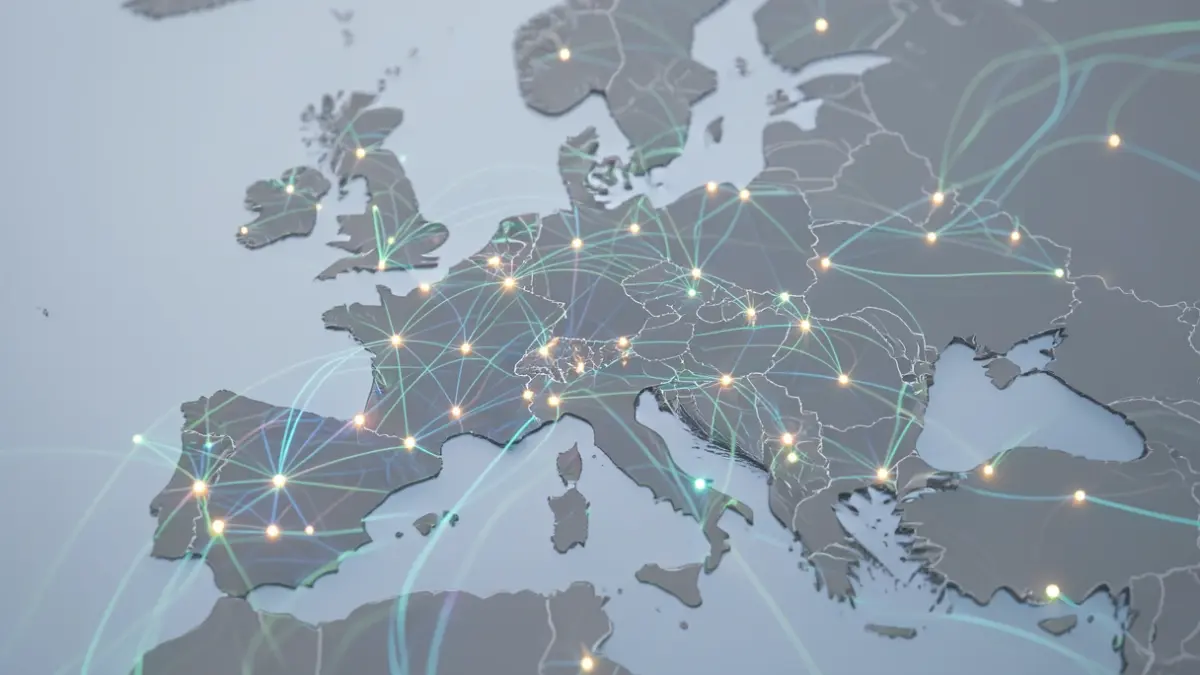
The activity, part of the initiative organized by the madri+d Knowledge Foundation, aimed to familiarize students with key concepts such as nodes, links, network topologies (star, ring, mesh), the importance of redundancy in maintaining communications, and how messages are divided into packets. Issues like data loss, interception, or modification were addressed, along with solutions such as connection repair, encryption, and authenticity verification.
Following the theoretical introduction, students engaged in a strategic role-playing game. Divided into five teams, each representing a European Union country, their goal was to keep Europe connected through a weak initial infrastructure. They had to manage resources, solve connection problems, and defend against cyberattacks, testing their coordination and decision-making skills.
As a final challenge, teams deciphered a secret message using Caesar cipher wheels, an exercise that also introduced the role of cryptography in protecting communications. The challenge highlighted the need for coordination, problem-solving, and collaboration to ensure reliable information transfer across networks.