Twelve non-profit organizations will be responsible for developing this initiative, which has a total budget of 2,880,000 euros. The first screenings will begin next week and will take place in all autonomous communities, as well as in the autonomous cities of Ceuta and Melilla.
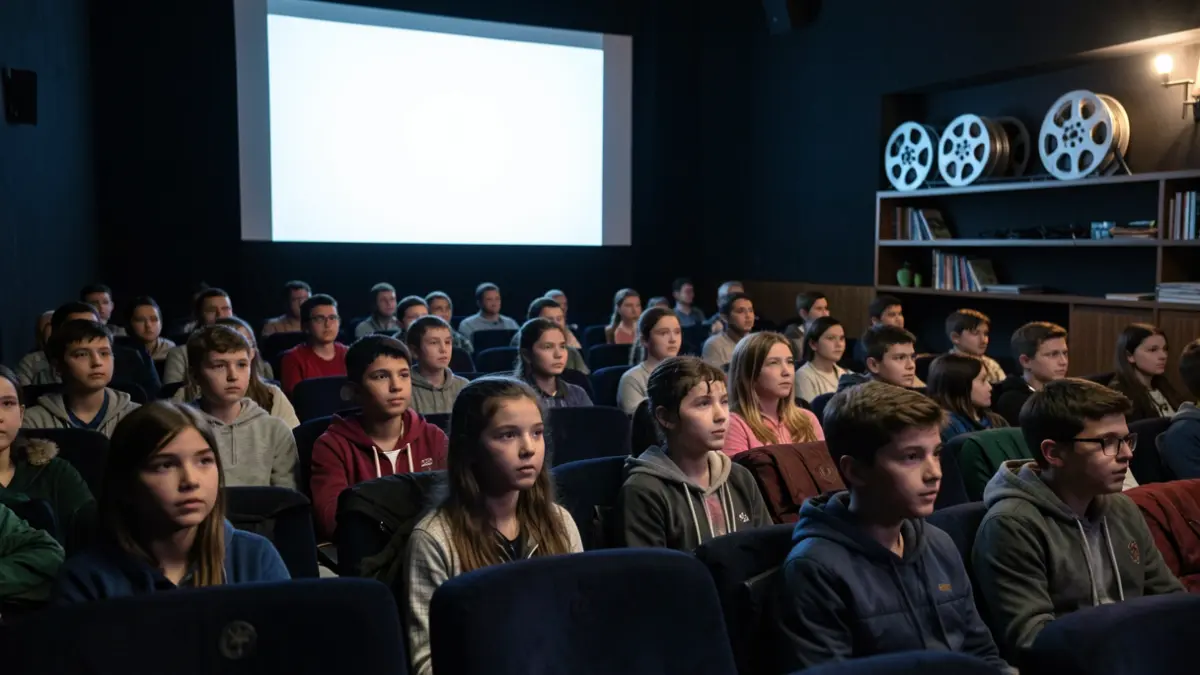
The main objective of ‘Cine Escuela’ is to introduce young people to cinemas, promoting this cultural habit and the understanding of cinematic language from childhood. The program also addresses inclusion and accessibility, bringing culture to sectors of the population who, for social, economic, or geographical reasons, cannot usually enjoy this activity. Additionally, it aims to bring audiences to cinemas during morning hours, which typically see lower attendance.
The beneficiary entities will act as a link between educational centers and cinemas, accompanying students to screenings and providing necessary pedagogical materials. To ensure the viewing becomes a significant educational process, these outings to commercial cinemas will be preceded by an introductory educational session and followed by a reflection session in the classroom.
For the selection of the 15 films, which span different eras and genres of Spanish and European cinema, the Ministry of Culture and the ICAA collaborated with an advisory committee of specialists in education and cinema. Selection criteria included intersectional gender perspective, universal accessibility, visibility of diverse identities, and territorial and cultural plurality.
The selected titles for the 2026-2027 academic year are: ‘20,000 Species of Bees’ (Estibaliz Urresola Solaguren, 2023), ‘Summer 1993’ (Carla Simón, 2017); ‘The Road’ (Ana Mariscal, 1964); ‘The Executioner’ (Luis García Berlanga, 1963); ‘Robot Dreams’ (Pablo Berger, 2023); ‘Libertad’ (Clara Roquet, 2021); ‘Buñuel in the Labyrinth of the Turtles’ (Salvador Simó, 2018); ‘The Butterfly's Tongue’ (José Luis Cuerda, 1999); ‘Maixabel’ (Icíar Bollaín, 2021); ‘El Bola’ (Achero Mañas, 2000); ‘All the Women I Know’ (Xiana do Teixeiro, 2018); ‘Billy Elliot’ (Stephen Daldry, 2000); ‘The 400 Blows’ (François Truffaut, 1959); ‘The Gleaners and I’ (Agnes Varda, 2000); and ‘The Spirit of the Beehive’ (Víctor Erice, 1973).
In previous editions, the pilot program was conducted in Madrid, L’Hospitalet de Llobregat, and Córdoba, and an initial phase in the 2025-2026 academic year reached 1,300 students from 16 centers across five autonomous communities.