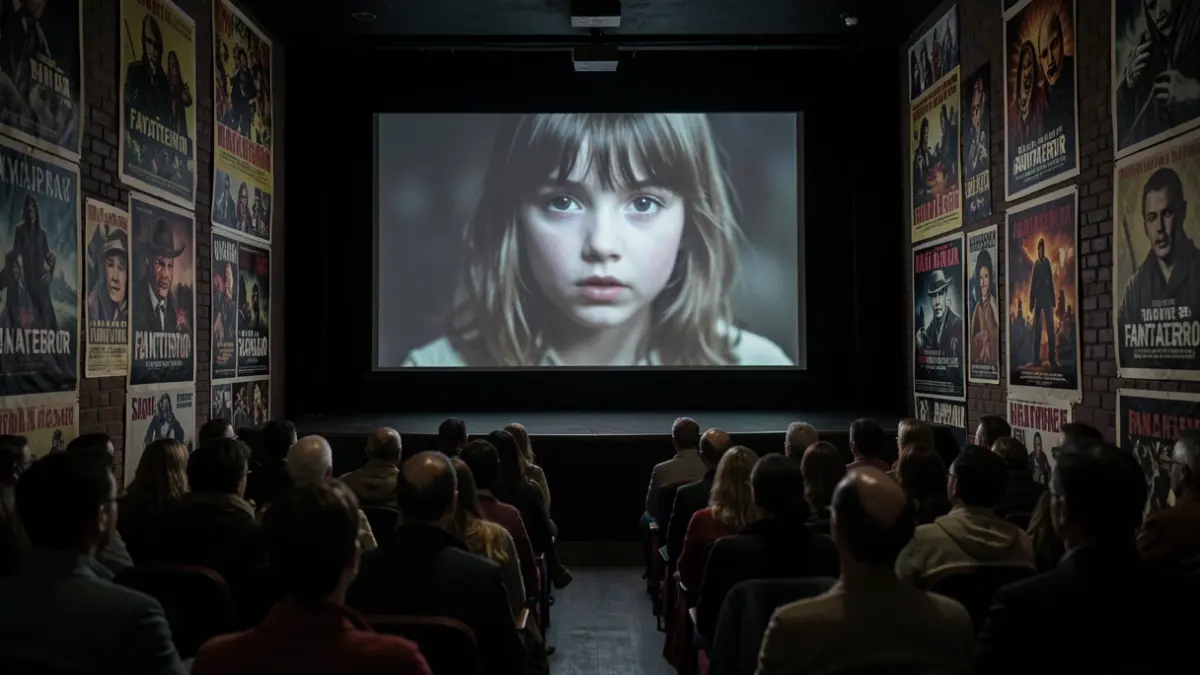
The documentary, presented at the prestigious Catalan festival, is a project that Aída Cordero has developed over two years, balancing it with her academic and professional responsibilities at the Complutense University of Madrid. The director expressed her excitement about premiering at Sitges, calling it "a dream come true" given her fascination with the horror genre.
Cordero's passion for horror cinema dates back to her childhood, influenced by her father and series like "The X-Files". Her interest solidified when she chose Spanish horror cinema of the 70s as her thesis topic, focusing on the figure of Chicho Ibáñez Serrador. Despite difficulties in contacting him due to his illness, Cordero later met him, an encounter she described as "very emotional".
The documentary's protagonist is Marian Salgado, child actress from Ibáñez Serrador's classic "¿Quién puede matar a un niño?" (Who Can Kill a Child?). Cordero met Salgado at the Sombra Festival of Murcia, and the documentary idea originated from a proposal by executive producer Reinaldo Pereira, aiming to highlight Salgado's career as one of the few child actresses with continuous roles in Spanish horror fantasy.
The collaboration with co-director Jesús Loniego focused on technical aspects and editing, while the script was initially developed by Javier Donate. The idea of using "the voice of the fantastic" as a narrative thread came from Donate, allowing for a touch of fiction in the documentary and overcoming budget limitations.
The production process involved two years of interviews with about thirty people, conducted during afternoons, weekends, and holidays. The selection of relevant material was a collaborative effort between Cordero and Donate, with Loniego providing objectivity in the final editing to condense the information.
Cordero also addressed the scarce presence of female directors in Spanish feature-length fantastic films, pointing to sections like "WomanInFan" at the Sitges Festival to promote female talent. She mentioned the increasing participation of women directors at the festival this year, including Carlota Pereda, Norma Vila, Clàudia and Paula Serra, María Martínez Bayona, Alicia Albares, Mirella Ruiz-Berdejo, and Mònica García i Masaggué.
Regarding her future, Aída Cordero is working on a feature fiction film idea that has already won an award and been selected for several labs, hoping to attract the interest of a production company.