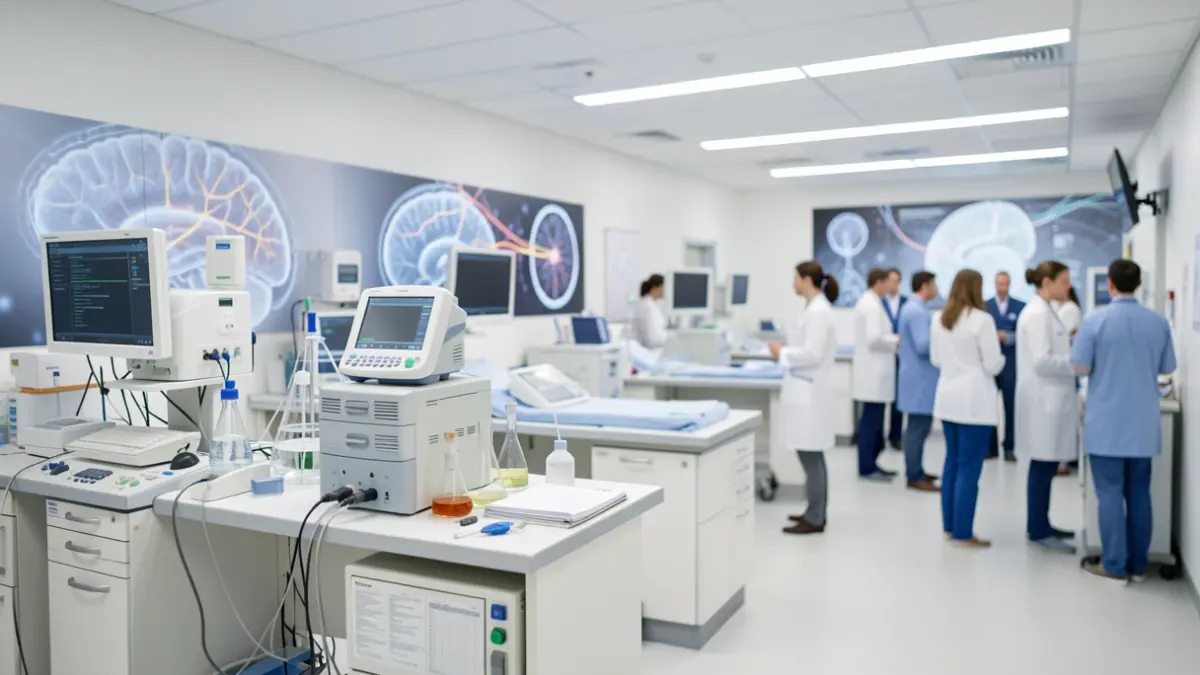
The Torrejón University Hospital, part of the public healthcare network of the Community of Madrid, has reinforced its commitment to multiple sclerosis research. The initiative focuses on promoting clinical trials and new study lines to improve the management of this condition, aiming to develop drugs with potential neuroprotective and neuroregenerative capabilities.
Multiple sclerosis is a chronic neurological disease where the immune system mistakenly attacks the brain and spinal cord, interfering with information transmission between the brain and the rest of the body. According to Dr. Luis Ignacio Casanova Peño, a Neurology specialist at the hospital, this condition can affect mobility, vision, sensation, and concentration, in addition to causing intense fatigue, one of its most common and debilitating symptoms.
Initial symptoms of multiple sclerosis are diverse, including visual problems like blurred vision or eye pain, sensory alterations such as tingling, loss of sensation, extreme fatigue, balance issues, and cognitive difficulties. Dr. Casanova Peño highlights that the disease often affects young individuals in their prime working and family years, leading to uncertainty, making a comprehensive approach crucial.
In this context, the Torrejón University Hospital is developing various research lines. These range from studying biomarkers for personalized medicine to active participation in clinical trials. Dr. Casanova emphasizes that these trials allow patients to access innovative treatments before they are commercially available and offer alternatives for cases lacking effective therapies.
Currently, the trials are focused on developing new drugs aimed at slowing the slow progression of the disease, regardless of relapse occurrence. This research aligns with the global strategy of seeking treatments with neuroprotective and neuroregenerative capacity.
The Madrid hospital points out that the combination of specialized care, research, and monitoring enables more precise diagnoses, individualized treatments, closer follow-up, and innovative tools not yet part of routine clinical practice. Multidisciplinary work and coordination among professionals from different areas contribute to improving care quality and patient experience.
Dr. Casanova concludes that multiple sclerosis research is experiencing a particularly positive phase thanks to advances in diagnosis and treatment. "Today, we have many more therapeutic options that allow for better disease control and improved patient quality of life, and research continues to advance towards more effective and personalized treatments," he stated.