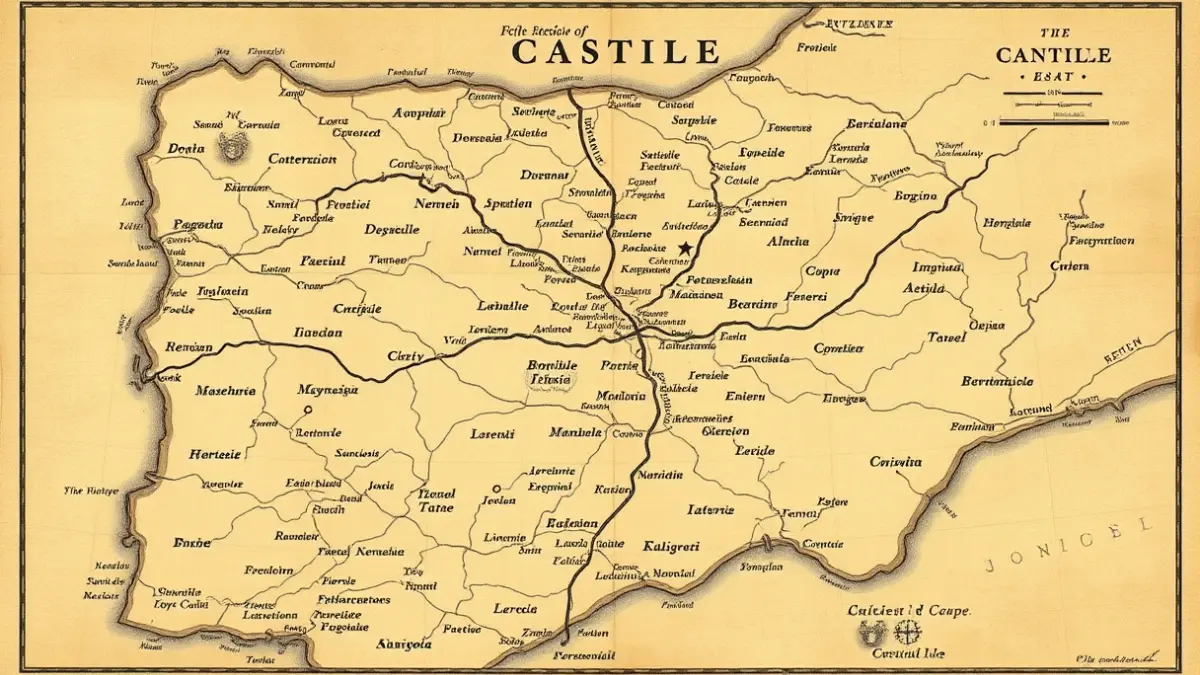
On April 27, 1521, the execution of three key figures of the Comunero movement—Juan de Padilla, Juan Bravo, and Francisco Maldonado—took place. This act, which followed the defeat of the Comunero troops in Villalar four days earlier, was not intended to prolong a conflict but to establish a swift and decisive end to a revolt that had challenged the power structure in Castile.
These leaders did not represent a disorganized protest. Juan de Padilla, from Toledo and of noble birth, sought to limit monarchical power and ensure the participation of cities in decision-making. Juan Bravo, from Segovia, focused on local issues such as tax pressure. Francisco Maldonado, from Salamanca, provided a social and political base. Despite their differences, they shared the conviction that the king's power should have limits and that cities should influence decisions affecting their resources.
The ascension of Charles I of Spain, a young monarch educated outside the peninsula, heightened tensions. His growing economic needs to finance his imperial project in Europe led cities to question not only their contribution of resources but also their lack of voice in decision-making. The Comunero Revolt was an attempt to rebalance this system, seeking to redefine the king's relationship with the cities without aiming for his replacement. Madrid, though not yet the capital, was part of this urban movement seeking greater participation in the kingdom's governance.
The outcome was swift. The defeat at Villalar on April 23, 1521, attributed to factors such as terrain and lack of coordination, led to the capture of the leaders. Their execution on April 27 was an exemplary act, designed to set a limit and prevent future revolts of a similar nature. This event consolidated royal power and significantly reduced the cities' ability to intervene in political decisions, shifting the governance model towards greater centralization.
For Madrid, this change was not immediately felt in daily life but conditioned its future development. Decades later, when the court was established in the city, Madrid grew as a political center within a system where power was exercised from proximity to the monarch, not from the counter-power of the cities. Villalar, therefore, was not just the end of a revolt but the turning point that defined the political framework for centuries to come.