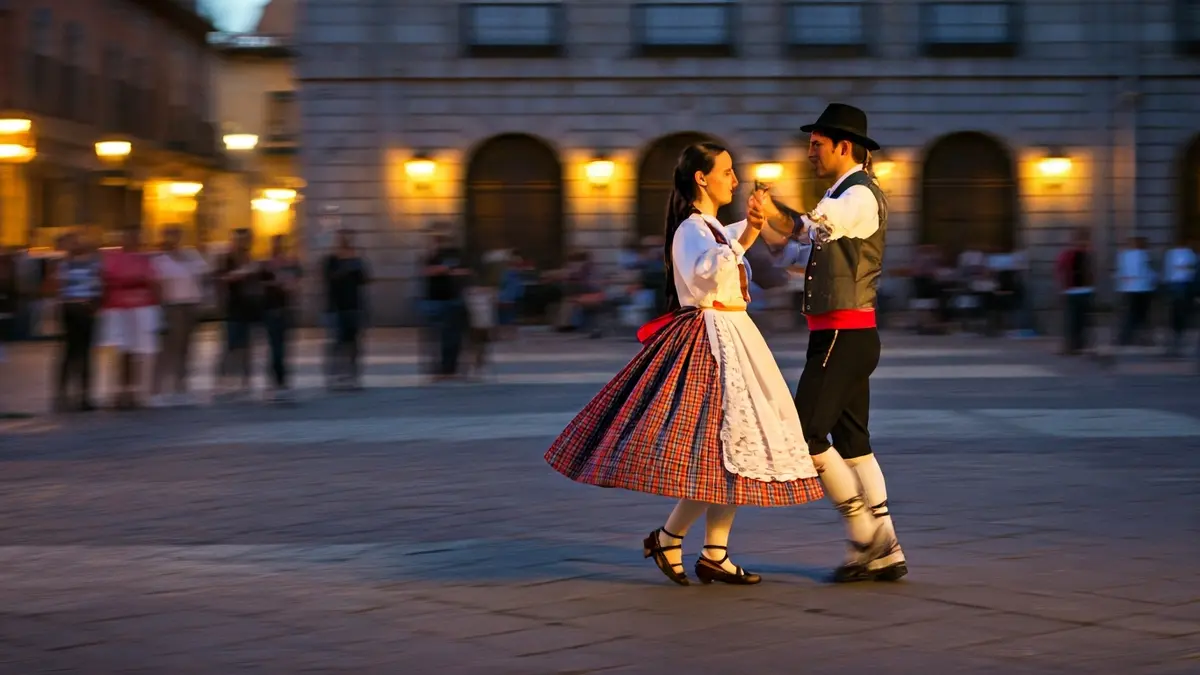
This cultural expression, which arrived in Madrid on November 3, 1850, during a party hosted by Queen Isabel II at the Royal Palace, has become a symbol of Madrid's identity. Originally known as “German polka” or schottisch, the chotis transcended aristocratic salons to take root in the city's streets and squares, where the woman traditionally sets the pace of the dance.
Despite its 176 years of history in the city, the chotis remains relevant, as demonstrated by the hundreds of chulapos and chulapas who dance it every May 15 during the San Isidro celebrations. Even public figures like Madrid's mayor, José Luis Martínez-Almeida, have joked about their attempts to dance it. The chotis has also served as a vehicle for political criticism, as seen in San Isidro 2019 with a satirical chotis performed by Vox leaders, aimed at the then-mayor, Manuela Carmena.
The genre has been reinterpreted by contemporary pop, rock, and techno artists, including groups like La La Love You, Sidecars, Ginebras, and Vera Noor. This versatility has achieved an unusual consensus in recent Madrid politics.
“"Here, people know how to dance sevillanas but not chotis, which puts the survival of traditional Madrid culture at risk in the future."
Two years ago, a Vox proposal in the Cibeles Plenary, unanimously approved, requested the Community of Madrid to declare the chotis as a BIC. However, the Community's response was that the chotis has been protected since December 15, 2021, when the Governing Council approved the decree declaring the San Isidro Festivities as a Cultural Heritage Asset in the category of Cultural Event.
This protection covers various elements of the festivities, including religious and civil acts, the bullfighting fair at Las Ventas, traditional dances and music like the chotis, gastronomic specialties, typical attire, and the oral and artistic representation of San Isidro. Marta Rivera de la Cruz, Culture delegate and former regional minister, has emphasized the ongoing dialogue with the Federation of Traditional Groups and the inclusion of the chotis in the programs of the municipal music and dance schools of the City Council.