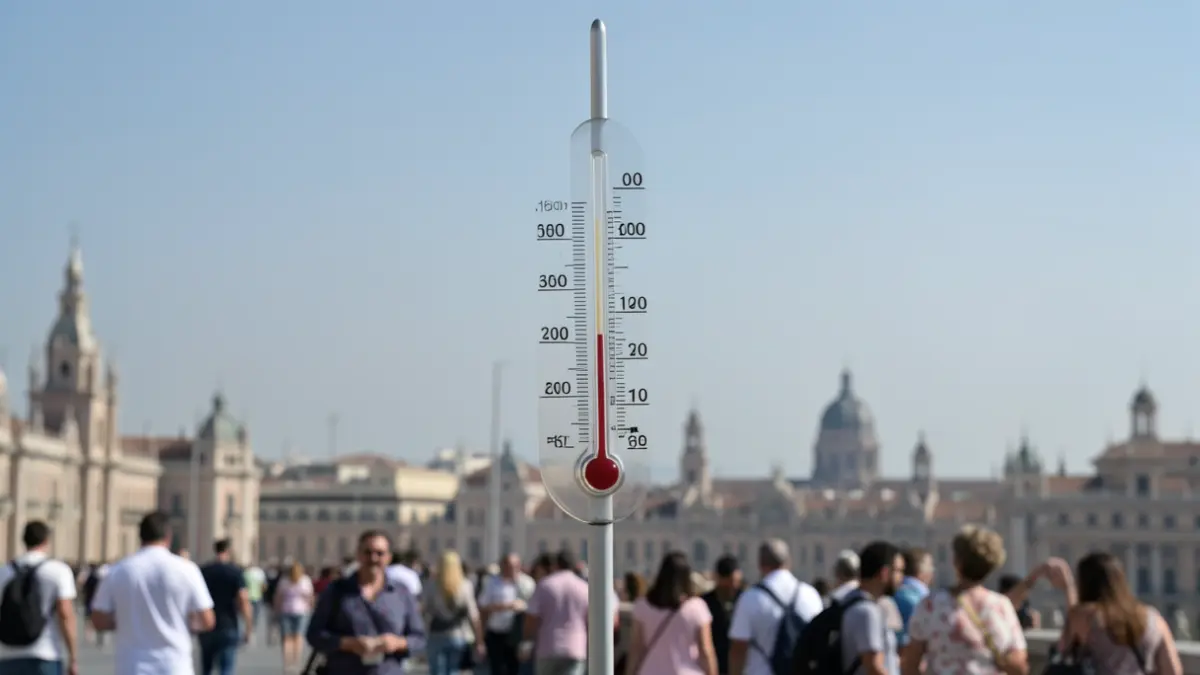
Meteorological forecasts indicate a summer quarter with temperatures potentially ranging between 1.5 and 3 degrees Celsius above the historical average in regions such as the Community of Madrid, both Castillas, and Extremadura. The central part of the peninsula is projected to be the area where heat could be most pronounced compared to typical values for the season.
Although it is still early to confirm heatwaves, the trend observed in recent years suggests a "quite probable" occurrence of extreme temperature episodes during the next three months, according to Samuel Biener, a climatologist at Meteored. No clear signals of significant thermal anomalies are identified in the far southwest of the peninsula or in the Canary Islands.
Regarding precipitation, the quarter is expected to be slightly wetter than usual in the Pyrenees, the southern Iberian System, the Mediterranean slope, and the Canary Islands. This trend is linked to a greater development of storms during the summer period, which could increase stormy activity in these zones.
Biener reminds that predicting precipitation, especially stormy events, is complex and subject to change. The influence of the El Niño phenomenon on Spanish summer temperatures is not direct, with other atmospheric factors like the polar jet stream being more determinant in the Iberian Peninsula's summer climate pattern.
This forecast confirms a growing trend towards more thermally demanding summers, with a particular impact on inland regions like the Community of Madrid. Intense heat episodes pose challenges for public health, energy consumption, and daily life, underscoring the need for early warning systems and adaptation measures.