For a week, the Community of Madrid has hosted intensive forest fire simulation exercises in a natural setting in San Martín de Valdeiglesias. The primary objective has been to strengthen coordination among various emergency services, including firefighters, forest brigades, forest rangers, and SUMMA 112, as well as resources from other administrations. These exercises are crucial as preparation for the high-risk fire season, which runs from June 15 to September 30, as part of the INFOMA Plan.
The drills, organized by the Fire Department of the Community of Madrid, aim to replicate realistic scenarios to test procedures, reaction times, communications, and the coordinated action capabilities of all teams. These practices, conducted for the past three years, cover all phases of an intervention, from initial activation to final fire control and mop-up, including area sectorization and direct firefighting efforts.
In total, approximately 400 professionals participated, including regional firefighters, forest brigades, forest rangers, and SUMMA 112 personnel. Both ground and air resources were deployed, essential elements in combating forest fires where speed and coordination are decisive. These resources will be part of the Community of Madrid's Civil Protection Plan against Forest Fires (INFOMA) during the summer months.
Inter-agency collaboration was a key focus, with the participation of water-bombing aircraft from the 43 Air Force Group (Ministry for the Ecological Transition) and crews from the Madrid City Council's firefighters, who joined these joint drills for the first time. This cooperation is vital, as large-scale fires transcend administrative boundaries, often requiring simultaneous intervention from regional, state, and municipal resources.
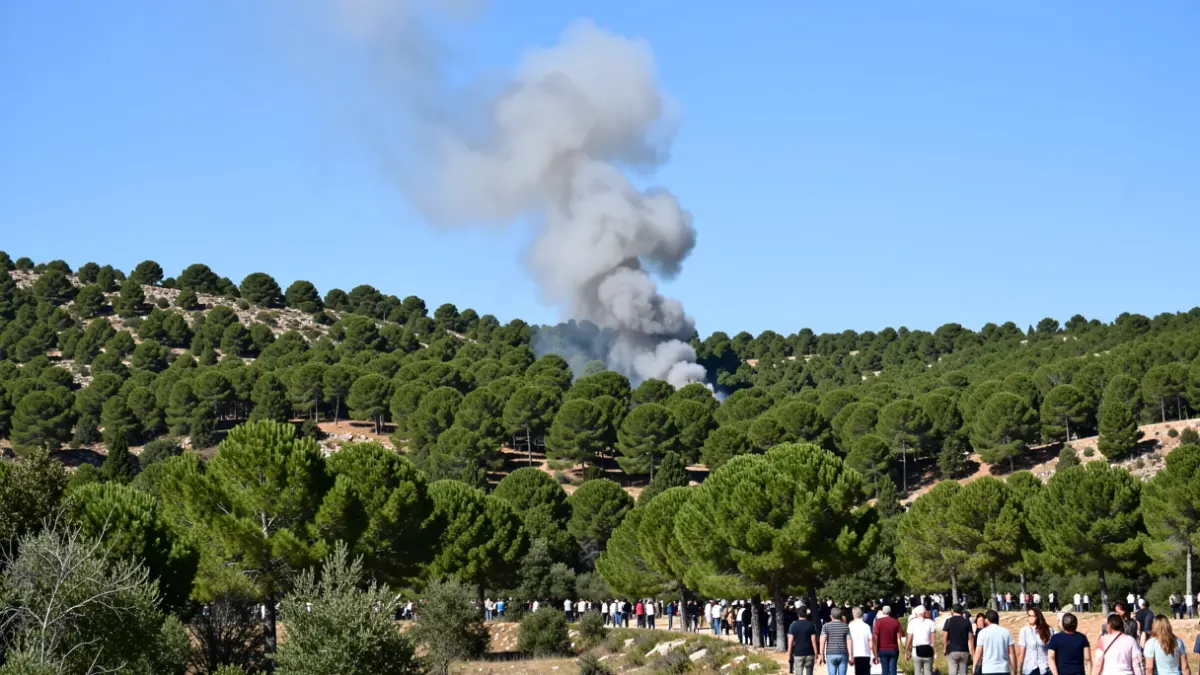
The simulated operation begins with a fictitious citizen alert, triggering mobilizations from the fire station in San Martín de Valdeiglesias and other regional points. To create a plausible scenario, difficult-to-access areas are prepared, and small controlled fires are generated on platforms, supplemented by artificial smoke to simulate realistic visibility and working conditions. After each exercise, a technical evaluation meeting is held to analyze the intervention and identify areas for improvement.
These drills highlight the importance of citizen prevention. While administrations prepare resources and train teams, responsible behavior by visitors in natural areas during high-risk months is crucial. A timely call about any sign of smoke can make the difference between a small fire and a large one.