
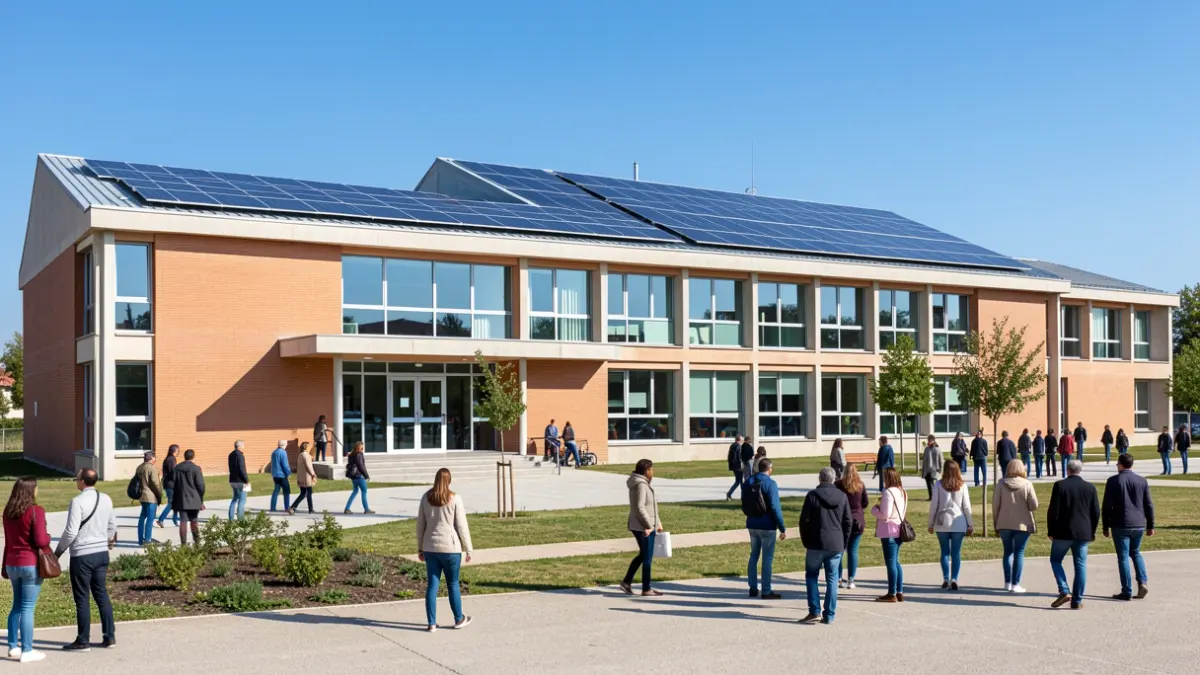
Rivas-Vaciamadrid is leading a transformation in the climate control of its public educational centers, replacing old heating systems with aerothermal units. This initiative, which has intensified in recent weeks, covers five nurseries and four schools, with the new systems expected to be operational from September 1st.
Rivas's decision comes amid a public debate in the Community of Madrid regarding the lack of adequate classroom air conditioning due to rising temperatures. Meanwhile, the regional government has yet to establish a comprehensive plan or specific timelines to address this issue across all educational institutions.
Municipal sources in Rivas explain that choosing aerothermal energy, rather than quick fixes like air conditioning, stems from a commitment to energy efficiency, sustainability, and health. This system, though more complex to install, promises lower consumption and greater durability, serving both for cooling in summer and heating in winter, while replacing obsolete boilers.
The plan is structured in two phases. The first, already underway, focuses on nurseries and four schools with the greatest thermal needs and where duct installation is simpler. These centers will have the new system by September 1st. The second phase, affecting the remaining schools, will be completed by September 2027.
The proposal was presented and approved in the school councils of the involved centers, as is customary in Rivas. The project, requested by the City Council from the Community of Madrid, will be executed subsidiarily by the municipality due to the regional administration's lack of response. The Territorial Area Directorate (DAT) did not permit debate within the schools, a stance now being called for by secondary school directors' associations and the FAPA Gines de los Ríos.
The total investment for this project amounts to approximately 14.2 million euros, including 15 years of maintenance. Major construction work is taking place after the academic year concludes, aiming for completion by the end of August. The project also includes replacing lighting with LED technology featuring motion and ambient light sensors to maximize efficiency.
The aerothermal system is expected to significantly reduce the energy bills and carbon footprint of the centers. Furthermore, the system will completely renew the air in the rooms every 14 minutes, promoting a healthier environment and hindering the transmission of respiratory illnesses, thereby benefiting the overall well-being of students and staff.
This initiative complements other energy transition measures in Rivas's schools, such as the installation of solar panels and energy-saving projects in classrooms, demonstrating a comprehensive commitment to sustainability and improving the educational environment.