Drivers who regularly use the main access roads to Madrid from Alcalá de Henares are set to face a potentially challenging autumn. The State Society of Terrestrial Transport Infrastructures (SEITT) has announced the tender for a 21.3 million euro contract for the resurfacing of 27.6 kilometers of the R-2 and M-50 motorways.
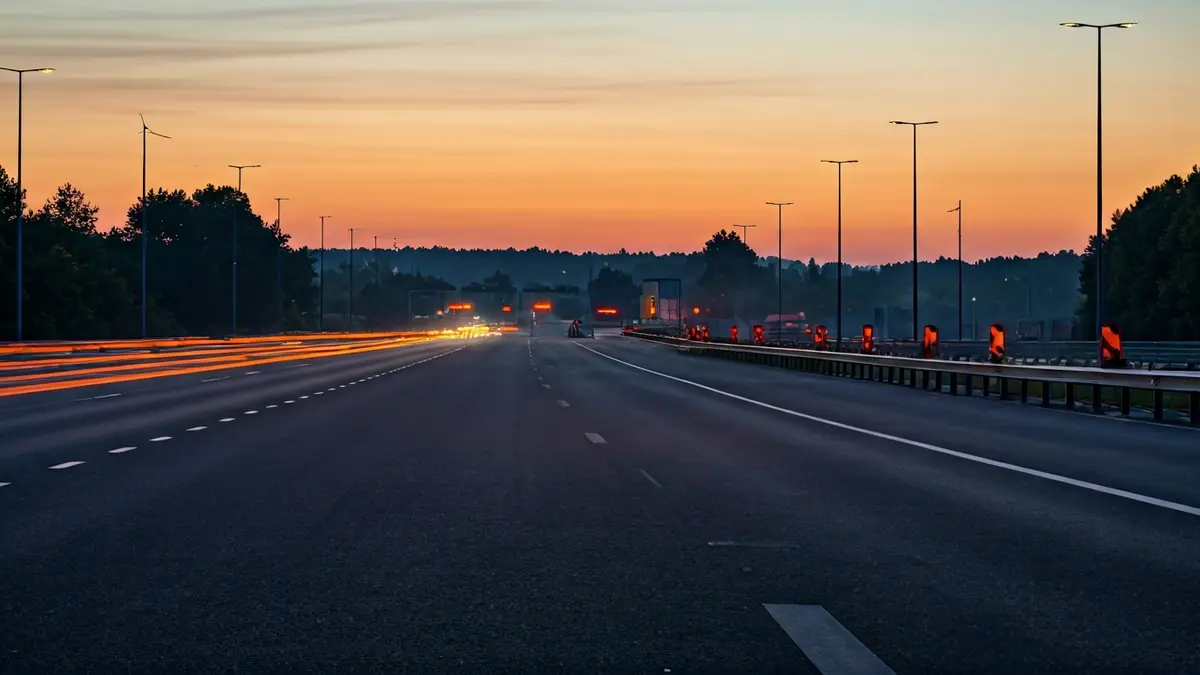
These works, covering 10.1 kilometers of the inner R-2 and 17.5 kilometers of the M-50, along with nine complete interchanges, two toll plazas, and 14 median crossings, will primarily involve milling and replacing the wearing course to enhance road safety and comfort. Although the tender has just been authorized, the works are expected to commence between summer and autumn 2026.
The intervention on these motorways will likely entail lane reductions, temporary closures, and detours, especially in interchange and toll areas. This situation will overlap with the activation of the dynamic Bus-VAO lane on the A-2, scheduled to launch in the first quarter of 2026 (between January and March), initially extending to Torrejón de Ardoz.
The Bus-VAO lane, managed with variable signage and cameras, will prioritize buses, vehicles with at least two occupants, motorcycles, and emergency vehicles, operating only during peak congestion hours. Many drivers from Alcalá de Henares alternate between the A-2, R-2, and M-50 depending on their destination, whether Madrid, the northern area, or the southern part of the Henares Corridor.
It is good news that infrastructure is being improved, but real coordination between administrations is urgently needed so that works do not overlap and create unnecessary chaos.
The coincidence of both projects could lead to additional traffic jams during peak hours, both entering and exiting the capital. The Regional Transport Consortium has reminded the public that the Bus-VAO aims to encourage the use of buses and shared vehicles, which could alleviate some pressure if citizens opt for these alternatives.
Users are advised to closely monitor alerts from the DGT and SEITT regarding closures and detours, consider public transport or carpooling during the construction periods, and use real-time traffic applications to explore alternative routes, such as the R-3, when possible.