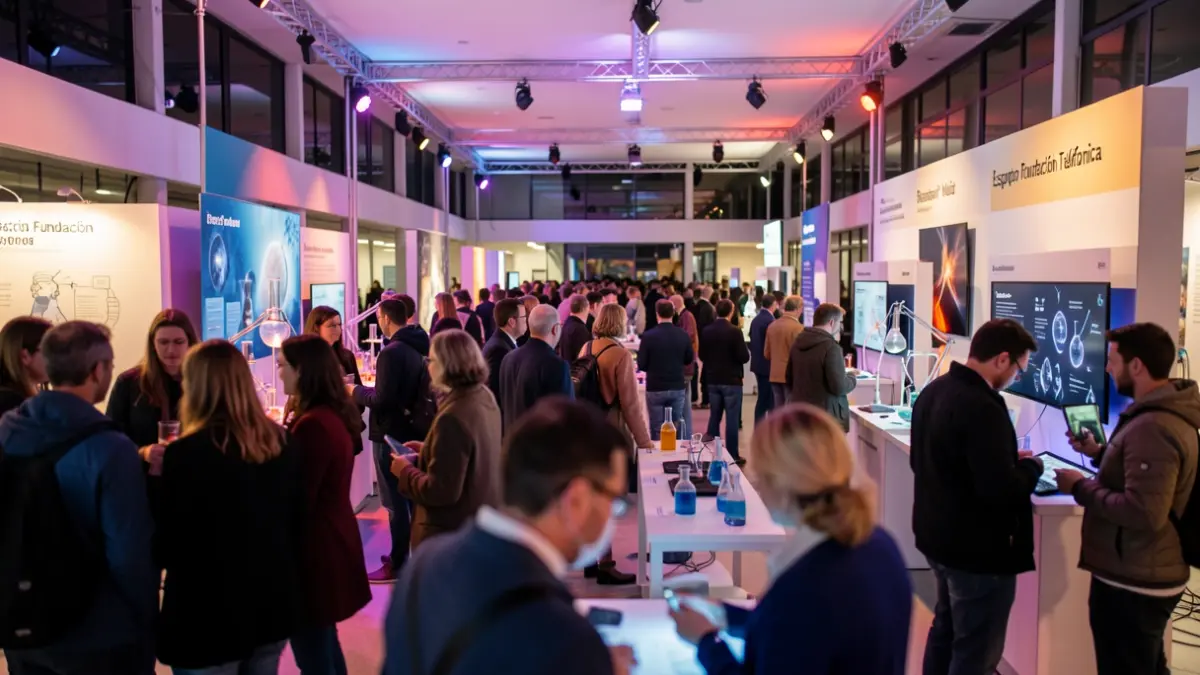
An exhibition on the quantum revolution has sparked interest in physics, even among those who never expected to enjoy a class on the subject. Inaugurated on May 7th at Espacio Fundación Telefónica, the exhibition Quantum Revolution: a journey from Galileo to future computers presents itself as an immersive educational experience.
The exhibition begins with a review of classical physics fundamentals, showcasing historical measuring instruments and works by scientists such as Galileo, Newton, and Kepler, thus preparing the ground for delving into quantum concepts.
For centuries, classical physics provided a predictable view of reality. However, in the early 20th century, the study of the microscopic world revealed perplexing phenomena: particles existing in multiple places simultaneously, probabilistic behaviors, and the influence of observation on experimental outcomes, challenging established certainties.
The exhibition, curated by Fundación Telefónica and Dr. in Information and Quantum Optics Sonia Fernández-Vidal, addresses concepts like Werner Heisenberg's uncertainty principle, Niels Bohr's complementarity, Emmy Noether's symmetries, and Maria Goeppert-Mayer's description of the atomic nucleus, transforming how reality is questioned.
Despite its complexity, the exhibition is visually appealing and connects quantum concepts to everyday applications such as transistors, lasers, and modern electronics. It invites philosophical reflection on the nature of reality, suggesting it can be malleable and dependent on the act of measurement.
Finally, the exhibition introduces quantum computing, promising a radical shift in simulating nature through quantum computers, inspired by the ideas of Richard Feynman.
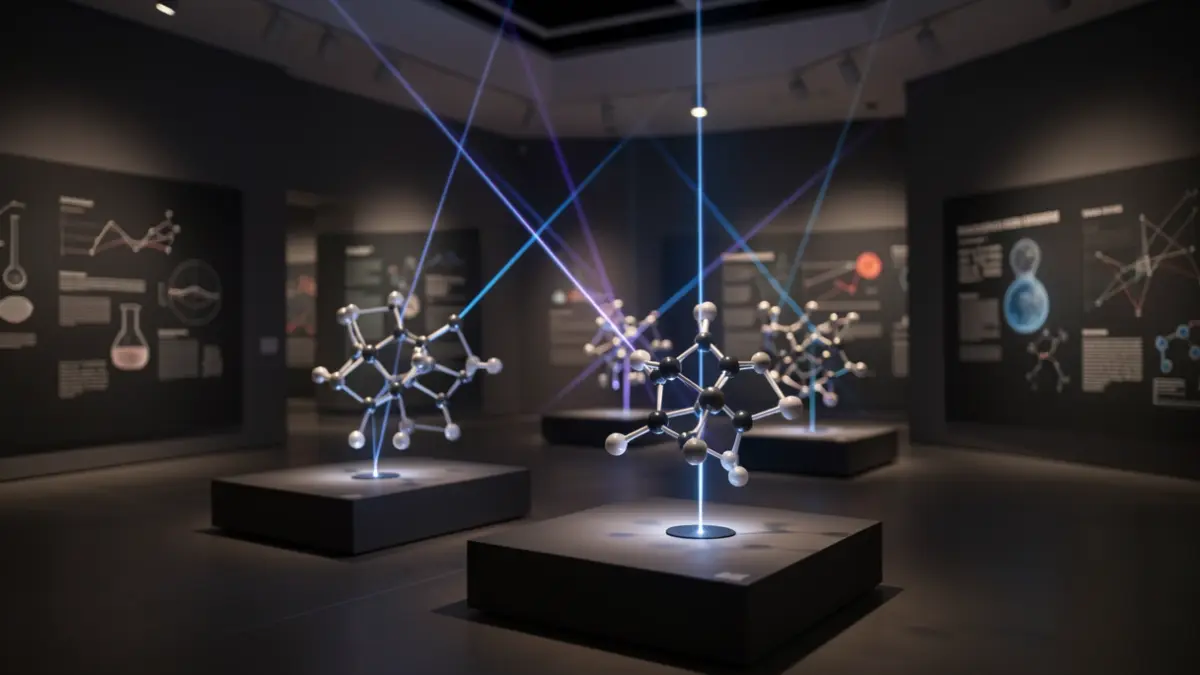
The exhibition is accessible even to those with limited physics knowledge, offering guided tours and informative screens with experts. Its meticulous curation includes large-format experiments, infographics, and projections, effectively using LED technology to illustrate complex topics.