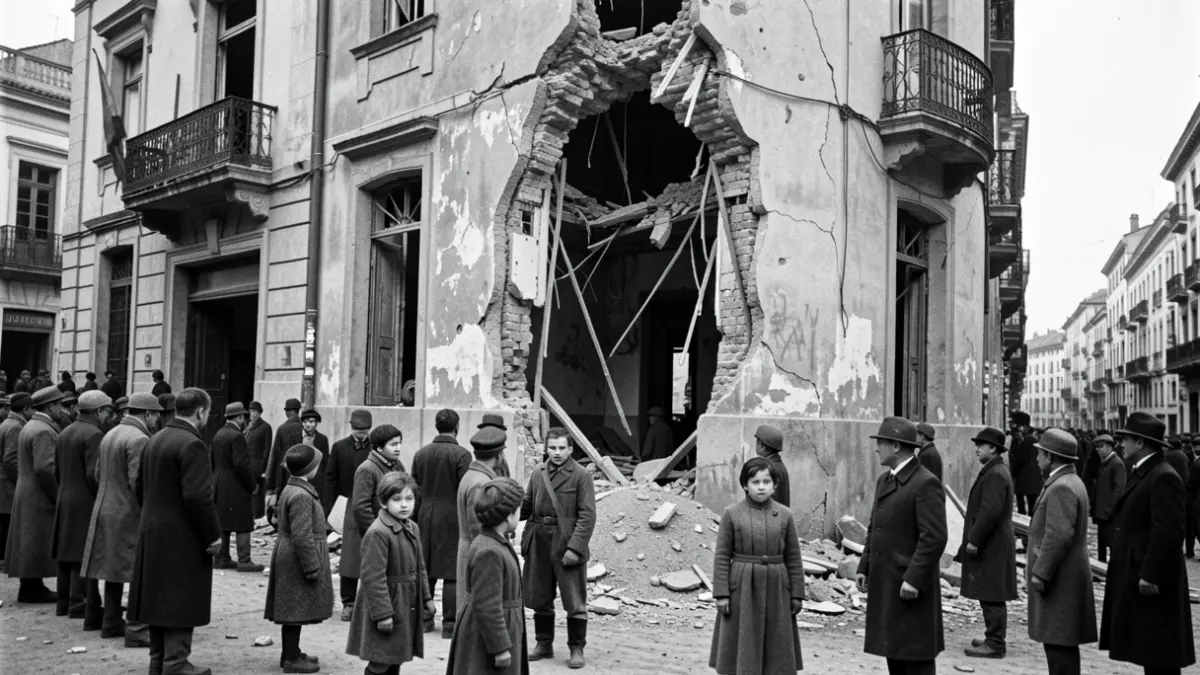
This recognition honors its historical value as a testament to the bombings suffered by the civilian population during the Spanish Civil War and the memory of the capital's working-class neighborhoods. The declaration ceremony took place at the site of the building, which gained international renown in 1936 after being captured in an iconic photograph by Robert Capa.
The image of children in front of a bomb-damaged dwelling became a powerful graphic symbol of the aerial attacks on Madrid. The designation encompasses not only the building but also the Plaza del Fotógrafo Robert Capa, the adjacent garden plot, and the Centro Pastoral de San Carlos Borromeo, integrating these spaces under a unified protection zone.
The resolution also highlights the area's evolution post-conflict, with families migrating from Andalusia, Extremadura, and Castilla-La Mancha. Fleeing postwar poverty and repression, many built precarious homes using materials from bombed-out structures, shaping the identity of Entrevías and other neighborhoods in the city's south and east.
The role of the neighborhood movement and the so-called worker priests in improving living conditions in these peripheral areas during the Franco regime and the Transition is also acknowledged. Citizen groups recalled the efforts of the Salva Peironcely 10 platform, instrumental in protecting the property.
Through this designation, Peironcely 10 joins the state catalog of Democratic Memory Sites, a registry that safeguards locations linked to significant events in Spain's contemporary history and preserves the memory of war and dictatorship victims.