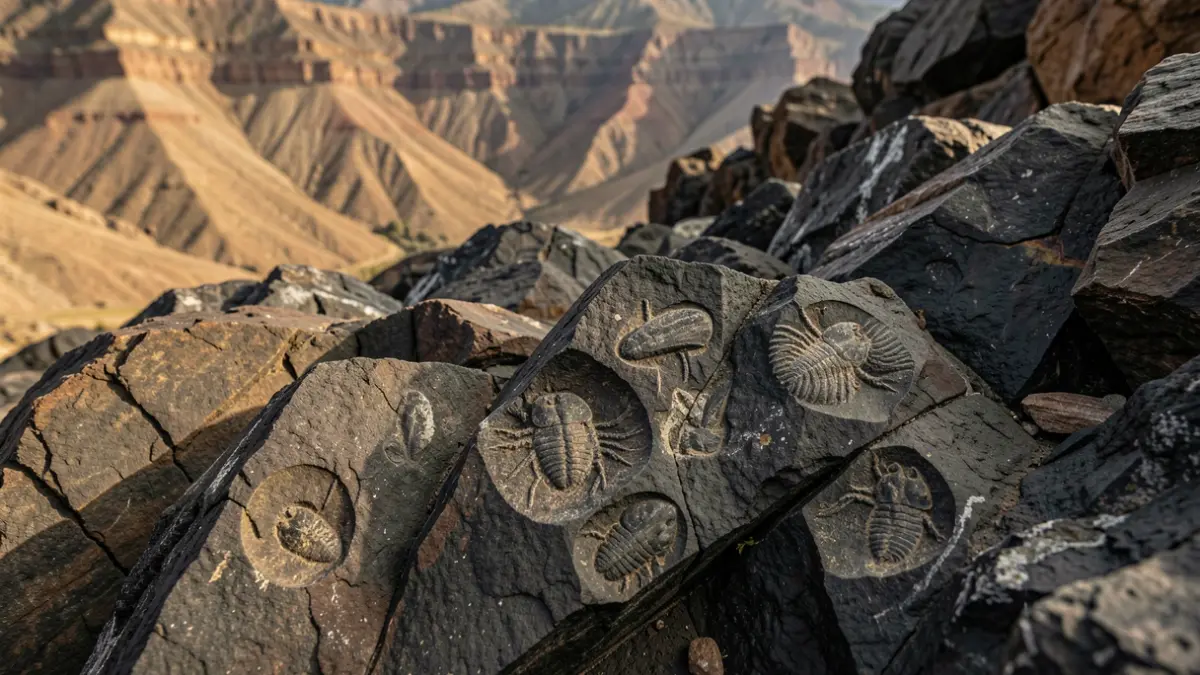
The find, made by scientists from the Complutense University of Madrid and the Spanish National Research Council (CSIC), occurred in outcrops of Paleozoic slates near Patones and El Atazar. The remains belong to various marine invertebrates, including fossils of trilobites, brachiopods, mollusks, and graptolites preserved in ancient marine rocks forming part of the region's geological basement.
These rocks, often hidden and only visible in certain areas of the Central System, have undergone intense geological processes. According to the UCM, this makes the discovery of fossils within them an 'extraordinary rarity'.
The research, which reviews previous paleontological information from the Paleozoic era in the Sierra Norte of Madrid and Guadalajara, provides new data on the marine fauna that inhabited the area when the current Madrid territory was covered by ancient seas.
The authors indicate that these body fossils are the oldest registered in the Community of Madrid, predating fossilized tracks (ichnites) of marine arthropods previously discovered in Puebla de la Sierra.
Paleontologist Sara Romero (UCM) and researcher Juan Carlos Gutiérrez-Marco (CSIC-UCM) participated in the study. The findings will be presented at the Geological Society of Spain and published in the scientific journal Geogaceta.