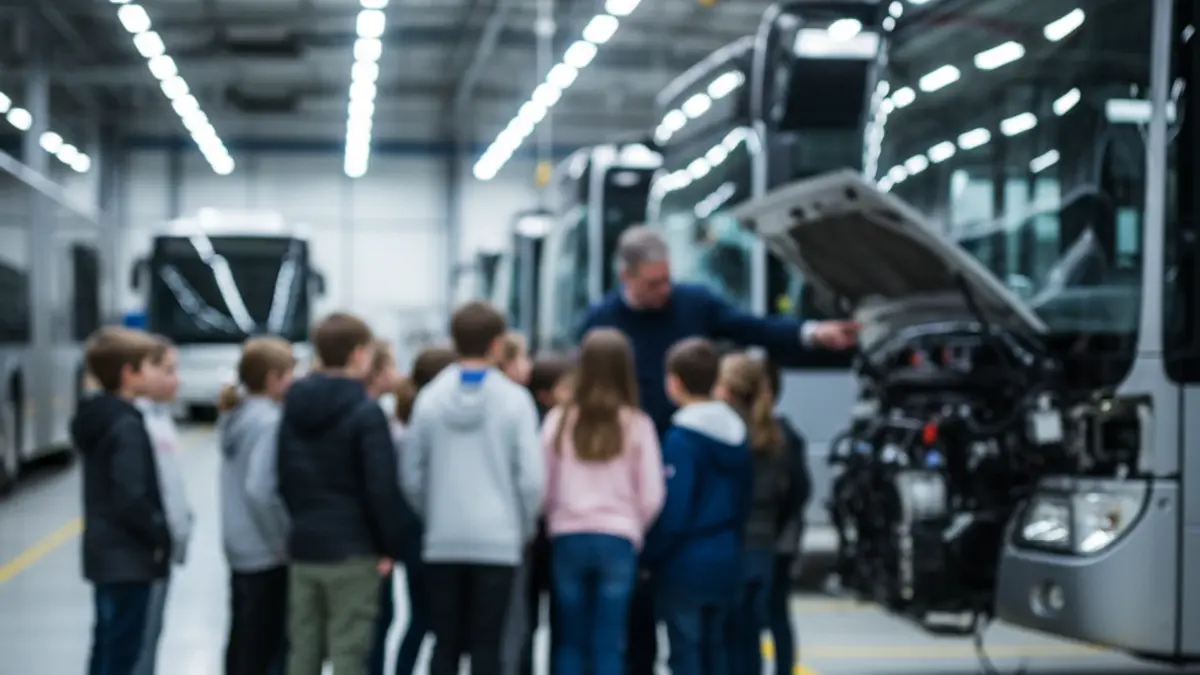
A group of 30 schoolchildren from various educational centers in the city recently visited the EMT Madrid Operations Center in Carabanchel. This activity is part of the municipal program ‘Madrid, an Open Book’, which aims to disseminate the capital's heritage and infrastructure among Madrid's students. During the 2025-2026 academic year, over 1,400 students have had the opportunity to learn about the city's bus service.
Visits to the EMT Madrid Operations Center are one of the most established activities of the ‘Madrid, an Open Book’ program, with a 40-year history. Thanks to this initiative, students from 5th and 6th grade of primary school, as well as those from Special Education centers and occupational centers, can directly interact with the urban transport system. The tours include the bus maintenance workshops and explain the complex logistics that enable the daily operation of a network that transported 512 million passengers in 2025.
EMT Madrid professionals guide the students, detailing how routes are designed and how the fleet is managed. This experience not only expands students' knowledge but also raises awareness about the benefits of public transport and the importance of sustainable mobility.
The visits take place during school hours, in groups of up to 30 people, and are free for participants, as they are organized and funded by the City Council. Furthermore, they are adapted for students with reduced mobility, ensuring the inclusion of people with disabilities.
The ‘Madrid, an Open Book’ educational program primarily aims to complement school education by connecting the city's reality with the academic curriculum. Over four decades, it has introduced children and young people to the capital's heritage, cultural, and natural resources. In the 2024-2025 academic year, 98 activities were carried out, with the participation of 250,000 students from 750 educational centers.
This initiative, promoted by the Area of Social Policies, Family, and Equality, offers primary schools, ESO, Bachillerato, vocational training cycles, and Special Education centers a wide range of proposals. These activities, which take place during school hours and mostly outside the classroom, include artistic options, nature and outdoor activities, environmental education, sports, health, historical tours, city routes, and tickets to major museums, among other proposals.