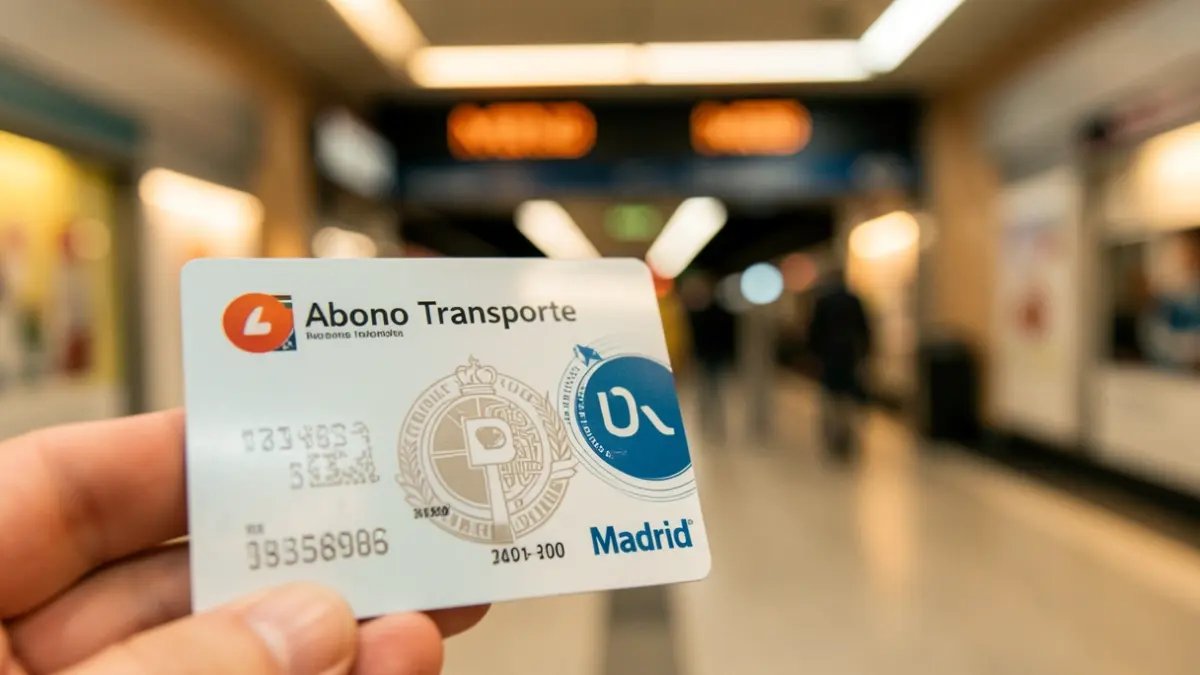
The Community of Madrid has announced a change in the requirements for obtaining the Personal Public Transport Card, commonly known as the transport pass. From June 15, 2026, only individuals registered in a municipality of the Community of Madrid or in tariff zones E1 and E2 will be eligible for the discounts and benefits of this pass. Applicants will need to present a valid registration certificate or authorize its consultation.
This measure, published in the Official Gazette of the Community of Madrid, excludes those who do not officially reside in the region, although exceptions apply. Agreements with the two Castillas will be maintained, and passes will continue to be issued to large families for technological reasons and to ensure the application of their legal benefits. The regional government has temporarily blocked new applications and renewals until the new conditions take effect.
According to the Transport Department, the decision aligns with the Regional Transport Consortium Law, which stipulates that public subsidies should benefit residents. A spokesperson for the regional government acknowledged that the implementation had been delayed due to technological limitations and the pandemic's impact but believes the system is now "fully consolidated".
The regional executive justifies the measure by stating that 94% of public transport funding comes from the Community and Madrid's city councils, thus subsidies should primarily benefit those who support them through taxes. They estimate the impact will be limited, affecting only 3.4% of users and will not be retroactive.
The restriction could affect students who travel to Madrid for university or other educational centers without being registered in the region, as well as non-resident children or retirees applying for free travel for those under 14 or over 65.