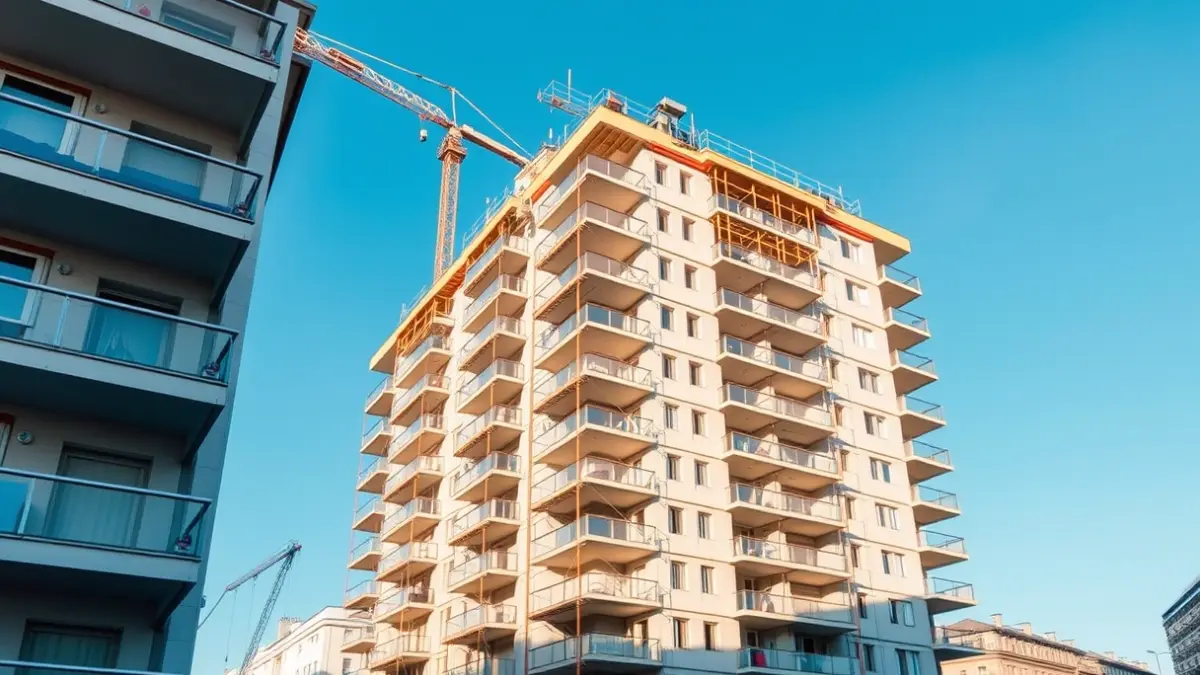
The Governing Council of the Community of Madrid will greenlight a law this week aimed at fostering the creation of 18,000 protected homes within a four-year timeframe. This initiative seeks not only to expand the available housing supply but also to optimize construction timelines to align with the needs of the regional real estate market.
The regulatory text, whose content was previewed in November by the regional president, introduces key measures to facilitate access to affordable housing, with a particular focus on young people and families. This action is part of the autonomous housing strategy that has been developed since 2019.
Among the main innovations of the law is the possibility of increasing development density by up to 30% and buildability by 20%. These changes will allow for the construction of a greater number of homes on the same plot, without the need to use new land. Furthermore, the legislation aims to reduce administrative and execution periods, a crucial factor in accelerating the delivery of protected housing given the constant growth in demand within the Community of Madrid.
The regional government frames this law within a broader strategy, highlighting that Madrid has accounted for over 40% of public housing built in Spain since 2019. During this period, various lines of action have been implemented, such as the VIVE Plan for affordable rental, which has delivered 5,300 homes and plans to add 3,200 more under construction this year, with the goal of reaching 14,000 by 2027.
Additionally, 14 tax reductions related to housing access have been approved since 2019, many targeting individuals under 25. The age limit for accessing mortgage guarantees has been extended to 50 years, with an allocation of 25 million euros. The Community of Madrid has also introduced regulatory changes allowing the conversion of offices into affordable rental housing, adding over 8,000 properties to the market in one year, and has authorized the construction of protected housing on private land initially designated for hotel use.
The My First Home program has increased the maximum subsidized amount to 425,000 euros to facilitate mortgage financing. Aid has been approved for large and single-parent families, lease-to-own options have been reinstated, and fees in disputes between owners and tenants have been eliminated. In the social sphere, public investment in housing will increase by 24% in 2026, enabling the construction of 2,100 homes during the legislative term, of which over 700 will be delivered that same year to vulnerable families.