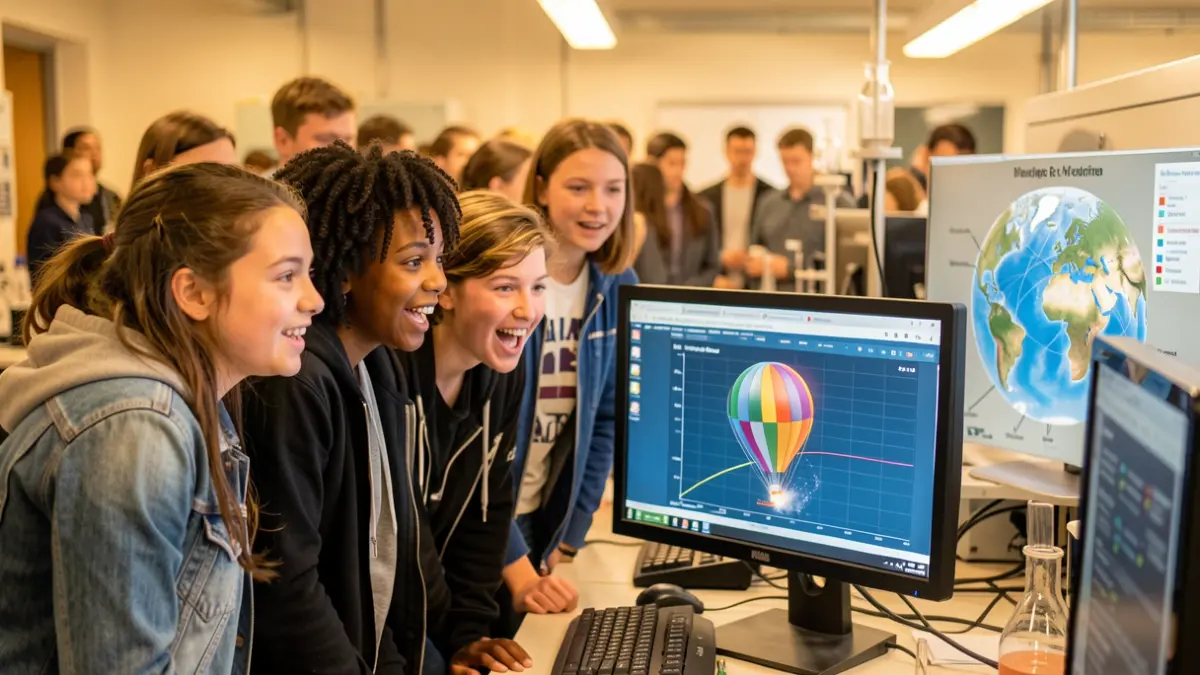
The program, promoted by the Ministry of Education, Science, and Universities, involved 13 public educational centers in its first edition. Students had the opportunity to design and launch their own experiments to an altitude of 30,000 meters in the stratosphere, where conditions resemble those of near space, enabling research not feasible on Earth's surface.
The experience culminated in a session at the Royal Academy of Engineering, where the young researchers presented the results and conclusions of their work. Among the investigations conducted were high-altitude photography, measurement of cosmic and ultraviolet radiation, and the study of microorganisms in extreme conditions, highlighting the participants' scientific rigor and analytical skills.
This project allowed students to participate in all phases of a real aerospace experience, from conceptual design to post-flight data analysis, including real-time tracking. To facilitate this work, teachers received specific training and developed proposals adapted to technical and safety requirements.