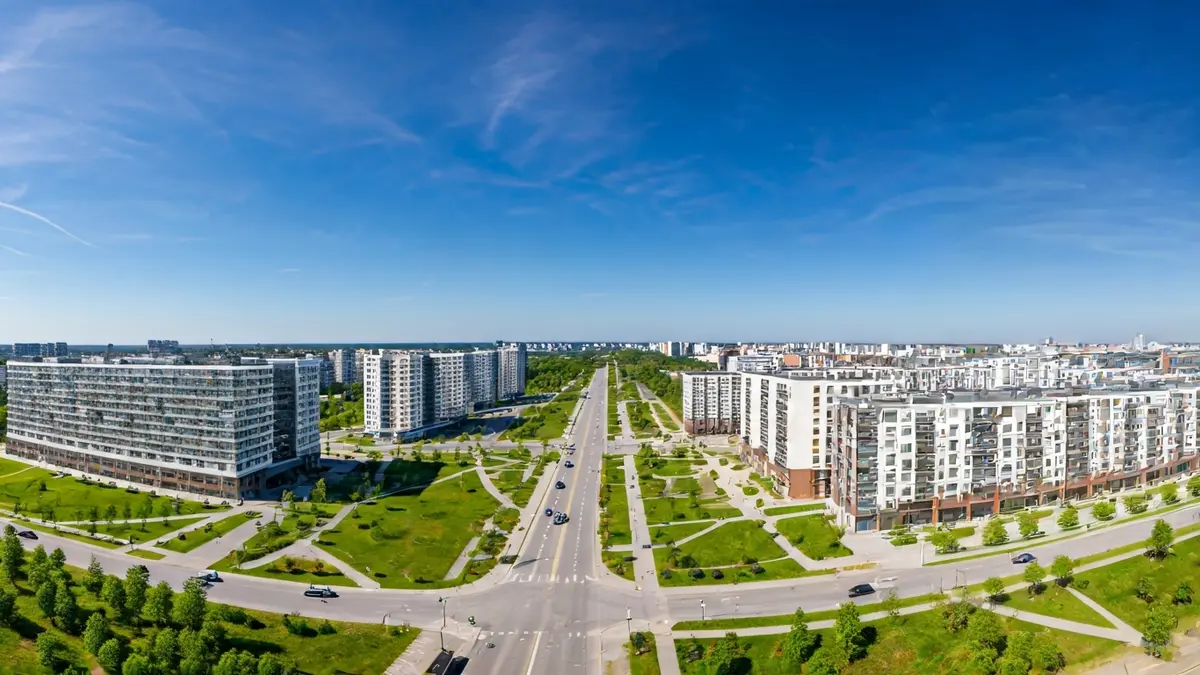
This approval marks the beginning of a significant transformation in the north of the capital, where the Malmea-San Roque-Tres Olivos sector is positioned as the main residential driver of the operation. Of the 7,100 projected homes, over 1,400, or 20% of the total, will be public housing, while the remaining 5,700 will be for the free market.
“"This area will contribute the most homes within the urban development operation that Madrid Nuevo Norte represents."
The project is not limited to residential construction but aims to create a cohesive neighborhood with all necessary services. Over 136,000 m² have been allocated for social facilities, including health centers, schools, institutes, and sports areas. Additionally, 214,000 m² are reserved for offices and 36,000 m² for commercial premises, promoting local businesses.
One of the most notable improvements is the elimination of the railway barrier, connecting the old town of Fuencarral with Las Tablas via three new bridges and a tunnel, including the Malmea bridge and the extension of Cardenal Herrera Oria street. Regarding public transport, 80% of commutes in the new neighborhood are expected to be sustainable, with two new transport hubs, Metro and Cercanías stations, and a priority bus system.
Sustainability is a fundamental pillar of the plan, which includes the creation of a large linear park of over 160,000 m² that will connect El Pardo mountain with Paseo de la Castellana, following the route of Agustín de Foxá street. A new network of bike lanes will also be implemented, linking with the Anillo Verde Ciclista and the route to Colmenar Viejo. The project ensures the preservation of historic buildings such as the hermitage of San Roque, Nuestra Señora de Lourdes, and the Profidén building.
To coordinate this 5.6-kilometer project covering over 3.3 million square meters, the City Council has established an entity that groups the four areas of Madrid Nuevo Norte: Malmea-San Roque-Tres Olivos, the Chamartín Business Center, Las Tablas Oeste, and Chamartín Station itself. This development will transform northern Madrid, with 76% of the land designated for public ownership and a total of 10,500 homes, of which 2,100 will be protected.