The Presidency of the Plenary Session of the Madrid City Council, under the direction of Borja Fanjul (PP), has issued a resolution dated June 1, 2026, altering the rules for public access and attendance at Permanent Commission sessions. This measure, according to official documentation, restructures the seating arrangement in the Commission Hall, granting fixed seats to political groups and reserving a smaller quota for citizens, a decision that has been immediately rejected by the Socialist Municipal Group.
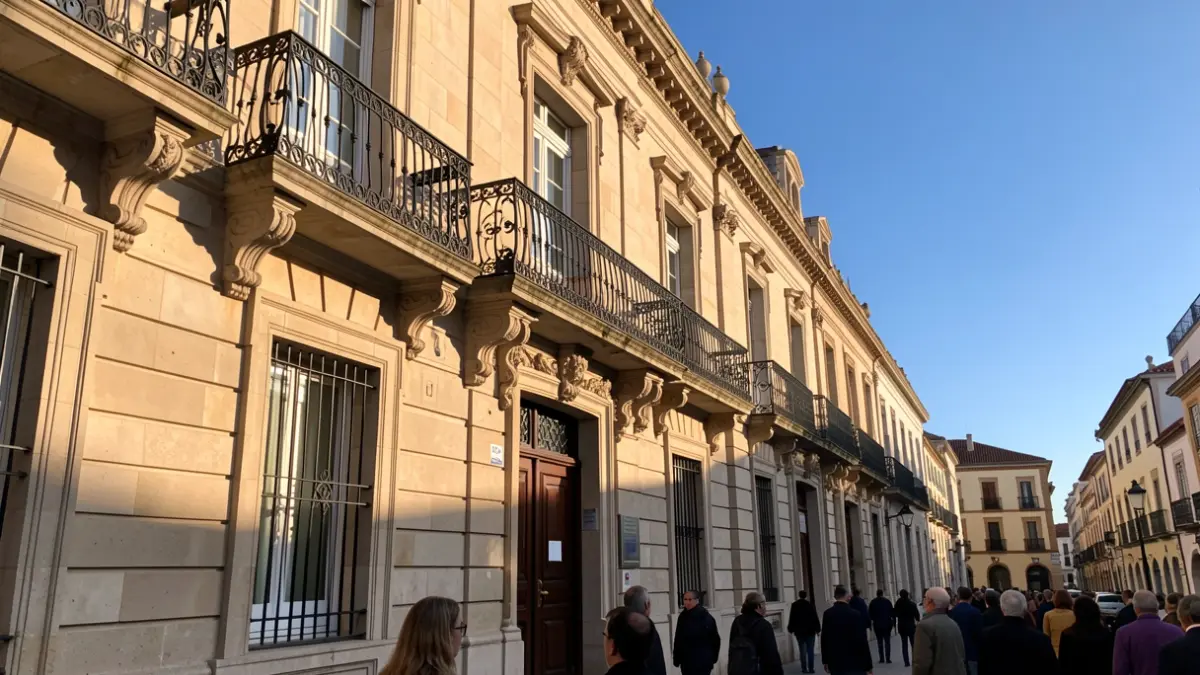
The resolution, signed by the Secretary-General of the Plenary, Federico Andrés López de la Riva Carrasco, justifies the update by changes resulting from the municipal elections held on May 28, 2023. Given the variation in the number of parties with representation and the volume of councilors in each, the local administration deemed it necessary to modify the regulations in effect since January 2020. The Commission Hall, located at Plaza de la Villa number 4, maintains a total capacity of 16 seats for attendees from outside the corporation.
From the norm's entry into force, the capacity will be proportionally distributed between political forces and the general public. The official breakdown is as follows: 5 invitations for the People's Municipal Group, 2 for Más Madrid, 2 for the Socialist Municipal Group (PSOE), 1 for Vox, and 6 seats reserved for the general public. The resolution is based on the Organic Regulation of the Plenary (ROP), which empowers the President of the body to ensure the smooth progress of work. These powers are exercised by delegation from the mayor to councilor Francisco de Borja Fanjul Fernández-Pita since June 17, 2023.
It represents a new affront to democracy
The Socialist Municipal Group has reacted adversely, labeling the resolution as a "new chapter in the gag policy against citizen participation" promoted by the governing team of Mayor José Luis Martínez-Almeida. The socialists criticize that, until now, the 16 seats were assigned indiscriminately without barriers between residents, representatives of neighborhood associations, or political parties. With the introduction of the specific cap of six seats for citizens not affiliated with parties, they estimate a "reduction of more than 60% in citizen presence in these institutional participation spaces." The socialist spokesperson described this measure as "a new affront to democracy" and warned that residents will express their disagreement at the polls.