The works, set to begin in August and with a ten-month execution period, will focus on Regeneration Unit 14.06-Moratalaz I. This action is part of the Plan Regenera Madrid and is the third intervention in the district following the completion of works in the E-I-Z Polygon and the Moratalaz III action plan.
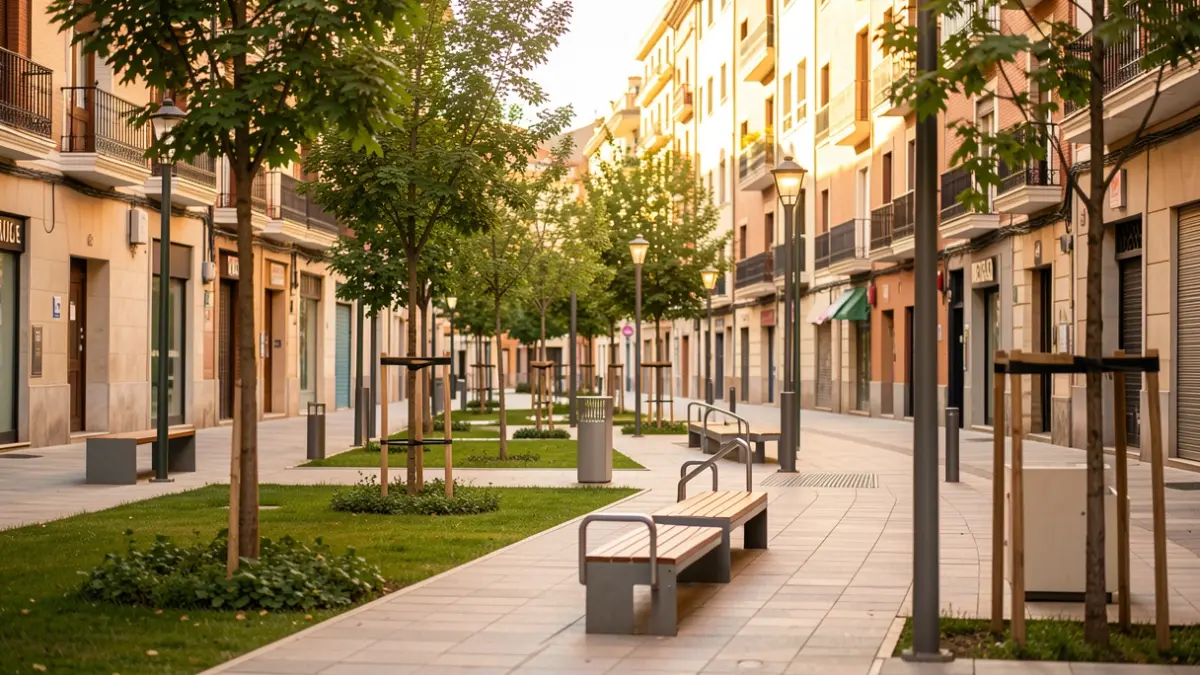
The project seeks to improve urban quality by creating accessible pedestrian routes, incorporating new vegetation, and transforming open spaces to make the neighborhood more livable. The intervention is divided into three distinct zones.
In the northern zone, a new rest area with biosaludable elements and garden spaces will be created, existing parking pavement will be replaced with permeable solutions, and an accessible ramp will be built. The central zone will focus on naturalizing the environment with new plantings and improving accessibility.
The southern zone will include a new accessible ramp, a meeting space with tiered seating and a staircase, and will transform a narrow, degraded corridor into a safer, better-lit route with vegetation. The overall intervention includes pavement renewal, improved public lighting, new urban furniture, and the creation of more comfortable spaces.
These actions, part of the South Strategy, aim to enhance safety, promote coexistence, and improve environmental conditions. The Plan Regenera Madrid includes interventions across more than 85 square kilometers of consolidated urban fabric, benefiting 75% of Madrid's population.