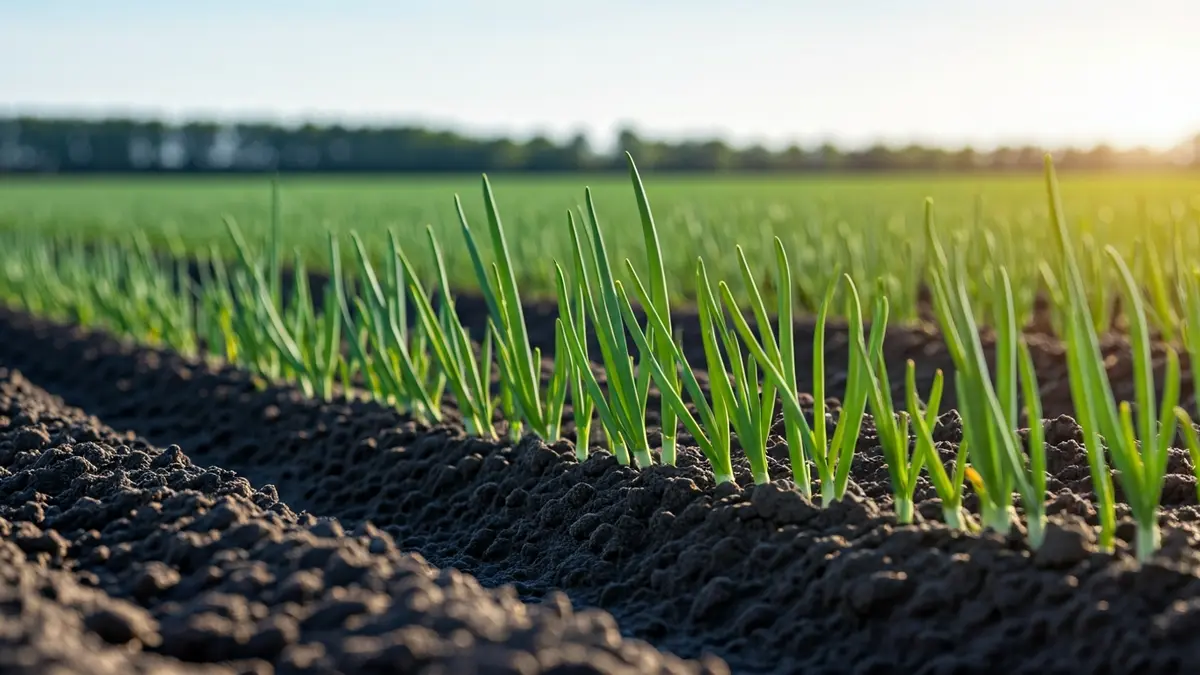
The Community of Madrid is involved in an innovative project aimed at developing its own version of calçot, a product traditionally associated with Catalonia. This initiative, named Alliummad 24, is being driven by the Madrid Institute for Rural, Agrarian and Food Development (IMIDRA), with the goal of adapting calçot cultivation to the region's climatic conditions and offering a new business avenue for local farmers.
For two years, IMIDRA technicians have been analyzing five onion varieties, including two native to Chinchón, a Madrid municipality with a rich horticultural tradition. These Chinchón varieties have recently been registered, ensuring their conservation and exclusivity within the Community of Madrid. The project collaborates with professionals from the Protected Geographical Indication (PGI) Calçots de Valls, thus guaranteeing the application of proven quality criteria.
The study evaluates several crucial parameters for calçot cultivation, such as sprouting, the number and diameter of shoots, the white length of the stem (a key quality indicator), and resistance to pests and diseases. Irrigation needs are also considered, a vital factor in a region with dry summers. Two of the analyzed varieties come from the Alcalá de Henares Plant Germplasm Bank, which preserves the genetic diversity of cultivated plants in the region.
The project has a very specific practical and economic purpose. If the results confirm that any of the studied varieties are viable for calçot production in Madrid, farmers in the region could incorporate this crop into their gardens for commercialization.
The project's progress was recently presented at a demonstration day at Finca El Encín, in Alcalá de Henares, attended by the Deputy Minister of Environment, Agriculture and Spatial Planning, Rafael García. During the event, the Gastronomic Innovation Center (CIG) of the Community of Madrid prepared tastings with the cultivated calçots, demonstrating their culinary potential.
In addition to its commercial value, the Alliummad 24 project contributes to the recovery of regional agricultural heritage. The Chinchón onion varieties, which were at risk of disappearing, are now actively maintained in the field, ensuring their conservation and practical application, which highlights the dual function of this project: to preserve and to produce.