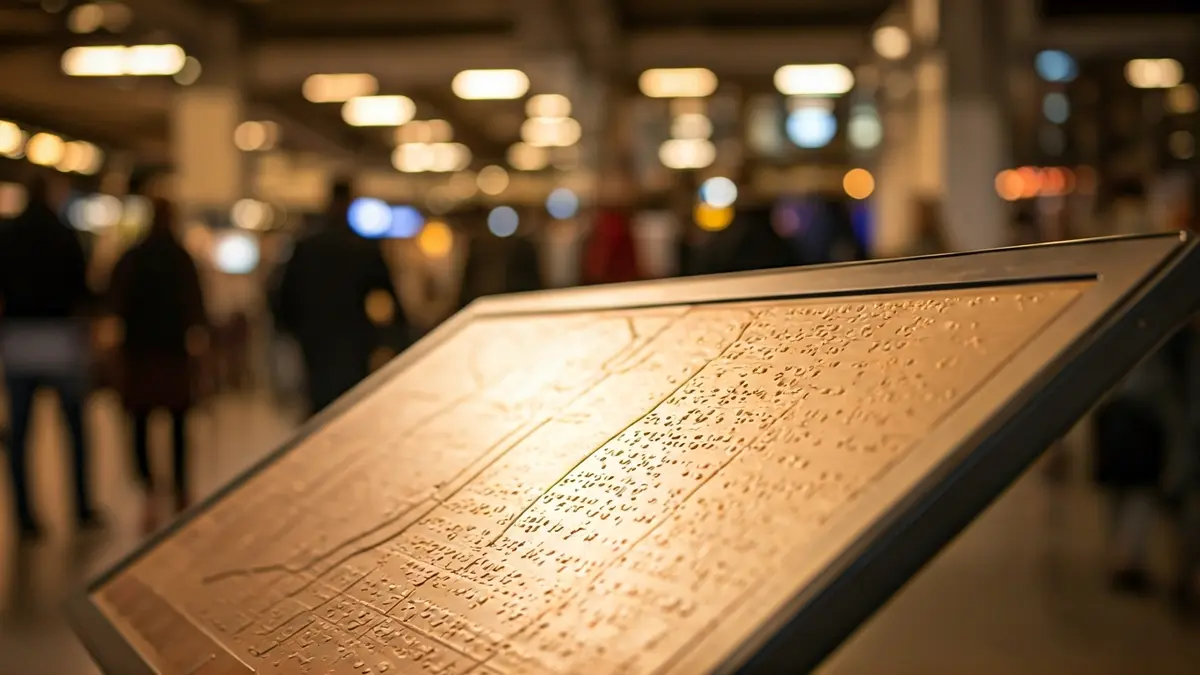
The Regional Transport Consortium of Madrid (CRTM) has installed a haptic map, a tactile plan designed to be read by touch, at the Plaza de Castilla interchange. This initiative, launched on March 30, 2026, seeks to reduce orientation barriers in a complex environment, with the potential for expansion to other facilities in the regional network if successful.
The 80x60 centimeter map, mounted on an accessible stand, integrates multiple communication systems. It includes tactile reliefs, Braille text, high-contrast and easy-to-understand pictograms, and digital support tools. These include QR codes linking to audio descriptions, audio buttons with spatial information, and sign language videos, ensuring accessibility for users with diverse needs.
One of the most notable aspects of this project is that it was not designed from an office without consulting those who will use it.
The choice of Plaza de Castilla is not accidental, as it is Madrid's most important surface interchange, covering nearly 60,000 square meters with 43 bus bays. In 2025, it recorded nearly 20 million passengers, making it a strategic point to evaluate the system's effectiveness. The map has been placed near the main Metro entrance for easy user access.
A key aspect of the project is the active participation of people with functional diversity in its design and validation. The CRTM collaborated with a specialized technical team and a group of users to ensure the map was truly useful and understandable in practice, going beyond mere compliance with technical regulations. This participatory approach underscores the Community of Madrid's commitment to inclusion in public transport.