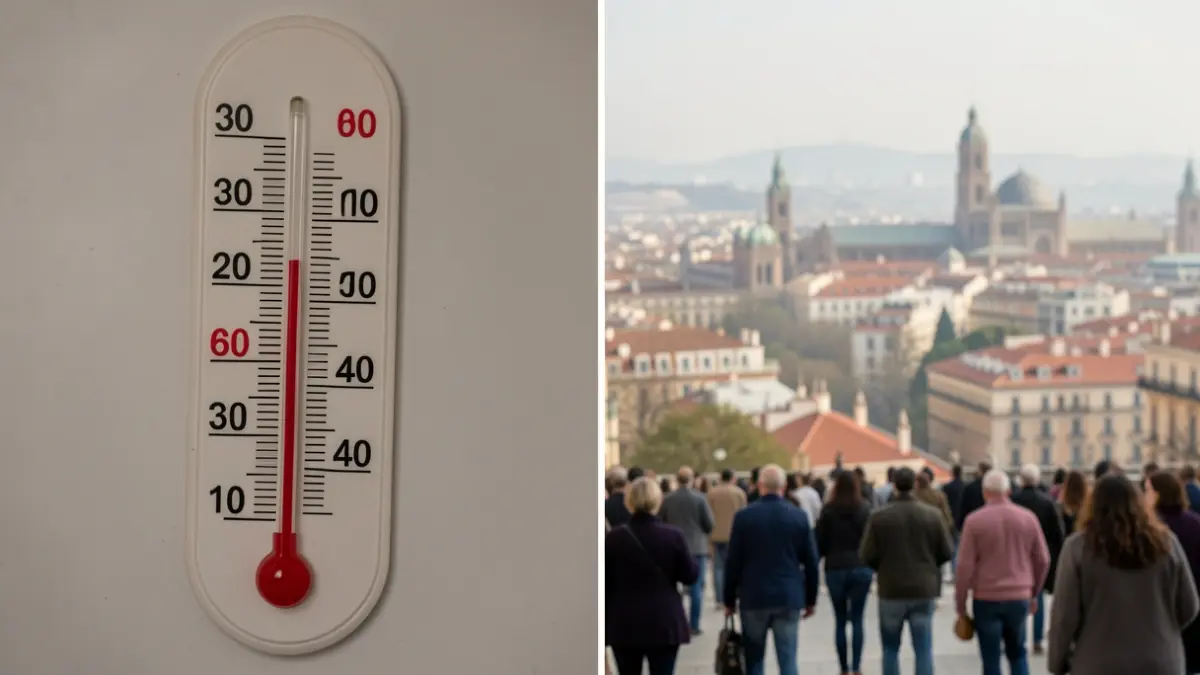
A study by Fundación AXA, titled ‘Caring for the Present, Protecting the Future: Climate Adaptation of the City of Madrid’, analyzes the consequences that the climate crisis could bring to the Spanish capital. Projections indicate a thermal increase of between 5.2 and 5.5 degrees, potentially leading to up to 68,000 additional deaths by 2050 if adaptation measures are not implemented.
This rise in extreme temperatures not only poses challenges for public health and social well-being but will also affect business profits. The alteration of climatic conditions directly impacts productivity, and losses exceeding 20 billion euros have already been recorded due to related incidents.
“"Heat would cause the loss of 7,700 jobs because extreme temperatures lead to lower productivity."
The report's author, Claudia Ylla Arbos, detailed that the Community of Madrid could see its GDP reduced by 16.4% if adaptation measures are not adopted. Predictions for 2030 already warned of a 17% increase in the risk of workplace accidents due to extreme heat. A 4-degree rise could reduce the working hours of exposed workers by at least half an hour per week.
Other anticipated consequences include an increase in energy bills, deterioration of green spaces, and restrictions on water usage. Ylla emphasized that an increase in the frequency and intensity of extreme weather events associated with climate change is already being observed, exacerbated in urban environments by phenomena like the urban heat island effect and soil sealing.
By 2050, the Spanish capital could experience more than two months of annual heatwaves, with perceived temperatures exceeding 33 degrees Celsius, translating into 55 days of high temperatures and over 62 additional warm nights each year. The report estimates that, in an extreme scenario, additional deaths could reach 68,000, a figure that could be drastically reduced with effective policies.