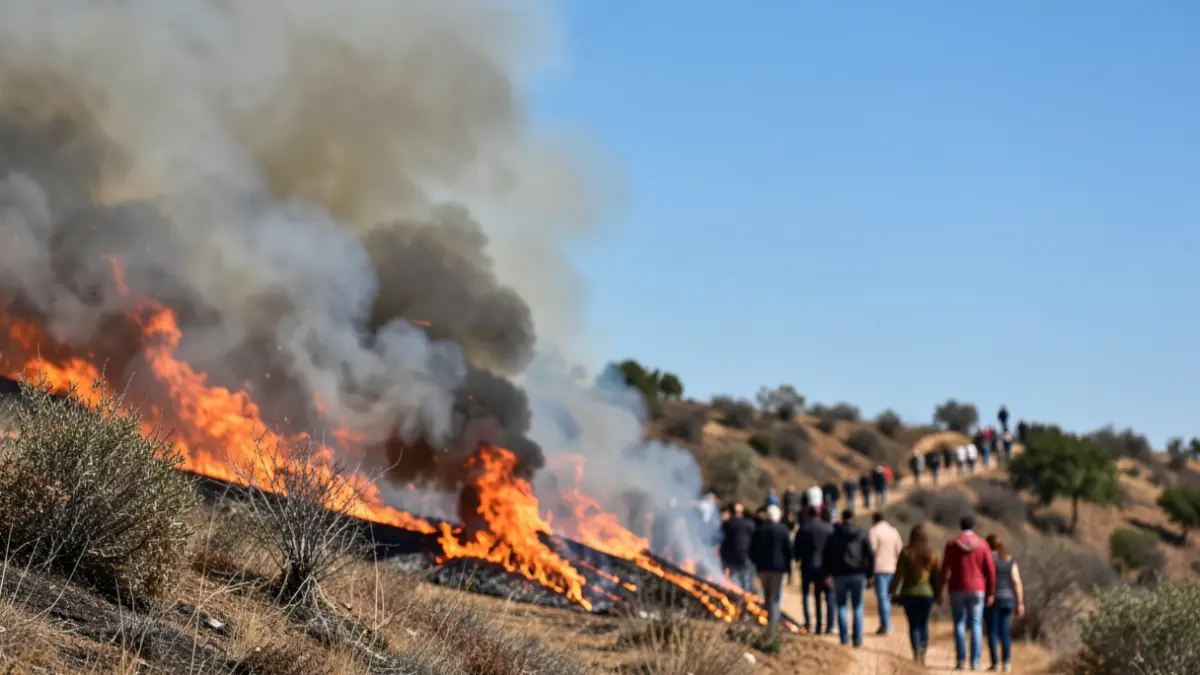
The Madrid region is preparing for the high-risk forest fire season with a significant deployment of resources. The special plan has an investment of 52.7 million euros and will mobilize over 1,700 forest firefighters in active operations.
The Minister of Environment, Agriculture, and Interior, Carlos Novillo, highlighted the high concentration of air and ground resources per forest hectare in the region, calling it the largest in Europe. The aim is rapid intervention to control outbreaks before they gain strength and become difficult-to-extinguish fires, as 80% of fires are controlled in the initial phase without exceeding one hectare.
This year, a promotion of 267 new personnel will join in September, bringing the total number of available forest firefighters to over 1,700, the highest to date. Furthermore, year-round prevention staff has been increased, with 420 forest firefighters working on silvicultural tasks, maintaining defense lines, removing damaged wood, and preventive grazing.
Novillo emphasized the importance of continuous prevention, especially as fire seasons are lengthening due to high temperatures before and after summer. Lessons learned from the previous campaign, such as the fires in Tres Cantos and Villamanta, which were exacerbated by dry thunderstorms and strong wind gusts exceeding 80 kilometers per hour, have been analyzed.
The training of personnel has been intensified to face extreme fires, with special attention to high-risk species in urbanized areas like arizónica hedges. The regional Government plans to amend the Forest Law to facilitate property owners replacing these plants with less fire-prone species.
Madrid's collaborative model maintains agreements with Castilla y León and Castilla-La Mancha since 2019, allowing automatic intervention within a five-kilometer strip beyond regional borders. Last summer's experience, including operations in provinces like Ávila and Segovia, has been used to review and improve communication coordination and the deployment of technological resources, such as drones and image transmission systems.