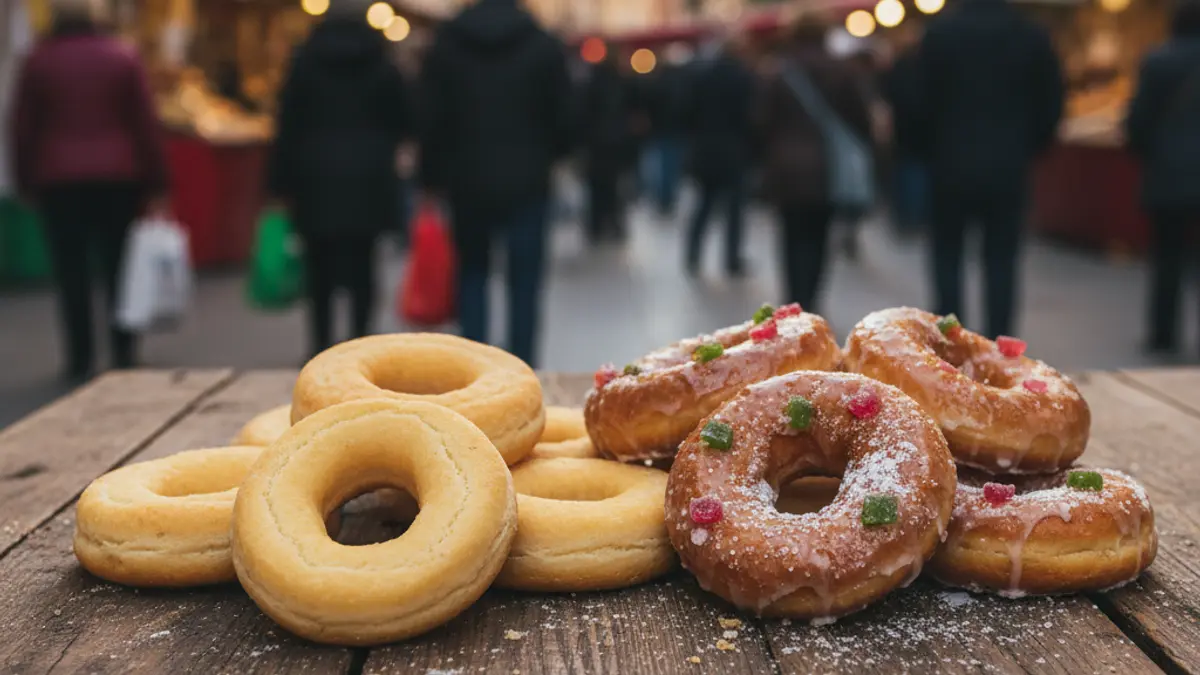
During the San Isidro celebrations in Madrid, doughnuts, known as 'rosquillas', take center stage. The 'tontas' (foolish) are characterized by having no topping, while the 'listas' (clever) feature a sugary crust, either white or yellow. Other varieties include those from Santa Clara, with dry meringue, or the 'francesas' (French), which incorporate ground almonds in their coating.
The tradition of these doughnuts is linked to the figure of the fairground sweet seller, personified by the legendary Aunt Javiera. This vendor, originally from Villarejo de Salvanés, became famous for her 'rosquillas listas', whose recipe was highly sought after. An advertisement in the Diario de Avisos from 1863 already mentioned her stall on the path to the Saint's hermitage, solidifying her presence in Madrilenian popular culture.
“"The renowned Aunt Javiera, from Villarejo Salvanés, informs her numerous patrons that from the 14th she will set up her doughnut stall on the path to the Saint's hermitage, going up to the left; at which stall there will be a sign with Aunt Javiera on a donkey."
The popularity of Aunt Javiera led to a wave of imitators, with numerous advertisements in the 19th and 20th centuries claiming to be relatives of the vendor or to possess her authentic formula. Although her exact origin is debated, it is accepted that her doughnuts came from Villarejo de Salvanés, a municipality that, along with Fuenlabrada, was an important producer of sweets for export outside Madrid, according to a 1912 study.
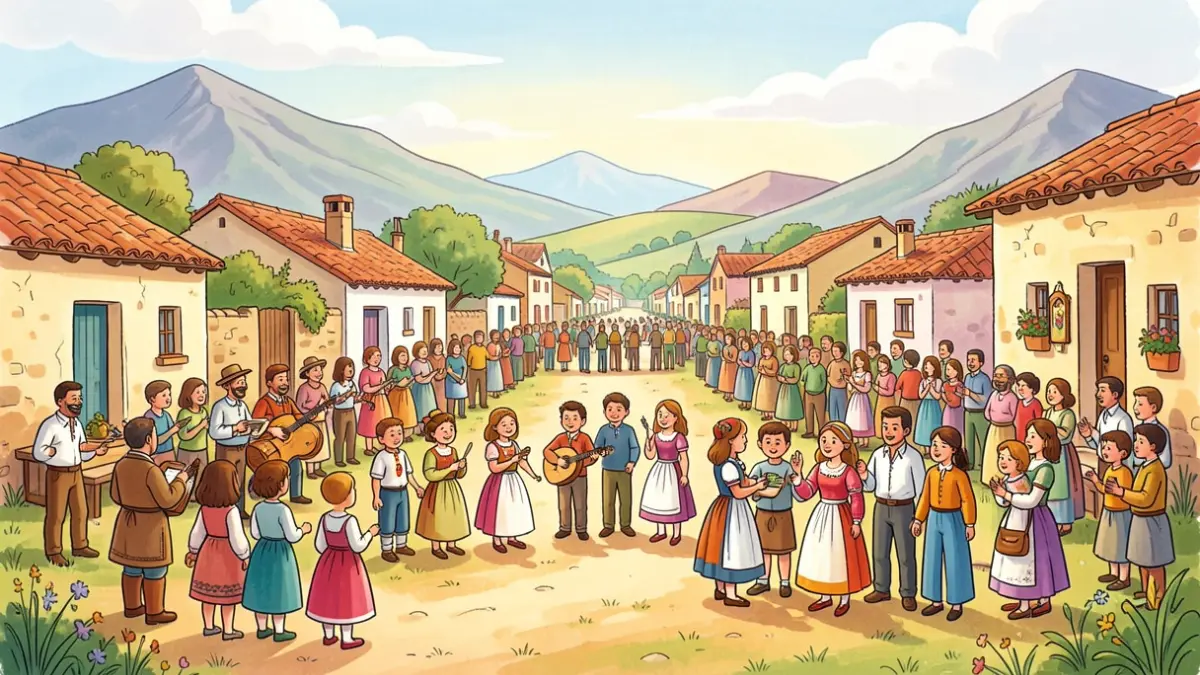
The San Isidro pilgrimage, dating back to the construction of the hermitage in 1528, evolved from a purely religious event into a popular festival with festive elements. Historical descriptions recount how pilgrims would come to seek miraculous water, and over time, the custom of picnicking and enjoying sweets and wine was added. This atmosphere fostered the appearance of various types of doughnuts, wafers, and churros, as well as fairground attractions.
The San Isidro doughnuts also reflect two aspects of the sweet industry: convent sweet shops, represented by the Santa Clara doughnuts, and salaried female labor, which in the early 20th century was one of the most precarious. The festival, immortalized in works like Goya's The Meadow of San Isidro, showcased an interclass mix, where different social strata coexisted in a festive and, at times, chaotic atmosphere, as described by chronicles of the era.