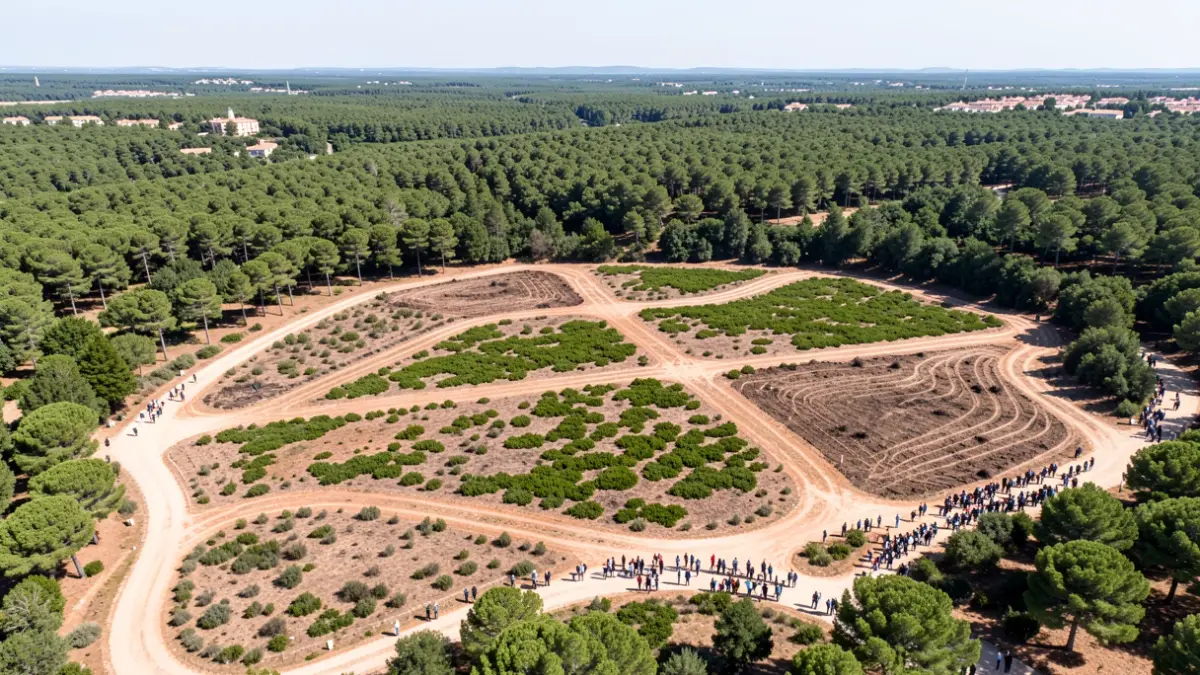
Technicians from the Fire Department have identified critical zones where dense vegetation poses the greatest threat. Operations focus on areas near residential zones and locations where fire could spread rapidly, utilizing pruning, clearing, and the maintenance of 74.6 kilometers of forest tracks to ensure access for emergency vehicles.
A key component of this strategy is the use of livestock for natural forest clearing. Approximately 71.2% of the treated area, totaling 3,772 hectares, is maintained through the grazing of sheep, goats, cows, and horses. This system, in place since 2011, involves 85 livestock farms that receive compensation for their role in ecosystem maintenance.
The remaining tasks are handled by a team of 304 specialized professionals working in forest crews, focusing on urban-forest interface zones. As summer temperatures rise, this unit will integrate into the INFOMA plan, bringing the total number of personnel to 419 to ensure a rapid and effective response to any emergency.