
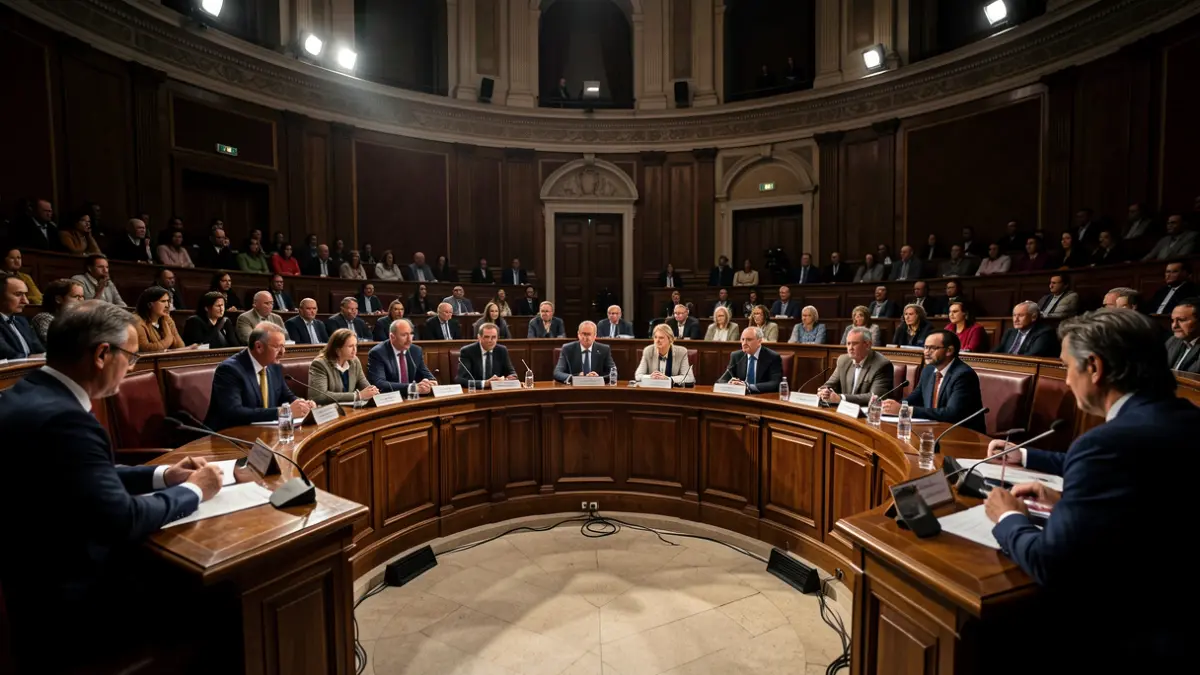
Socialist deputy Fernando Fernández Lara, a prominent figure of the PSOE in the Assembly of Madrid and with strong ties to Alcalá de Henares, was involved in a highly tense incident this Thursday. The event occurred during the discussion of a Non-Binding Proposition by the Popular Party on ETA terrorism and recognition of victims, highlighting the deep divisions that the memory of terrorist violence still evokes in Madrid's politics.
According to parliamentary chronicles, the altercation began when Fernández Lara attempted to intervene to qualify a statement from the PP which asserted that "ETA's victims are on this bench." The Vice President of the Assembly, Ana Millán (PP), denied him the floor, ordered his microphone turned off, and repeatedly called him to order. Despite attempts by socialist spokesperson Mar Espinar to calm him, the deputy persisted in his verbal protest, culminating in his immediate expulsion from the hemicycle.
Upon leaving the plenary hall, Fernández Lara engaged in a heated verbal exchange with members of the popular bench. Subsequently, the entire socialist group walked out of the session in bloc as a sign of protest, escalating the tension in the regional chamber.
Fernando Fernández Lara, a law graduate with experience in the financial sector (BBVA, CaixaBank), has a long career in public administration. He served as a councilor in the Meco City Council and later in Alcalá de Henares, holding positions in Finance and as socialist spokesperson. In the Assembly of Madrid, he has been deputy spokesperson for the Socialist Group, participating in debates on economy, public services, and democratic memory. From Alcalá, he has advocated for increased regional investment and criticized the government of Isabel Díaz Ayuso's treatment of the Henares region.
The debate takes place amidst controversies surrounding prison policies for ETA inmates, particularly after the transfer of competencies to the Basque Government. While the PP and Vox demand harsher conditions for those convicted of terrorism, the socialists argue that a matter that should unite against violence is being politically exploited.
Thursday's incident immediately drew reactions. Sources from the Popular Party described the socialist deputy's attitude as "intolerable" and "unjustifiable," while the PSOE-M defended that Fernández Lara acted in defense of his group's dignity and questioned Vice President Ana Millán's decision.
The episode carries local significance for Alcalá de Henares, where Fernández Lara is a prominent political figure. His supporters highlight his commitment to public services and territorial equity, while detractors criticize his vehement political style. The activities of its regional representatives are closely followed in the city, and Fernández Lara's name is once again at the center of political debate.
Fifteen years after ETA announced its end, the issue continues to provoke intense parliamentary confrontations, demonstrating how the memory of terrorism remains central to Spanish political conflict.