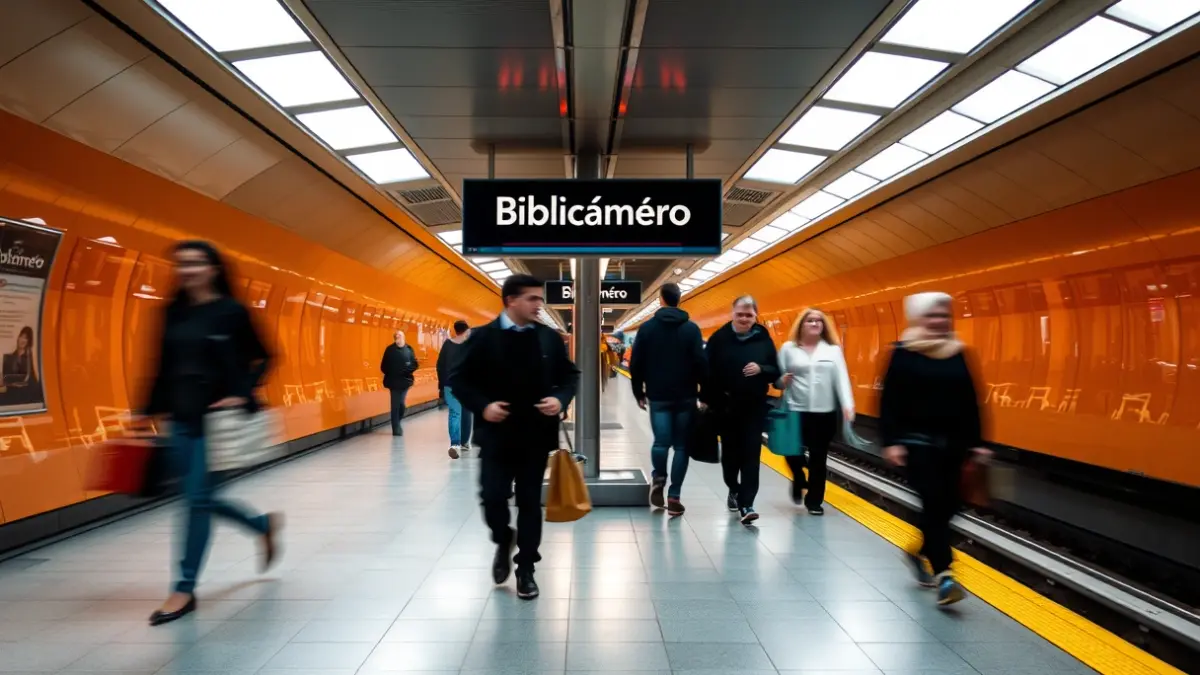
The Bibliometro service, which offers book lending in metro stations, is set to undergo significant changes. The Regional Ministry of Culture of the Community of Madrid has confirmed that the new agreement will include modules located in Carabanchel Alto, Chamartín, Mar de Cristal, Sierra de Guadalupe, Nuevos Ministerios, Puerta del Sur, Embajadores, Moncloa, and Legazpi.
This decision means the recovery of four of the six Bibliometros previously managed by the City Council and closed since last summer: Nuevos Ministerios, Embajadores, Moncloa, and Legazpi. The Ministry justifies this choice by stating that these are the stations with the highest passenger traffic and where the most loans were made. However, the modules at Canal and Aluche will remain out of service, with no clear indication yet of what will happen to their infrastructure.
“"These are the stations with the most traffic and where the most loans were made."
Conversely, the Bibliometro at Puerta de Arganda, which has remained operational under regional management, might face withdrawal from service. Although the Regional Ministry of Culture excludes it from the new agreement, it has stated that its contract will be renewed until its situation is defined. Sources close to the staff have indicated that this location has the lowest demand, causing concern among employees given the imminent expiration of the current agreement on April 30.
Bibliometros, installed in 2005, are small spaces in the vestibules of twelve stations, each holding approximately 1,700 titles, many of them new releases. This service has been highly valued by commuters. Nevertheless, last July, six of the twelve modules, those managed by the City Council, unexpectedly closed. An employee expressed staff concerns, noting that the City Council has been neglecting the service for years, leading to layoffs and reassignments.
“"The City Council has been neglecting it for years. They ignored the six posts and did not issue the tender to renew the concessions. Those who worked there have been laid off or reassigned."
The outsourced management of the service has been a point of contention. While the company awarded the municipal modules, Betansa, offered salaries close to the Minimum Interprofessional Wage and temporary contracts, the company managing the regional posts, Normadat, despite similar economic conditions, maintained greater control over quality standards. The approaching expiration of the agreement without news of its renewal had generated uncertainty among the staff, who feared layoffs. However, the recent decision by the Community of Madrid appears to ensure the continuity of part of the service, although not all operational points that functioned for 20 years will be recovered.