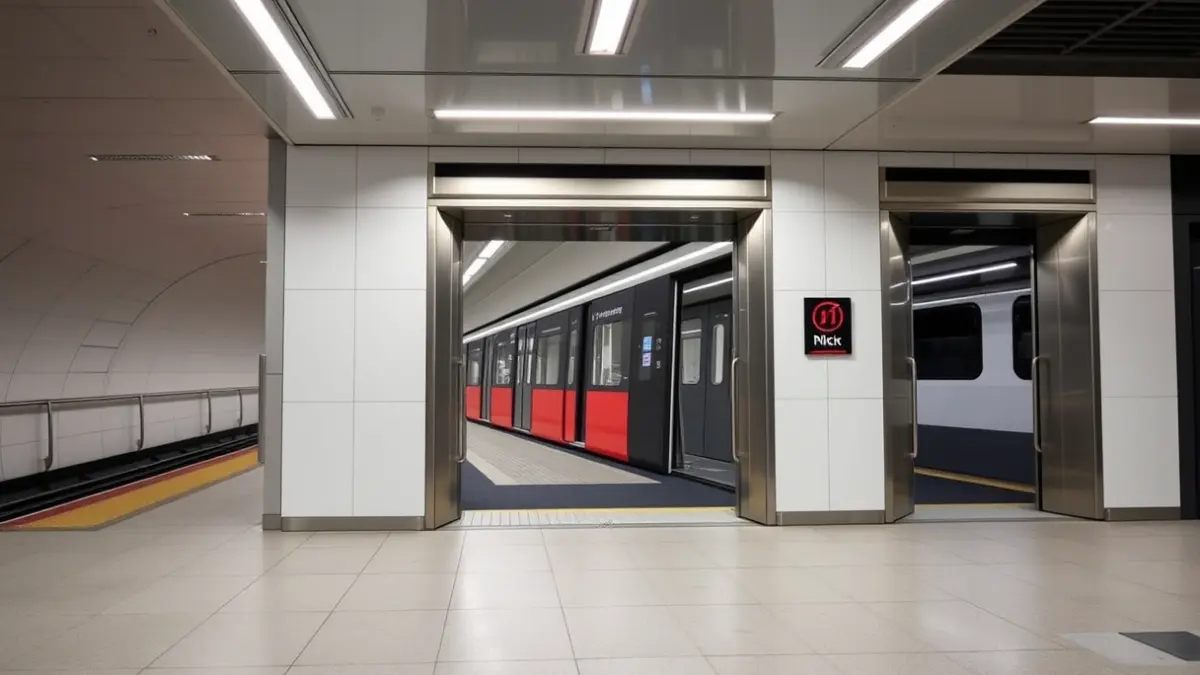
The works, scheduled to last ten months, will be carried out without service interruption, affecting approximately 430,000 daily users of this line. The main intervention involves adjusting platform heights to level them with train doors, thereby eliminating the current step or gap.
“"Leveling the platforms not only improves comfort and safety for all passengers, especially for the elderly or those with reduced mobility, but it is also technically essential for the installation of automatic doors."
These automatic doors, which will synchronize with the train doors, are vital for the operation of driverless trains, preventing access to the tracks when no train is in the station. Additionally, the project includes the installation of stainless steel and safety glass screens at the ends of the platforms to protect the trackside area and create technical spaces.
The renovation also includes a complete overhaul of platform flooring, modernizing stations with more durable materials. Special attention will be given to accessibility at four stations (Ciudad Universitaria, Guzmán el Bueno, Laguna, and Lucero), with improvements such as tactile paving, adapted public address systems, non-slip surfaces, and Braille signage.
This award is part of a larger investment plan by the Community of Madrid, exceeding 1,000 million euros for the comprehensive transformation of Line 6. This plan includes the acquisition of 48 new driverless trains, general infrastructure renovation, platform door installation, and signaling improvements. By 2027, the Circular Line will become the first automated driving line in the entire Metro de Madrid network.