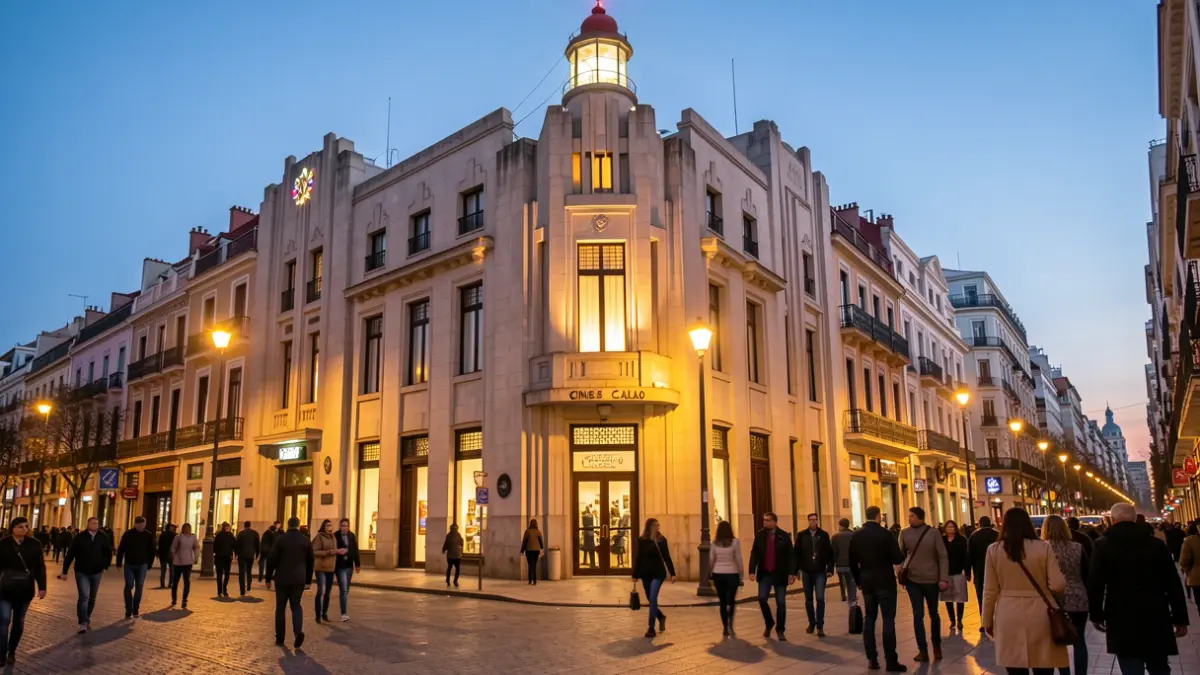
Designed by architect Luis Gutiérrez Soto and built in just eight months, the building opened its doors on December 11, 1926, with the screening of the silent film Luis Candelas, el bandido de Madrid. Since then, Cines Callao has been a privileged witness to the evolution of the city, cinema, and Madrid's popular culture.
Josué Reyzabal, CEO of Callao City Lights, describes the anniversary with "great emotion and nostalgia," emphasizing the "legacy" and "honor" of preserving and caring for the space for "another 100 years."
From its inception, Callao stood out as one of the first buildings in Madrid conceived exclusively as a cinema and an architectural reference of art deco. Its iconic lighthouse at the top became one of the most recognizable hallmarks of Gran Vía.
The complex also featured a rooftop that operated as a summer cinema and has now been repurposed as a terrace for corporate events. The interior has also transformed: the basement housed a café, a billiard room, and the Xenon nightclub before becoming the current Sala 2 of the cinema.
“"It means a lot of emotion, nostalgia, and legacy. Preserving and caring is an honor, it means betting on Cines Callao for another 100 years"
Callao has been a pioneer in technological and cinematic milestones, being the first cinema in Spain to screen a sound and spoken film in 1929, and one of the first to host Spanish-language productions from Hollywood. In 1935, it premiered the first color film in Spain, and in 1953, it introduced 3D cinema.
The business model has undergone profound adaptation. About 15 years ago, the City Council permitted large-format outdoor advertising on the building's facade, initiating the transformation into a cultural and events space. Today, Callao City Lights manages one of Europe's most significant digital screen circuits in the Gran Vía and Plaza de España area.
The building has established itself as a premier venue for film premieres in Spain, hosting international stars and productions from major studios and platforms. In the last week mentioned, the venue hosted two major Disney events.
In 2011, Callao replaced its traditional film posters with large-format digital screens, then the largest in Spain. In 2019, these were replaced by new advanced technology supports, with a further renovation planned.
The most ambitious renovation in its history occurred in 2024, with a comprehensive overhaul of both the interior and exterior. This included replacing seats, repairing stairs, improving acoustics, and fully restoring the facade, while respecting the original 1926 architectural elements. A video mapping system was added to Sala 1 for immersive experiences.
“"We were the first to have the first sound film, the first spoken one"
These technical improvements have achieved a high level of soundproofing and versatility, enabling diverse activities to coexist simultaneously in each hall, from film screenings to musicals, events, and presentations. It has also consolidated its digital LED screen circuit as one of the most important in Spain.
Beyond cinema, the Callao area has become a hub of social activity in the city. Its 2,000-square-meter pedestrian plaza is a daily meeting point for locals and visitors. In 2025, around 300 million people passed through the Plaza Callao area. The digital screen circuit between Plaza Callao and Plaza de España achieves 700 million annual impacts.
The building's operational complexity allows for up to three simultaneous events, such as screenings, cocktail receptions, and corporate presentations, managed without interference.
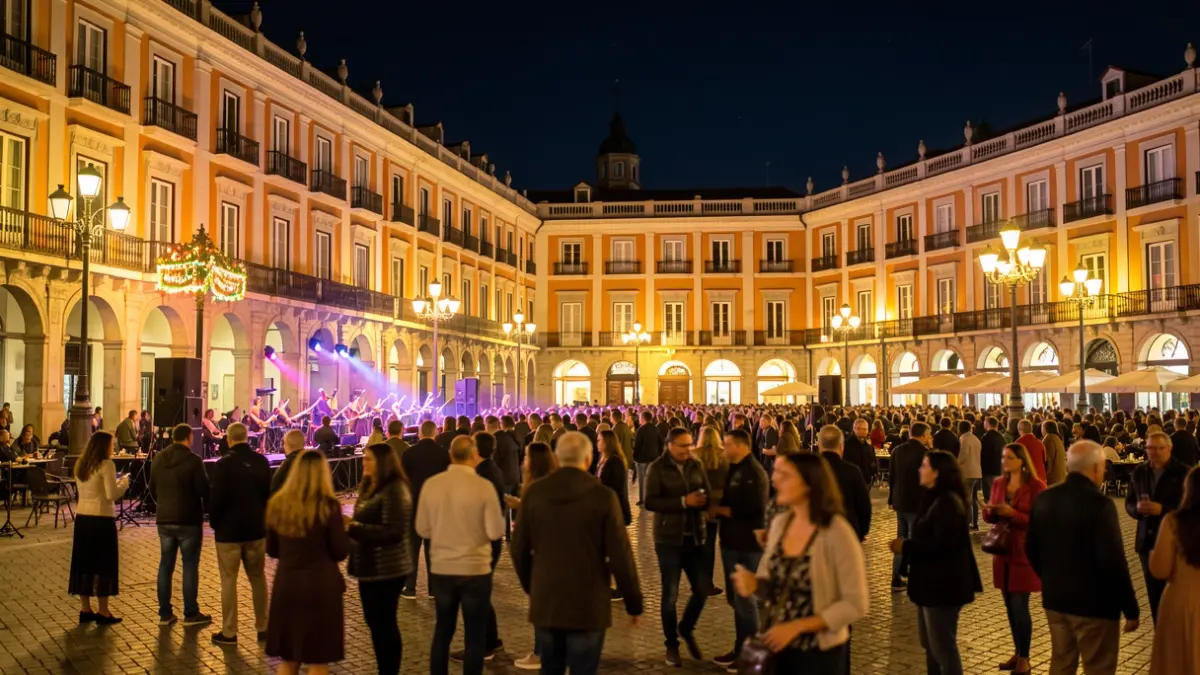
The centenary celebration will extend throughout 2026 with a special program, including a "grand red carpet" event in the plaza featuring a live symphony orchestra playing film scores, and the creation of centenary awards for prominent figures in national and international cinema.
The group's objective for the coming years is to consolidate the current model while maintaining its cinematic essence, balancing culture, events, and advertising, and continuing to be "the best square."