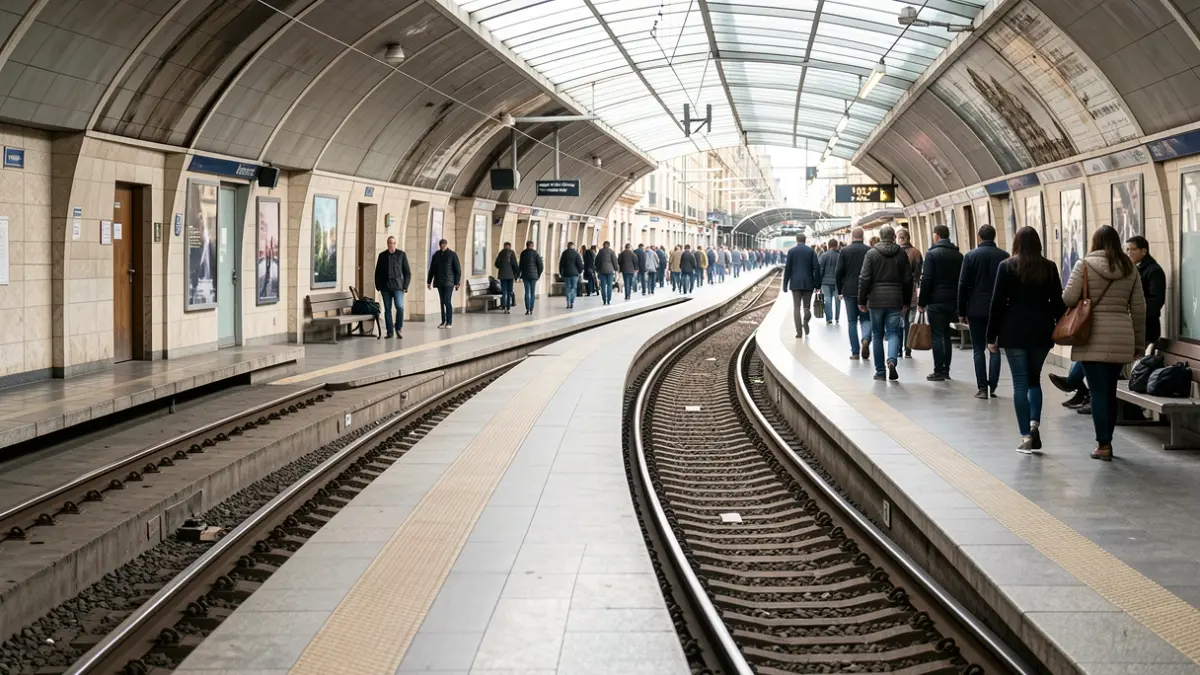
The incident, confirmed by Adif, has forced the limitation or diversion of several services at one of the capital's main railway hubs. Technicians are working to restore normalcy, but restrictions remain in place.
The affected Cercanías lines include C2, C3, C4, C7, C8, and C10. Line C4 is the most impacted, with trains from Parla only reaching Villaverde Alto, disrupting a key corridor in the southern region. C4a, which typically connects Alcobendas-San Sebastián de los Reyes to the city center, now terminates at Chamartín, while C4b trains from Colmenar Viejo stop at Atocha Cercanías.
Line C7 has been rerouted via O'Donnell to alleviate congestion, and lines C2, C3, C8, and C10 are experiencing significant delays without changes to their routes. Adif has communicated the situation via social media but has not specified the exact cause of the breakdown or how long it will take to resolve, only stating that their teams are acting "as quickly as possible."
“"Adif's teams are acting as quickly as possible to resolve the incident."
This situation directly impacts thousands of Madrid residents commuting to work, educational centers, and Mid-Distance connections during the morning rush hour. The chaos is particularly noticeable for users in the south and north of the region who rely on these lines to access the city center.
Atocha station is a critical point in Madrid's railway network, and any incident in its infrastructure typically creates a domino effect that quickly spreads across the entire Cercanías network. Travelers have already begun reporting disruptions to their usual routes on social media. Adif continues to monitor the situation and advises users to check official channels for updates on service restoration, not ruling out that the breakdown could be prolonged if more complex infrastructure damage is detected.