The A-5 undergrounding project in Madrid is maintaining its execution schedule and even shows advances in some of its milestones, despite the complexities arising from the international situation. Factors such as tensions in maritime trade and increased energy costs, influenced by global conflicts, have created challenges in material supply and project budgeting.
“"All of this affects the works we are carrying out in the city of Madrid, but thanks to the efforts of the companies and the City Council, we are on schedule and will be able to complete this work within the committed timeframe. We are making a tremendous effort."
During a visit to the latest section of the south tunnel, inbound to Madrid, Mayor José Luis Martínez-Almeida highlighted that, despite the difficulties, the works are "on schedule" thanks to the collaboration between companies and the City Council. This joint effort will allow them to fulfill commitments made to residents in an "especially complex" context.
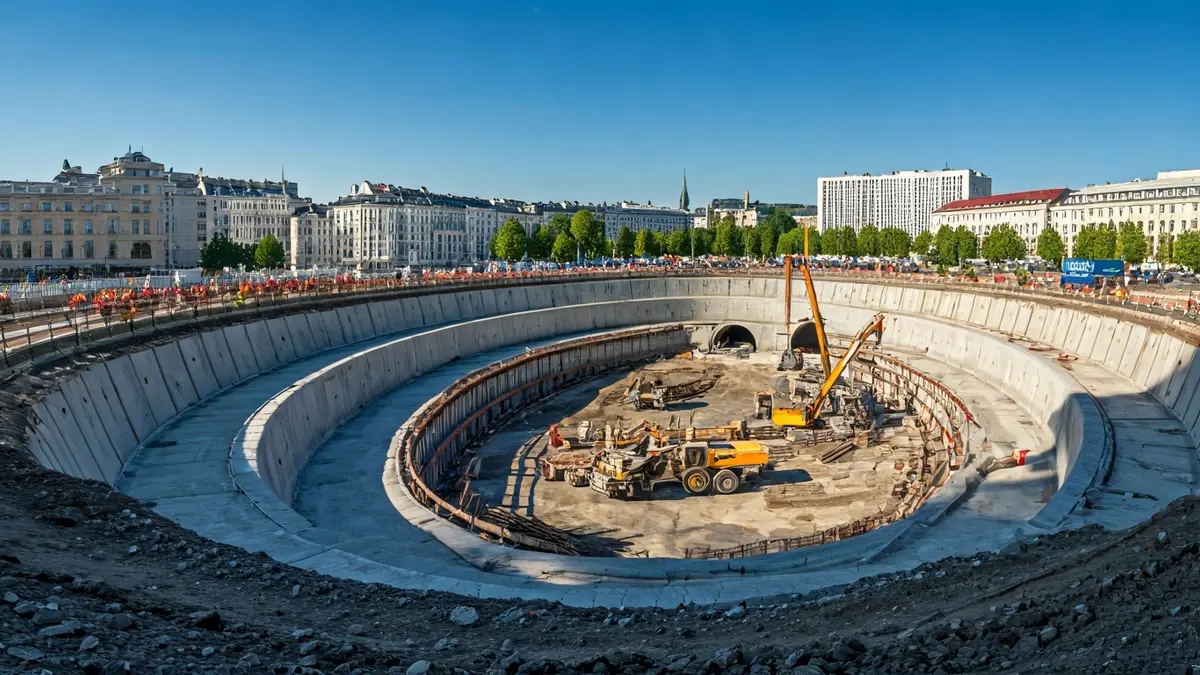
The mayor announced the completion of the south tunnel excavation, an achievement made "ahead of schedule" despite heavy rains earlier in the year that complicated the work. The visit allowed for an on-site inspection of the works in the section connecting Pedro Piquer Avenue with the M-30 underpass on Portugal Avenue, where a retaining wall will be demolished in the coming weeks to link with the traffic lane.
Martínez-Almeida emphasized that this represents "the greatest urban transformation" in Madrid in decades and thanked residents, especially in the Campamento area, for their "generosity and patience" regarding service and supply disruptions, such as internet signal outages. Tunnel excavation in both directions has reached 83% of the total, with 100% completed inbound and 70% outbound, with the latter expected to finish in May. The project has involved nearly 600 workers and over 400 machines, with an investment exceeding 400 million euros and an affected area of over 100,000 square meters.
The coming months will see crucial project phases. In June, beam placement will begin on the Batán and Boadilla structures, continuing until July and contributing to reduced noise impact. After the summer, tunnels will be connected to M-30 systems (ventilation, emergency exits, and control) and testing will commence, while surface urbanization of the Southwest Green Promenade will begin concurrently. The tunnel is expected to be operational by year-end, freeing up 3.2 kilometers for a green corridor connecting Madrid Río and Casa de Campo, removing the urban barrier the highway has posed since 1968 for neighborhoods like Lucero, Aluche, Las Águilas, and Campamento.
Key benefits of this action include improved environmental quality, as over 80,000 daily vehicles on the A-5 will be undergrounded, reducing their surface presence by 90% and, consequently, noise and pollution levels. The mayor stressed that the project will significantly enhance the quality of life for thousands of residents, confirming its on-schedule (and even early) completion despite the adverse global context.