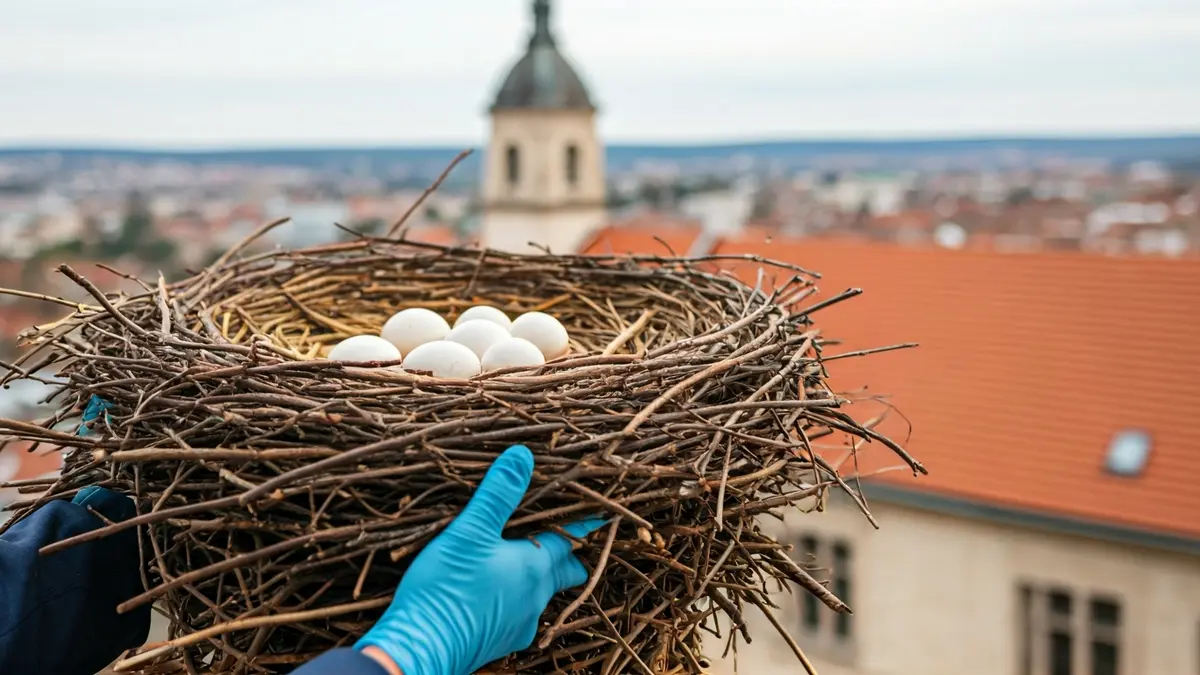
The operation, authorized by the Community of Madrid, involved coordinated participation from forest agents, municipal technicians, and the GREFA entity, which specializes in wildlife recovery. The primary goal is to reconcile necessary construction work with respect for the biological cycle of storks, an emblematic species of the Complutense urban landscape.
“"A white stork nest located on the city hall roof has been removed. Although it is breeding season, the urgency of the situation forced us to intervene."
The intervention occurred during the white stork's breeding period, which generated some opposition, such as from the Ciconia collective. However, Miguel Garcés of GREFA justified the action due to the urgency of structural damage detected in the municipal infrastructure. During the process, the eggs were removed from the nest to be transferred to GREFA's wildlife hospital in Majadahonda, a reference center in the Community of Madrid.
In Majadahonda, the eggs will be artificially incubated until hatching. Subsequently, the chicks will be raised under controlled conditions. The plan is for the young birds, once developed, to be released back into Alcalá de Henares in July, thus minimizing the impact of the relocation and ensuring the species' continuity.
“"When these stork chicks hatch and are raised and become juveniles, in July they will be transported back to Alcalá de Henares and released again."
Municipal veterinarian, Almudena Soriano, explained that the intervention began after detecting the urgent need to repair the building's roof. Authorization was processed through the Community of Madrid, including precautionary measures to protect the avifauna. Soriano highlighted the coordination between municipal veterinary services, heritage technicians, GREFA, and forest agents, ensuring the process was carried out correctly and respecting Alcalá's protected fauna.
Coinciding with the start of the breeding season, the City Council has also begun its annual monitoring of the white stork population in the municipality. Provisional data indicate a slight reduction, with 77 pairs counted compared to 91 in 2025, figures that will be confirmed after evaluating the season's reproductive success. This action is part of the municipal policy to reconcile biodiversity conservation with the maintenance of urban heritage.