
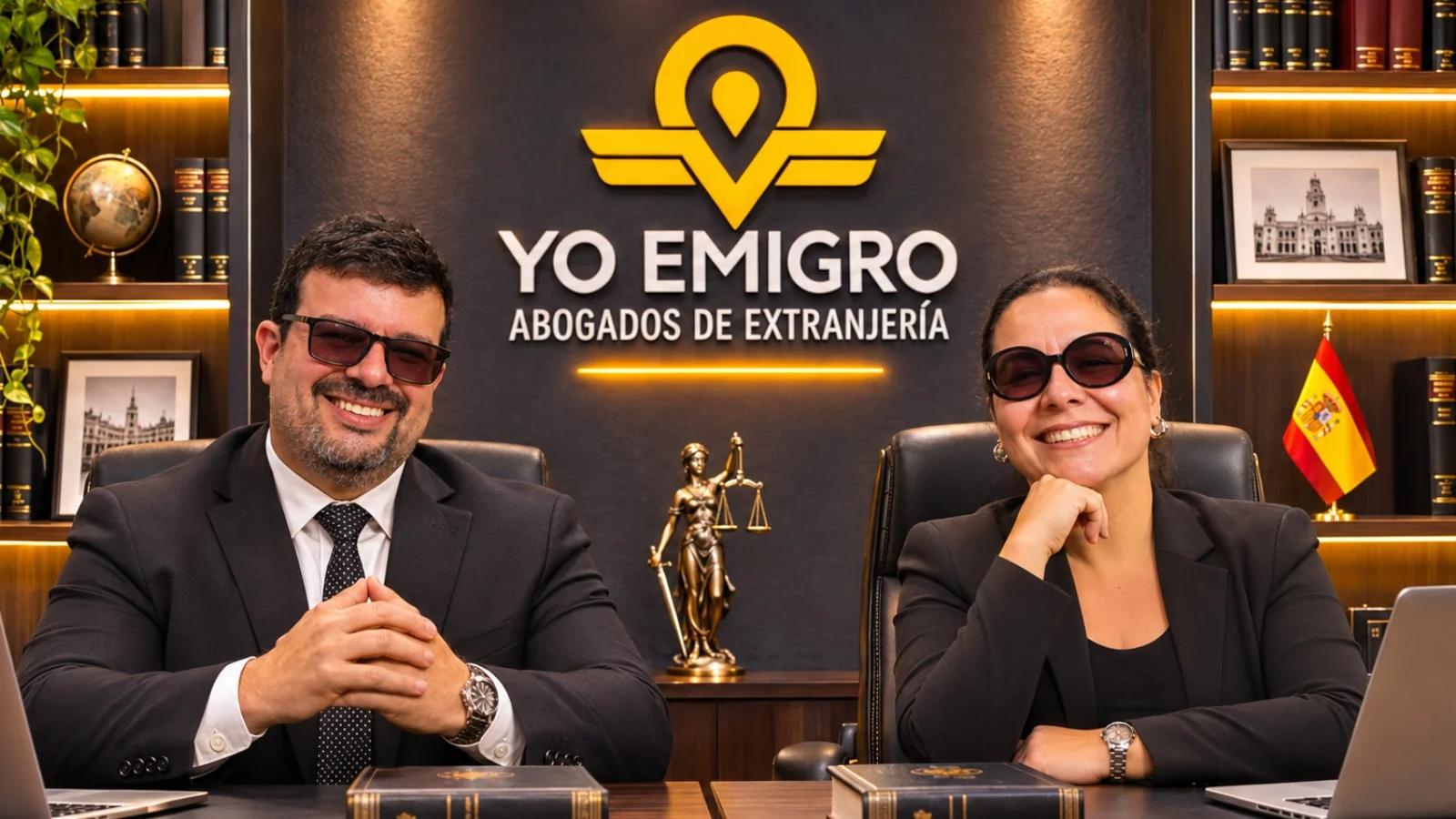
We know what it's like to wait for a resolution, because we waited for one too
Anyone who has changed countries knows that a residency card is never just a card. It's the work contract that can finally be signed, the flat that can be rented, the ticket to visit family without fear of not being able to return. The firm, dedicated exclusively to immigration law and Spanish nationality, was built on that certainty.
The story begins in Venezuela, far from the courts. Vásquez was a business administrator; Flores, a journalist. Neither thought about law when they packed their bags a decade ago, but migration forces reinvention, and they did it twice: first to get by in a new place and then to return to university.
Once settled in Madrid, both studied Law and were admitted to the bar. He also completed an MBA. From this unusual combination emerged a different way of understanding the profession: technical rigour in every case, order in management, and clarity in explaining to the client what they can and cannot expect.
Today, they process residency and work permits, various types of 'arraigo' (legalisation based on ties to Spain), study stays, family reunification, and residency-based nationality applications. In-person consultations are available at the Pinto office, in the Community of Madrid, and via video call for the rest of the country, so distance is not an obstacle.
In this time, they have handled thousands of cases, mostly for citizens from Venezuela and other Latin American countries, with a very high percentage of favourable outcomes. They attribute this to a simple-to-state, demanding-to-follow method: study each situation before accepting it, tell the truth about the real options, and don't let go of the case until the Administration's response arrives.
This commitment to sharing knowledge has extended beyond their daily work. Vásquez has become, through his social media (@EnriqueVasquez), a reference point for the Venezuelan community, translating every regulatory change into understandable language. Flores writes on marijo.es about what doesn't fit in any form: identity, displacement, and the silent grief of those who leave.
Both have brought this experience to paper. In their book 'Eso que llamas hogar' (That Which You Call Home), Vásquez starts from the question every migrant eventually asks when they have a fixed address, a job, and a routine: at what point did I stop being from there without becoming fully from here? Venezuelan by birth and Spanish by heritage, he recounts his beginnings in Venezuela, Panama, and Madrid without easy formulas or recipes, navigating grief and humour, bureaucracy and love, with fatherhood as an unexpected arrival point.
'La huella de mi emigración' (The Mark of My Emigration), by Flores, offers something different: it's not a book to read, but to write. It's a guided journal where each person reconstructs their migratory journey with a dual purpose: to process their experiences, almost as a therapeutic exercise, and to leave it in writing as a legacy for their loved ones. Both books can be purchased on Amazon.
One firm and two books stem from the same conviction: leaving one's home country is one of the hardest decisions a person can make, and no one should face it blindly or alone. YoEmigro Lawyers serves clients in Pinto, and online via yoemigro.com