
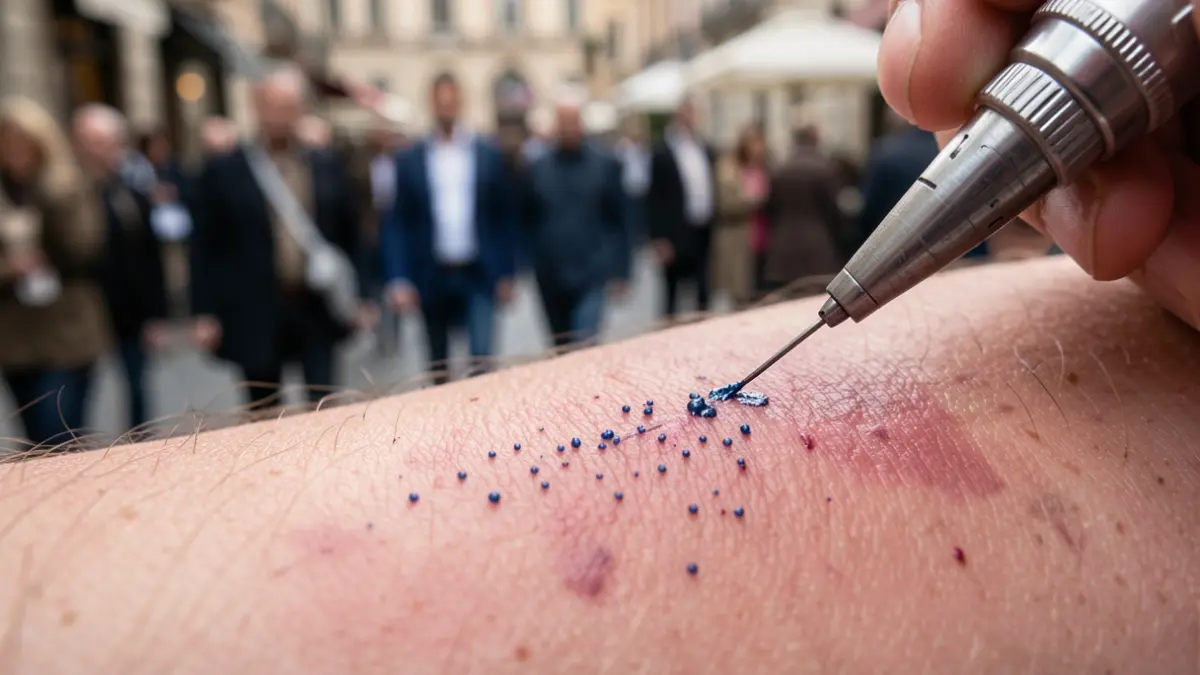
Tattoos, increasingly popular especially among young people, carry health risks that science is investigating. It is estimated that between 30% and 40% of people under 40 in the USA and Europe are tattooed. Complications can include allergic reactions, skin infections, inflammation, autoimmune diseases, or toxicity from sun exposure.
Dr. Pablo Tutor presented a case of uveitis triggered by a tattoo, which led to a literature review on complications. When ink is injected into the dermis, the body recognizes it as foreign, activating an immune response. Ink particles, difficult to break down, remain in the skin and can migrate to lymph nodes or distant organs via the bloodstream, causing chronic inflammation.
The composition of inks is key. They contain pigments, solvents, and preservatives. Red, black, and green inks are most associated with allergic reactions. A prior hypersensitivity test is recommended. Sun or laser exposure can break down pigments, generating harmful chemicals.
Ink migration to lymph nodes can hinder medical diagnoses, such as detecting melanoma metastasis. It can also trigger local infections or systemic inflammatory reactions like arthritis or uveitis. Animal studies suggest tattoos may alter vaccine responses.
Furthermore, ink can interfere with medical tests like MRI, causing pain or burning if it contains iron oxide pigments. European regulations limit certain ink components, but some are classified as potentially dangerous by the World Health Organization and the International Agency for Research on Cancer.
Dr. Tutor recommends choosing facilities with health guarantees and following aftercare guidelines. He notes that tattoos, especially extensive and multi-colored ones, should be considered among potential causes of autoimmune diseases.